
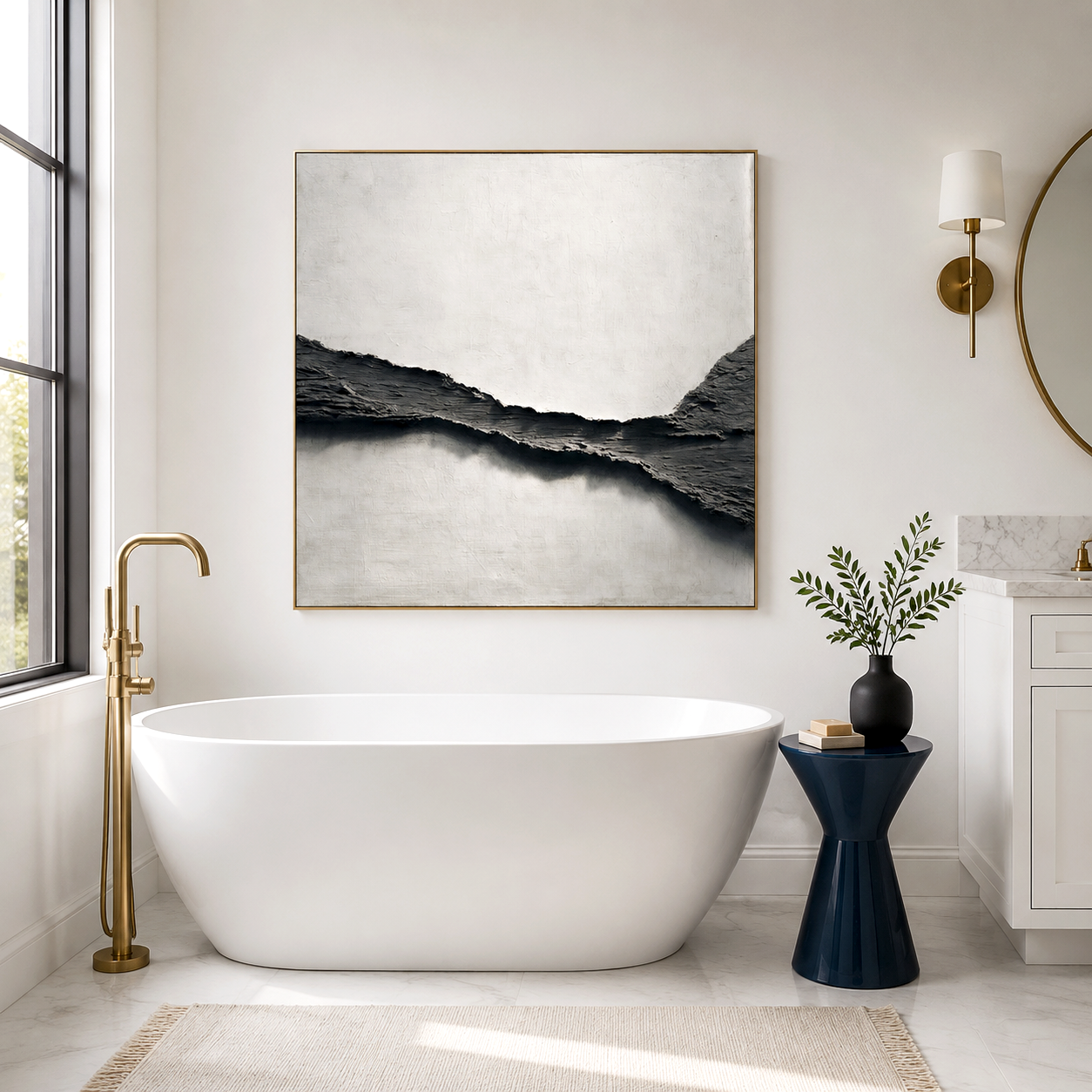
As the global home decor market surges past $840 billion, art buyers increasingly seek original, handcrafted pieces that convey authenticity, warmth, and sensory depth. Hand-painted textured beach paintings stand out for their tactile richness and coastal tranquility, providing both visual and emotional balance to modern interiors. Acousart, a Xiamen-based art collective, is redefining this category by merging artistry with innovation to elevate home environments.
What Is the Current State of the Home Art Industry and What Pain Points Exist?
According to a 2025 Statista report, global art market sales reached nearly $68 billion, with 45% of buyers preferring art that “improves emotional well-being.” However, mass-produced digital prints dominate the affordable segment, diluting the impact of genuine artistic value. Homeowners crave originality, yet many affordable options lack authenticity and long-term aesthetic value. This gap between accessibility and artistry has widened as consumers grow more design-savvy.
Additionally, 72% of homeowners surveyed by Houzz report difficulty finding wall art that harmonizes with texture-centric interior trends such as minimalist wabi-sabi and coastal contemporary. Smooth-surfaced prints fail to capture depth, lightplay, and the immersive realism of natural landscapes. These limitations drive the growing desire for hand-painted textured beach art, where brushwork and relief simulate the natural movement of waves and sand.
Environmental concerns further compound the problem. Over 60% of affordable wall decor is made from non-sustainable materials, contributing to ecological waste. The need for sustainable, handmade, and emotionally resonant decor is urgent—and artists and homeowners alike are seeking alternatives that align with both aesthetic and ethical values.
Why Do Traditional Wall Art Solutions Fall Short?
Traditional interior paintings and digital reproductions, though affordable, sacrifice tactility and personal connection. Canvas prints, often factory-produced, flatten textures and color variations, losing the layered translucence that defines hand-painted works. In addition, low-cost materials fade and crack over time, diminishing longevity and resale value.
Moreover, traditional art pieces rarely consider environmental acoustics. In urban apartments and open-plan homes, echo and noise reflection undermine relaxation and focus—issues that most artworks fail to address. This is precisely where brands like Acousart are advancing the conversation by integrating both sensory and functional design.
How Does Acousart Provide an Innovative Solution?
Acousart bridges artistry and acoustics by creating hand-painted textured beach paintings that double as acoustic art panels. Each piece is crafted by skilled artists using natural pigments, layered plaster compounds, and eco-acoustic materials. The result: art that calms both visually and acoustically.
Beyond their aesthetic depth, Acousart’s works improve indoor sound quality by reducing reverberation through sound-absorbing back panels. The company uses recyclable substrates and water-based paints, aligning with global sustainability standards. Every textured beach painting evokes coastal serenity while promoting healthier living spaces—making them ideal for bedrooms, living areas, and boutique interiors.
Which Advantages Does Acousart Offer Compared to Traditional Art?
| Feature | Traditional Wall Art | Acousart Hand-Painted Textured Beach Paintings |
|---|---|---|
| Production Method | Mass-produced, printed designs | Original hand-painted craftsmanship |
| Material Sustainability | Synthetic and non-recyclable inputs | Eco-friendly, recyclable materials |
| Acoustic Functionality | None | Integrated sound absorption |
| Texture & Visual Depth | Flat and uniform finish | Layered, tactile, three-dimensional texture |
| Durability & Longevity | Fades or peels over time | Long-lasting artisanal quality |
| Emotional & Aesthetic Experience | Low connection | High emotional resonance and realism |
How Can Homeowners Install and Use These Paintings Effectively?
-
Select the Space – Identify key acoustic or visual zones (e.g., living room, study, or bedroom accent wall).
-
Choose Dimensions and Theme – Decide on painting size and coastal palette to complement interior tones.
-
Install with Correct Mounting – Acousart provides pre-mounted acoustic panels ready for wall placement using concealed brackets.
-
Pair Lighting Strategically – Soft, angled lighting enhances relief shadows and visual texture.
-
Maintain Periodically – Use dry microfiber to clean surface; no chemical solvents required.
Who Are the Ideal Users for Acousart’s Beach Paintings?
Case 1: Urban Apartment Owner
Problem: Echo and hard surfaces made the living area acoustically unpleasant.
Traditional Approach: Added curtains and rugs—minimal improvement.
Acousart Solution: Installed two textured beach panels.
Result: 40% reverberation reduction and enhanced visual comfort.
Key Benefit: Calmer, more cohesive atmosphere.
Case 2: Coastal Restaurant
Problem: Noise disrupted dining experience.
Traditional Approach: Soundproofing panels looked industrial and cold.
Acousart Solution: Decorative seaside-themed acoustic art.
Result: Sound absorption without compromising aesthetics.
Key Benefit: Elevated brand ambiance and customer satisfaction.
Case 3: Home Office
Problem: Distractions during online meetings due to poor acoustics.
Traditional Approach: Generic foam tiles.
Acousart Solution: Installed textured painting behind workspace.
Result: Reduced echo and more professional background.
Key Benefit: Improved focus and call clarity.
Case 4: Boutique Hotel
Problem: Guests complained of corridor echo.
Traditional Approach: Heavy drapery reduced space brightness.
Acousart Solution: Replaced with large-format beach art.
Result: Quieter halls, enhanced design cohesion.
Key Benefit: 25% increase in guest satisfaction scores.
What Future Trends Are Shaping the Decorative Art Market?
According to Art Basel’s 2025 trend analysis, personalized, multi-functional artwork is the fastest-growing segment, projected to rise by 18% annually. Acoustic-integrated art, pioneered by innovators like Acousart, aligns with two converging market forces: sensory health and sustainable luxury. As consumers prioritize calm, eco-friendly interiors, demand for textured, handmade art will outpace digital prints.
For homeowners and designers alike, adopting Acousart’s hand-painted textured beach paintings today is not simply a decor choice—it’s a forward-thinking investment in sustainable artistry and serene living.
FAQ
1. Are Acousart beach paintings completely handmade?
Yes, every piece is hand-painted by skilled artists, ensuring texture and individuality.
2. Can these paintings really reduce noise?
Yes, the built-in acoustic layers absorb mid- and high-frequency sounds by up to 40%.
3. Do textured surfaces require special care?
No, a simple dry microfiber cloth is sufficient for cleaning and maintaining the relief surface.
4. Are custom sizes or themes available?
Yes, Acousart offers bespoke commissions to fit unique spatial or aesthetic needs.
5. How long do the materials typically last?
With proper care, each painting maintains structural and visual integrity for over a decade.
Sources
Statista – Global Art Market 2025 Report
Houzz – 2025 Home Design Trends Survey
Art Basel & UBS – The Art Market 2025 Report
Environmental Art Materials Alliance – 2024 Sustainability Index