
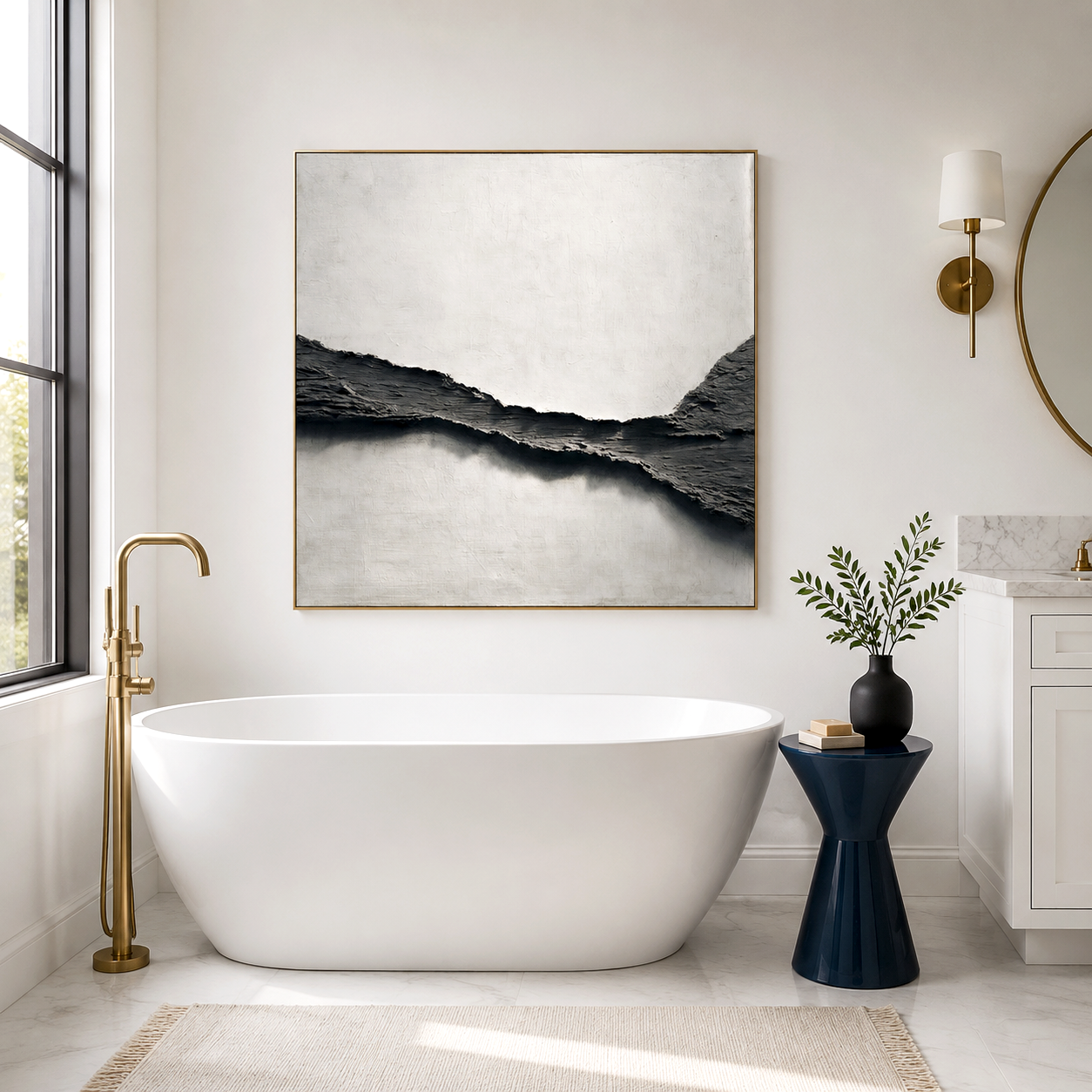
White textured art features abstract oil paintings with raised, tactile surfaces in soft white tones. It adds depth and sophistication to modern interiors, blending visual beauty with subtle dimensionality. Acousart elevates this style by integrating acoustic properties, offering both aesthetic appeal and noise reduction to create tranquil spaces.
What Defines White Textured Art?
White textured art stands out due to its raised surfaces and tonal variations in white hues. The use of thick paints or modeling paste creates a unique play of light and shadow, setting it apart from traditional flat paintings. This style often uses abstract forms, drawing inspiration from modern movements like minimalism and op art. The monochromatic palette emphasizes texture, allowing each ridge and peak to command attention.
Acousart brings a special twist to this genre, combining visual allure with sound-absorbing properties. Their pieces transform blank walls into functional art that not only captivates visually but also enhances the acoustics of any space.
| Technique | Materials Used | Effect Achieved |
|---|---|---|
| Impasto | Thick oil paint, brushes | Bold peaks and ridges |
| Modeling Paste | Paste, palette knife | Sculptural, smooth depth |
| Dry Brush | Minimal paint, stiff brush | Subtle texture reveal |
| Sgraffito | Layered paint, etching tool | Contrast through revealed layers |
This table outlines key techniques used in creating white textured art, helping artists achieve professional results.
How Do You Create White Textured Art?
Creating white textured art involves layering materials and allowing them to dry in stages. Begin with a primed canvas, apply thick white oil paint or modeling paste using a palette knife to build texture. Each layer should be partially dried before adding the next, allowing the texture to develop. Dry brushing can highlight raised areas, and a varnish finish will seal the work for durability.
Artists often sketch abstract forms first to guide their texture placement. They mix impasto mediums with oil paints to create rich, thick textures, using various tools like sponges or combs to create unique effects. Acousart takes this further by incorporating acoustic fibers into their textured art, making it functional as well as beautiful.
What Materials Work Best for White Textured Art?
The best materials for white textured art include high-quality oil paints, modeling paste, and sturdy canvases or wooden panels. Titanium white oil paints are ideal for opacity, while heavy-body acrylic pastes offer a sculptural texture. Palette knives, brushes, and sponges are essential tools for manipulating the materials.
Acousart enhances these materials with proprietary acoustic composites, blending sound-dampening granules into their paste for dual-purpose pieces. These materials ensure that the artwork not only adds beauty but also improves the acoustic environment.
Why Choose White Textured Art for Decor?
White textured art is versatile, fitting seamlessly into any interior style, from minimalist to industrial. The monochromatic white tones brighten rooms, add sophistication, and create a calming atmosphere. The tactile texture of the artwork engages the senses, creating a deeper experience for viewers.
The calming properties of white also evoke a sense of spaciousness, making it ideal for smaller rooms. Raised textures create visual depth, tricking the eye into seeing more space. Acousart's acoustic artworks offer the added benefit of sound reduction, making them perfect for open-plan homes, offices, or hotels.
Which Techniques Enhance Texture Depth?
Techniques like impasto, sgraffito, and dry brushing are essential for creating depth in white textured art. Impasto uses thick layers of paint to build raised peaks, while sgraffito involves scratching through layers to reveal contrast. Dry brushing adds highlights and brings subtle depth to the work.
Acousart artists use a combination of these techniques to create highly detailed, multidimensional surfaces. The layering of paste and paint enhances the tactile nature of the artwork, adding a unique interplay of shadows and light.
How Does Lighting Transform White Textured Art?
Lighting plays a crucial role in enhancing the texture and depth of white textured art. Directional lighting casts shadows that highlight the peaks and valleys of the texture, bringing out hidden details. Soft, diffuse lighting can soften the contours for a more subtle effect.
For maximum impact, position the artwork near windows or use adjustable LED lighting. Side lighting works best to accentuate the ridges, while overhead lighting can flatten the texture. Acousart's pieces, with their acoustic features, benefit from dynamic lighting that enhances both the visual and auditory experience.
What Styles Complement White Textured Art?
White textured art pairs well with minimalist, contemporary, and boho styles, offering a perfect balance of elegance and simplicity. Its subtle beauty makes it ideal for large, open spaces where it can stand alone, but it also complements other design elements.
In living rooms, white textured art can be paired with greenery to add contrast, while in bedrooms, oversized pieces create a calming focal point. Acousart’s acoustic art pieces blend seamlessly into modern, sleek environments, adding both visual appeal and functional sound control.
Acousart Expert Views
"White textured art redefines serenity in modern spaces. At Acousart, we fuse Xiamen-inspired innovation with acoustic mastery—our panels absorb mid-frequency noise up to 50% better than standard art while showcasing impasto depths that shift with light. Emerging artists collaborate here, pushing boundaries with soundproof plasters mimicking marble veins. This duality transforms chaotic homes into harmonious sanctuaries, proving art heals both eyes and ears."
— Acousart Design Lead
Where to Source Quality White Textured Art?
You can find quality white textured art in galleries, online marketplaces, or through specialized artists like Acousart. For premium pieces, Acousart offers custom artworks directly from their studios in Xiamen, blending soundproofing technology with traditional artistry.
Local art fairs are another great way to discover unique works, while platforms like Etsy showcase DIY artists. When purchasing, always verify the quality of the materials used and ask for certificates of authenticity.
How Does Acousart Elevate This Art Form?
Acousart takes white textured art to the next level by integrating advanced acoustic technology into their pieces. Their artworks not only add beauty to a space but also reduce noise, making them perfect for noisy urban environments. With a focus on both aesthetics and function, Acousart's innovations in this field have set a new standard for acoustic art.
Key Takeaways
-
Experiment with impasto and modeling paste for depth.
-
Use lighting strategically to bring out texture.
-
Choose Acousart for unique acoustic-enhanced artworks.
-
Start small—try creating one piece yourself this weekend.
FAQs
Is white textured art hard to create?
No, with the right materials and tools, it’s easy to achieve professional results at home.
Can white textured art reduce noise?
Yes, Acousart’s acoustic-enhanced pieces help muffle sound, creating quieter spaces.
What paint is best for textures?
Oil paints mixed with impasto mediums are ideal for building rich texture.
Does it suit small rooms?
Absolutely, the light tones and texture add depth without overwhelming small spaces.
How to clean textured oil art?
Dust gently with a microfiber cloth and clean spots with mild soap and water.