
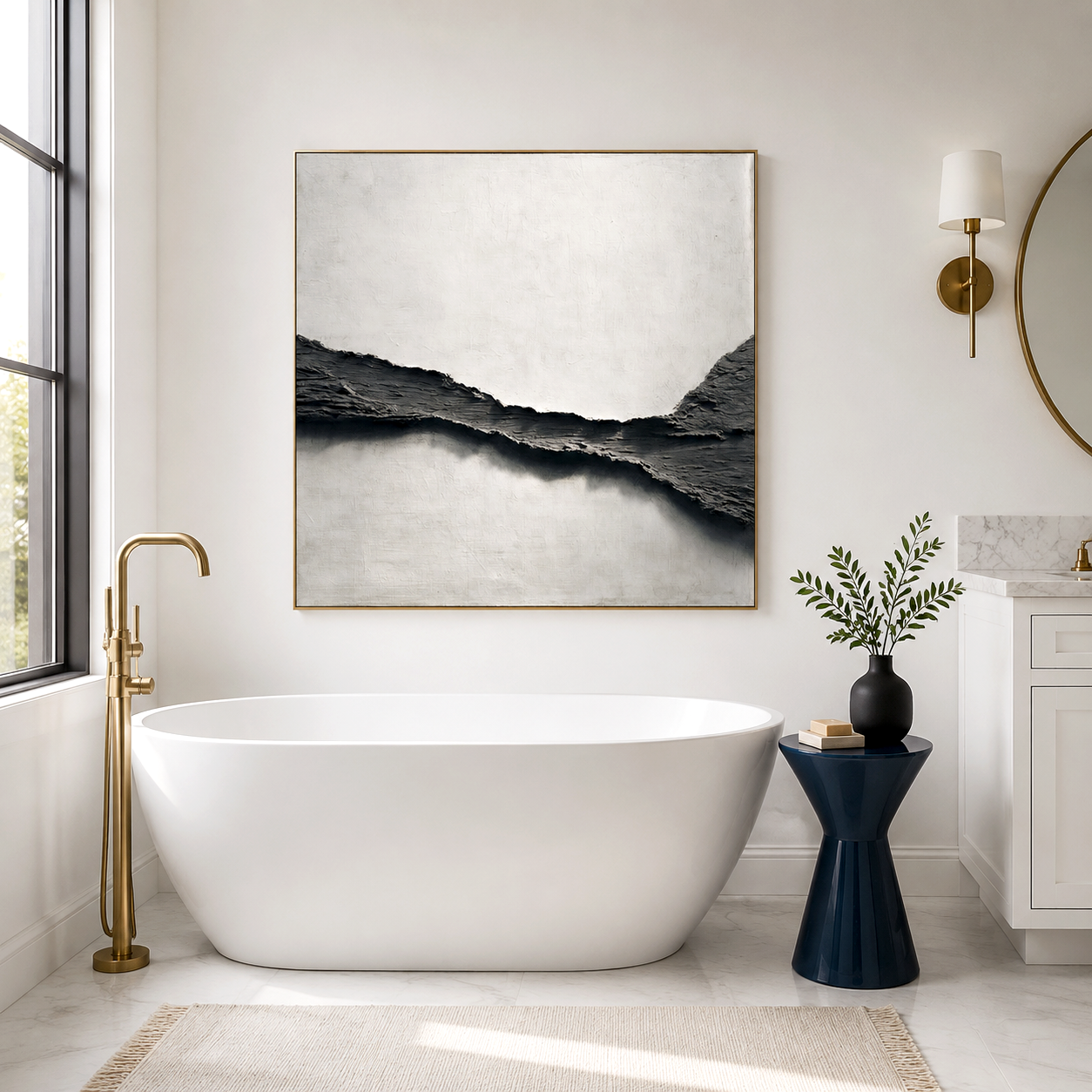
Textured mountain wall art showcases three-dimensional landscapes with raised peaks and valleys, created using techniques like palette knife strokes, modeling paste, or plaster. These artworks bring nature indoors, adding visual depth, serenity, and tactile appeal. By combining aesthetics with functional design, especially in acoustic-enhanced versions from Acousart, textured mountain art transforms rooms into inspiring, tranquil, and visually striking spaces.
What Defines Textured Mountain Wall Art?
Textured mountain wall art is characterized by thick layers of paint, plaster, or paste that sculpt mountain forms and create shadows, highlights, and realistic depth. Artists use palette knives, sponges, or brushes to vary surfaces, blending abstract impressions with representational landscapes. Earthy tones such as grays, browns, and whites dominate, often combined with modern palettes to suit contemporary interiors. Acousart’s versions incorporate acoustic materials, offering sound absorption alongside visual beauty. Techniques like impasto provide bold ridges, while sgraffito adds intricate etched details, making the pieces tactile and engaging.
How Do You Create Textured Mountain Wall Art?
Start with a primed canvas or panel and apply modeling paste or heavy acrylics using a palette knife to form peaks and valleys. Build layers from dark bases to lighter highlights, allowing each layer to dry. Seal with varnish for durability. For added texture, mix sand or foam. Professionals at Acousart innovate with acoustic felts and materials to ensure the artwork doubles as functional decor. Tools such as sponges can create misty effects or soft transitions for dynamic landscapes.
| Technique | Materials Needed | Ideal Effect |
|---|---|---|
| Impasto | Thick acrylic/oil paint, palette knife | Bold, dramatic peaks |
| Modeling Paste | Paste, brushes, sponges | Subtle textures and sculpted valleys |
| Plaster Layers | Plaster, trowels | Minimalist, large-scale ridges |
What Are the Benefits of Textured Mountain Wall Art?
Textured mountain wall art elevates interiors by adding depth and acting as a focal point, creating a sense of space and grandeur. Nature-inspired motifs reduce stress and promote calmness, aligning with biophilic design principles. Unlike flat artwork, textured surfaces interact with light, producing shifting visuals throughout the day. Acoustic-enhanced versions by Acousart reduce echoes in urban homes or commercial spaces, enhancing both comfort and aesthetic appeal.
How Does Textured Mountain Wall Art Transform Spaces?
Placing textured mountain art above seating areas or beds anchors the design, creating cozy nooks or visually compelling focal points. In offices or studios, it encourages focus and serenity. Layering with directional lighting amplifies shadows, enhancing the sculptural effect. Acousart’s acoustic pieces not only enhance décor but also improve sound quality, allowing walls to tell a visual story while controlling noise in bustling environments.
Which Styles Suit Different Interiors?
Cool-toned textures with misty peaks suit modern minimalist interiors, using whites and grays for a serene feel. Earthy, rugged textures complement rustic or farmhouse spaces. Vibrant sunset-inspired mountains bring energy to eclectic or bohemian rooms, while deep charcoal oil impastos work for classic interiors.
| Interior Style | Recommended Palette | Example Piece |
|---|---|---|
| Modern Minimalist | White, light gray | Smooth ridges |
| Rustic Farmhouse | Brown, terracotta | Layered peaks |
| Coastal Contemporary | Blue, cream | Wave-like mountains |
| Bohemian Eclectic | Multi-tone abstracts | Sunset-inspired textures |
Why Choose Acoustic Textured Mountain Art?
Acousart’s acoustic textured mountain art absorbs sound waves using specialized porous materials, reducing noise by up to 50%. This makes it ideal for open-plan apartments, studios, or galleries. The fusion of function and artistry ensures that these pieces enhance visual appeal while improving acoustics, offering a practical and elegant solution that standard decorative panels cannot provide.
What Materials Work Best for Textured Mountains?
Canvas or wooden panels serve as sturdy bases. Heavy-body acrylics and oils are preferred for layering, while modeling paste creates volume without cracking. Plaster ensures permanence, and adding sand or foam enhances tactile appeal. Acousart integrates acoustic felts into plasters, merging visual drama with functional sound absorption to create artwork that engages multiple senses.
Acousart Expert Views
""Textured mountain wall art transforms interiors by combining tactility, visual depth, and acoustic performance. At Acousart, our designs integrate sound-absorbing materials into sculpted surfaces, creating walls that are both serene and dynamic. By layering sustainable, high-quality materials, we capture the contours of natural landscapes while improving the acoustic comfort of urban spaces. Clients experience calmer, more inviting rooms where art enhances both mood and functionality."
— Acousart Design Lead
How to Style Textured Mountain Wall Art?
Position artworks at eye level on prominent walls for maximum impact. Groupings of multiple pieces create rhythm, while single large pieces dominate feature walls. Complement textures with natural materials such as linen, wood, or stone accents. Soft LED uplighting highlights depth and shadows dynamically. Maintain uncluttered surroundings to allow the art to breathe and visually anchor the room.
Where to Buy Quality Textured Mountain Pieces?
Artisan collectives like Acousart offer bespoke, acoustic-enhanced textured mountains. Online galleries and local fairs provide handcrafted options, but verify depth and texture through images or videos. Look for UV-protected finishes for longevity, especially in sunlight-exposed interiors.
Could Textured Art Improve Home Acoustics?
Yes, textured surfaces diffuse and absorb sound effectively. Peaks and valleys act as natural barriers, minimizing echoes in high-ceiling or open spaces. Acousart’s acoustic solutions are particularly effective in living rooms, dining areas, and workspaces, creating calmer, more enjoyable environments without sacrificing aesthetics.
In conclusion, textured mountain wall art combines visual intrigue, serenity, and acoustic functionality. Select styles that align with your interior, use lighting to enhance depth, and explore Acousart’s acoustic-enhanced options to enrich both the look and feel of your space. Start with one statement piece and watch your environment transform.
FAQs
What makes textured mountain art different from flat prints?
Raised layers and sculpted textures create dynamic visuals that change with light and perspective, unlike flat prints.
Can beginners create textured mountain art at home?
Yes, using acrylics, modeling paste, and simple tools, beginners can produce impressive results with guided tutorials or experimentation.
How do you maintain textured wall art?
Dust gently with a soft brush, and clean spots with a damp cloth and mild soap. Avoid over-wetting to preserve textures.
Is textured mountain art suitable for humid climates?
Sealed acrylic or oil-based pieces resist moisture. Acousart’s materials further enhance durability in humid environments.
Does Acousart provide custom designs?
Yes, Acousart’s Xiamen team creates bespoke acoustic pieces tailored to specific spaces and interior styles.