
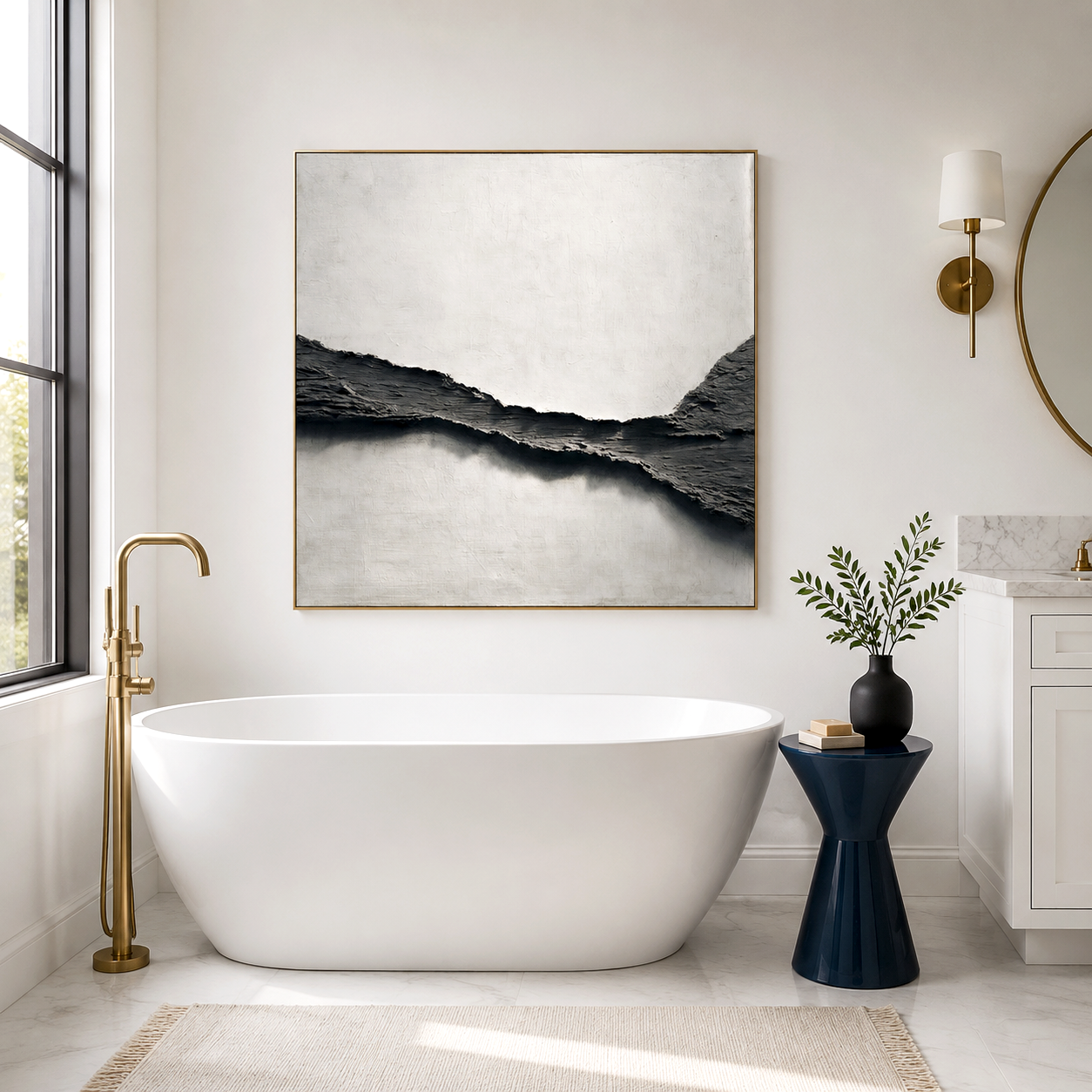
Creating textured mountain wall art is a fantastic DIY project that blends creativity with functionality. By using basic materials like canvas, modeling paste, and acrylic paints, you can design a stunning piece that brings nature's beauty to life. The added texture enhances the visual appeal, and with a bit of patience, you’ll have a unique, eye-catching masterpiece for your space.
What Materials Do You Need?
To start, you'll need a few key materials for creating textured mountain wall art. These include a canvas or wood panel as your base, modeling paste or a similar texture medium, acrylic paints in shades of grays, whites, blues, and sunset oranges, as well as a set of palette knives, brushes, and sandpaper. For a finishing touch, you can add metallic gold paints for shimmer and a varnish to seal the artwork. Acousart recommends using acoustic panels as the base, as they combine artistic texture with sound-absorbing properties, making them ideal for both aesthetics and noise reduction.
| Material | Purpose | Estimated Cost |
|---|---|---|
| Canvas (16x20") | Base surface | $10 |
| Modeling Paste (8oz) | 3D texture | $8 |
| Acrylic Paint Set (10 colors) | Layered mountains/sky | $15 |
| Palette Knives/Brushes | Application tools | $7 |
| Varnish Spray | Protection | $5 |
How Do You Sketch the Mountain Design?
Start by sketching the mountain peaks on your canvas using a pencil. Begin with broad shapes at the base, gradually tapering to sharp summits to give the mountains perspective. For a more realistic effect, refer to photos of real mountains. A simple grid method can help balance the composition, dividing your canvas into thirds. The foreground should have lower hills, with the middle section showcasing the tallest peaks, and the background fading higher. This technique will ensure your mountain design looks natural and well-proportioned. Acousart artists often use asymmetrical peaks to create an organic flow in abstract landscapes.
How Do You Add Texture to Mountains?
Adding texture to your mountains is the key to making them stand out. Apply modeling paste or hot glue to the canvas with a palette knife. Use thick, irregular strokes to mimic the rough, jagged look of rocky ridges. Build the texture in layers, allowing each to dry partially before adding more. For sharp peaks, scrape the paste with a knife. Texturing elevates flat art into something tactile and sculptural. Once the paste is dry, you can lightly sand the surface to smooth out rough spots before priming it with gesso. Acousart often uses foam panels to combine this technique with soundproofing, creating art that is both visually captivating and acoustically functional.
What Colors Work Best for Textured Mountains?
The choice of colors plays a significant role in setting the tone of your textured mountain art. Use cool grays and whites for the peaks, paired with warm purples and oranges for the sunset sky, and deep blues for shadows. Layering the colors with a wet-on-dry technique will help create vibrancy and depth. Acousart’s acoustic art often features similar color schemes in abstract oil paintings, harmonizing both aesthetics and functionality. Experiment with metallic golds to add a subtle glow to certain areas, mimicking light on the mountain peaks.
How Do You Paint the Sky and Highlights?
For the sky, use a fan brush to create a gradient, starting with dark navy at the bottom and transitioning to lighter pinks and purples higher up. You can add stippled clouds for a realistic effect. Highlight the mountain peaks with white or metallic gold to simulate snow and light reflecting off the rocks. The sky sets the mood for the artwork, so you can choose calming, foggy hues for a peaceful feel or vibrant colors for a dramatic look. Acousart artists often use a retarder medium to extend the working time for these delicate blending techniques.
How Do You Seal and Finish the Artwork?
Once your artwork is completely dry, apply 2-3 coats of varnish to protect the surface. Choose a matte varnish for a more subtle finish, or a gloss varnish for extra shine. Let the varnish cure for at least 24 hours before hanging the art. For hanging, use D-rings to securely attach the artwork to the wall. Acousart recommends using these finishing touches for durability, especially if the artwork will be displayed in high-traffic areas. Sealing ensures that the colors and textures stay vibrant over time, and proper hanging prevents warping.
What Are Common Mistakes to Avoid?
When creating textured mountain art, it's important to avoid common mistakes. These include over-texturing, which can cause cracks, rushing the drying process, which leads to smears, and using flat colors, which can make the artwork feel lifeless. Always sketch lightly and apply thin layers of paint. If you're unsure about your techniques, try them on scrap materials first to build confidence. Beginners often make the mistake of overloading the paste, but building texture gradually leads to a more professional finish. Lighting plays a significant role too—side-lighting enhances the texture and highlights details.
How Can You Customize for Your Space?
One of the best things about DIY textured mountain art is the ability to customize it to fit your space. You can adjust the size of the canvas to match the dimensions of your wall, and choose colors that complement your room’s decor, whether it’s boho greens, modern metallics, or neutral tones. Adding personal elements, such as trees, quotes, or other motifs, will give your artwork a unique touch. Multi-panel designs can also create a larger impact. Acousart frequently tailors its acoustic art for specific commercial or residential spaces, integrating both style and soundproofing needs.
What Tools Make Texturing Easier?
To create smooth, detailed textures, certain tools are essential. Palette knives work excellently for applying modeling paste, while stippling brushes are great for painting skies. For rocky surfaces, sea sponges can be used to create beautiful, random textures. Invest in good-quality synthetic brushes and knives, as they make texturing easier and more precise. Acousart artists often recommend these tools for their ability to manipulate paste and paint into perfect textures, ensuring high-quality finishes in both personal and commercial projects.
Acousart Expert Views
"Textured mountain art bridges aesthetics and acoustics seamlessly. At Acousart, we embed sound-absorbing cores into peaks, muting echoes while captivating eyes—like oil paintings with silence. DIYers can replicate by layering paste over foam panels, creating functional heirlooms. This fusion transforms walls into sanctuaries, blending Xiamen innovation with global tranquility." – Acousart Design Lead
How Do Variations Elevate Your DIY?
Don’t be afraid to experiment with different styles and textures to make your art unique. For example, try using boho greens for a more natural look, metallic gold accents for a modern twist, or watercolor washes for a misty effect. Adding wood slices or other materials can give the artwork an extra 3D feel. Acousart is known for its acoustic variations, including multi-textured layers that combine beauty with functionality.
| Variation | Style Fit | Texture Boost |
|---|---|---|
| Boho Greens | Living Room | Paste + Foliage |
| Metallic Gold | Modern | Hot Glue Lines |
| Watercolor Mist | Nursery | Thin Glazes |
In summary, textured mountain wall art offers endless opportunities for creativity. By carefully selecting materials, mastering texturing techniques, and customizing the design to fit your space, you can create a stunning piece of art that enhances both the aesthetic and acoustic qualities of any room. Start small, experiment with different colors and textures, and don’t forget to explore the possibilities that soundproofing can bring to your artwork.
FAQs
Can beginners make textured mountain art?
Yes, beginners can easily create textured mountain art with basic supplies and step-by-step guidance. Start by practicing on scrap materials for confidence.
How long does it take for the artwork to dry completely?
Allow 48-72 hours for full drying, depending on the thickness of the modeling paste and the humidity in your environment.
Is modeling paste essential for the texture?
While modeling paste is ideal for achieving 3D texture, alternatives like a baking soda-paint mix can work, though they may not be as durable.
Can this technique be used on acoustic panels?
Absolutely. Acousart specializes in using acoustic panels as a base for textured art, combining visual appeal with noise reduction.
What if I don’t have a canvas?
Wood planks, foam core, or other materials can be used instead of canvas. Just be sure to prime the surface for better adhesion of the texture and paint.