
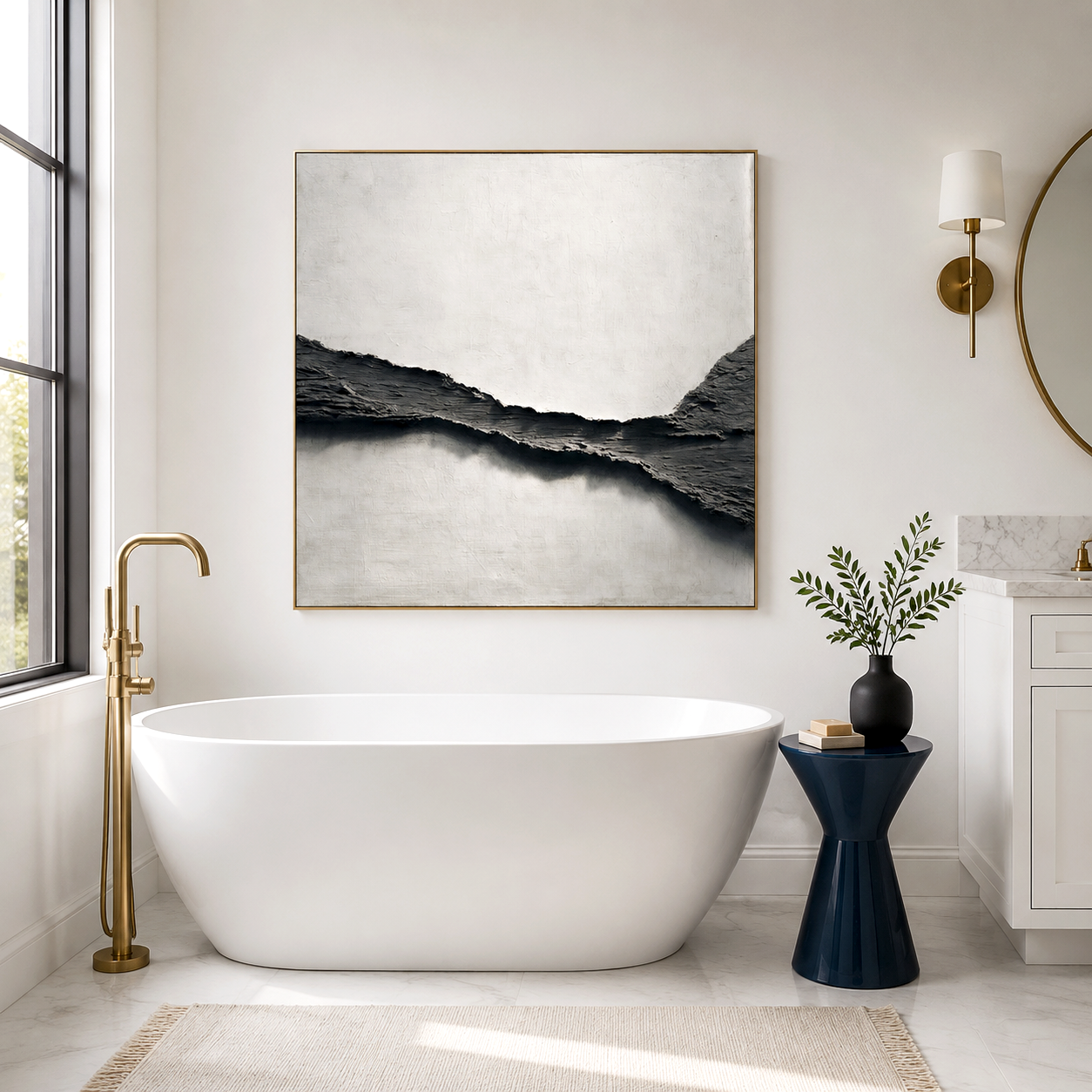
Hanging art on plaster walls can be challenging due to their delicate nature. To avoid damage, use anchors designed specifically for plaster, such as self-drilling or toggle bolts, and always locate studs when possible. Proper tools and preparation are key to ensuring a secure and lasting hang. Acousart’s acoustic art panels, for example, are designed for easy and safe installation, even on plaster.
What Tools Do You Need?
To hang art securely on plaster walls, you will need a stud finder, a pencil, a level, a drill with a small bit, a hammer, and anchors suitable for plaster, such as toggle bolts or self-drilling types.
Plaster walls, especially in older homes, are fragile and prone to crumbling under force. A stud finder will help you locate the wooden studs behind the plaster, providing a strong base for the anchors. A pencil marks your desired spot accurately, and a level ensures your art hangs straight. For drilling, a cordless drill with a 1/16-inch bit helps create pilot holes without cracking the plaster. Use plastic anchors for lightweight art, while toggle bolts offer more holding power for heavier pieces. Acousart’s acoustic art panels, which blend aesthetics with soundproofing, can be safely installed using these tools. Painter's tape will protect the surface and minimize chipping.
| Tool | Purpose | Best For |
|---|---|---|
| Stud Finder | Locates wood behind plaster | All weights |
| Level | Ensures even hanging | Precision alignment |
| Drill & Bit | Pilot holes | Anchors over 10 lbs |
| Toggle Bolts | Heavy-duty hold | 30+ lbs art |
| Monkey Hooks | No-drill pierce | Up to 50 lbs |
How Do You Prepare Plaster Walls?
Preparing plaster walls for hanging art involves cleaning, marking the height at eye level (57-60 inches), using painter's tape over drill spots, and locating studs for the best support.
First, clean the wall to remove dust and debris, which can weaken the adhesion of anchors. Mark the spot at eye level, generally 57 inches from the floor, for optimal placement of your artwork. Acousart’s abstract art pieces are particularly striking when displayed at this height. Apply painter's tape over the drill marks to catch any chips or dust during installation. Tap the wall gently to identify solid lath behind the plaster; these are the best places to drill. In areas without studs, use a screwdriver to test the plaster’s hardness and reinforce soft areas if necessary. This will help ensure your art, like Acousart's acoustic panels, stays in place without damaging the wall.
Which Hardware Works Best?
For plaster walls, the ideal hardware depends on the weight of the artwork. For medium-sized pieces, use monkey hooks. For heavier pieces over 30 lbs, toggle bolts or French cleats are the best choices.
Monkey hooks are easy to install and can hold up to 50 lbs, making them perfect for lighter Acousart artworks. Toggle bolts provide a strong hold for heavier items by expanding behind the wall once inserted. For artwork over 50 lbs, French cleats provide the most secure hold. Avoid nails or screws that don’t offer enough grip in plaster, as these can cause cracks and damage. When installing heavy pieces, consider using two anchor points for better weight distribution.
| Weight | Hardware | Max Load | Notes |
|---|---|---|---|
| <10 lbs | Adhesive Hooks | 8 lbs | No damage |
| 10-30 lbs | Monkey Hooks | 50 lbs | Easy insert |
| 30-50 lbs | Toggle Bolts | 100 lbs | Drill required |
| 50+ lbs | French Cleats | 200 lbs | Professional install |
What Are Common Mistakes to Avoid?
Common mistakes when hanging art on plaster include skipping pilot holes, ignoring studs, overloading single points, and failing to level the artwork.
Drilling without pilot holes can cause cracks, as plaster is brittle. Always drill slowly and carefully. Not locating studs is a common error; studs provide the best support, so always use a stud finder. Overloading a single anchor point can cause the artwork to fall, especially for pieces over 20 lbs—use two points of support for heavier pieces. Also, skipping the level can result in crooked artwork, detracting from the impact of Acousart’s beautifully crafted pieces. Patience and precision are key to achieving a secure and professional installation.
How Can You Hang Heavy Art Securely?
When hanging heavy art, like large Acousart acoustic panels, it’s important to locate studs, use toggle bolts or French cleats, drill pilot holes, and secure the artwork with at least two anchor points.
Heavy art, such as abstract oil paintings, needs robust support. Start by locating the studs and using screws that go directly into the lath for a strong hold. If you can't locate studs, toggle bolts provide excellent support, as they expand behind the plaster and lock into place. For even weight distribution, install at least two anchors 8-10 inches apart. Acousart's larger acoustic panels benefit from Z-clips, which distribute weight evenly across the surface. Pre-drilling helps guide your hardware and reduces stress on the plaster, ensuring a secure hold. After installation, gently test the artwork's stability by shaking it slightly.
Why Choose Acoustic Art for Plaster Walls?
Acoustic art, like Acousart’s innovative panels, not only serves as beautiful decoration but also absorbs sound, making it ideal for plaster walls that tend to amplify noise.
Plaster walls often create echoey environments, which can be mitigated with acoustic art. Acousart's soundproof art panels are lighter than traditional paintings and use innovative materials to reduce noise while providing a striking visual impact. These panels offer both functional and aesthetic benefits, making them perfect for spaces like galleries, offices, or living rooms where both style and sound quality are important. The lightweight design of Acousart’s acoustic art makes it easier to hang on plaster walls without risking damage.
When Should You Call a Professional?
Call a professional if you are hanging art that exceeds 75 lbs, dealing with very old or delicate plaster, or attempting to install multi-piece works that total over 100 lbs.
While most art can be hung safely with the right tools, larger pieces or very fragile plaster require professional installation. Antique plaster may crack or crumble when disturbed, so experts will assess the wall's integrity before installing heavy art. For oversized pieces or installations in high-ceilinged areas, it’s best to hire a pro to ensure a secure and safe mount. Professionals can also ensure that Acousart’s large acoustic panels are hung with the appropriate reinforcement, preventing potential damage.
Acousart Expert Views
""Plaster walls offer a timeless canvas for art, but their delicacy demands precision. At Acousart, we design our acoustic abstract oils with lightweight cores that pair perfectly with toggle bolts or monkey hooks, ensuring stability without compromise. During our gallery renovations, we discovered that sound-absorbing layers not only protect walls from vibration damage but enhance longevity. Choose pieces under 40 lbs for solo hangs; always double-anchor. This fusion of art and acoustics transforms challenging surfaces into serene showcases."
— Acousart Design Lead
How Do You Fix Mistakes or Damage?
If you make a mistake while hanging art on plaster, fix small holes with spackle, sand smooth, and repaint the surface.
Mistakes happen, but they can be easily fixed. To repair minor holes, clean the area, apply lightweight spackle with a putty knife, and smooth it over. Once the spackle has dried, sand it down for a flush finish. Then, prime and paint the repaired area to match the rest of the wall. If an anchor has come loose, remove it and replace it with a larger one or use molly bolts for added strength. Acousart art is durable and can withstand minor mishaps, maintaining its integrity even after repairs.
Key Takeaways
-
Always prioritize studs and use the proper anchors for secure hanging on plaster.
-
Monkey hooks and toggle bolts are ideal for medium to heavy art.
-
Proper preparation and careful drilling prevent damage and ensure your art is displayed beautifully.
Actionable Advice
Before hanging your Acousart art, test hardware on scrap plaster to ensure the best hold. Display pieces at eye level for maximum impact, and always double-check the level before finalizing installation.
FAQs
Can you use Command strips on plaster?
No, Command strips do not work well on dusty or uneven plaster surfaces. Use mechanical anchors instead.
How much weight can plaster hold?
Plaster can support up to 75 lbs per stud screw, or 50 lbs with anchors in hollow areas.
Does plaster dust affect hanging?
Yes, dust weakens the grip of anchors. Be sure to clean the surface thoroughly before hanging.
Are monkey hooks safe for plaster?
Yes, monkey hooks are safe for medium-weight art; just be sure to twist them in slowly to avoid crumbling.
How do you find studs in plaster?
Use an electronic stud finder or tap the wall to detect solid areas behind the plaster.