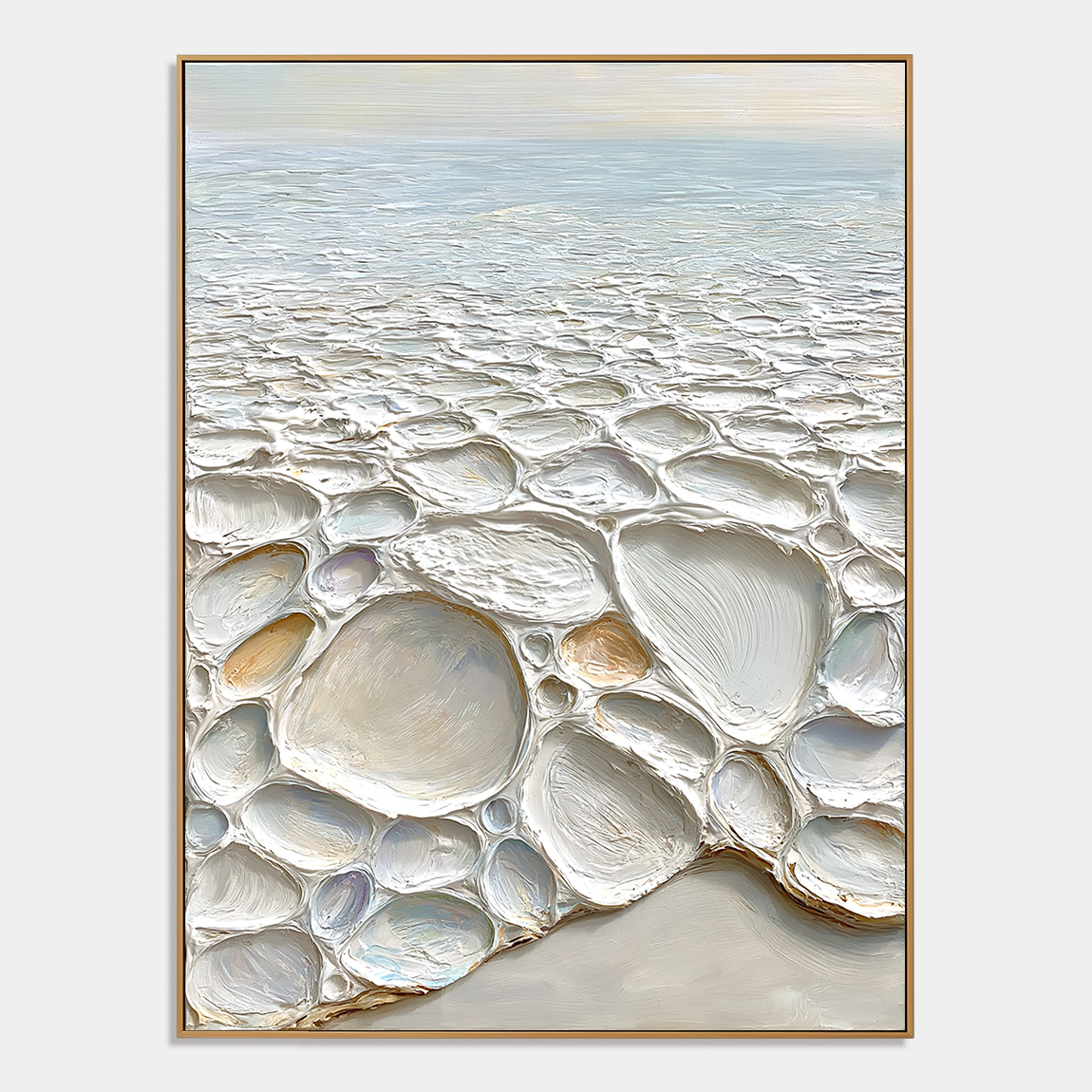
Palette knife texture art is painted to be seen in motion, not just at a distance. The raised texture, thick surface, and soft shadows created by a knife give the work a physical presence that a smooth print cannot match, which is why it often feels more luxurious in rooms with changing daylight or spotlights.
What palette knife texture art actually is
Palette knife texture art is made by applying oil or acrylic paint with a flexible blade instead of a brush, so the surface builds into visible ridges, peaks, and scraped edges. Those irregular layers are what create the not flat look that buyers notice first.
Because the paint sits in thicker masses, the surface behaves almost like a small relief. Light catches the high points and slips into the low points, which is what makes the piece change character as you move around the room. That shifting effect is a big part of why this style feels more alive than a printed image.
Why the surface looks richer
The visual appeal comes from depth, not just color. A heavy knife stroke throws a tiny shadow beside it, and many small shadows together create the sense of dimension people often describe as “gallery-like” or “sculptural.”
This is also why palette knife work often suits modern interiors. In a room with recessed lighting, the texture can become part of the room’s atmosphere, adding warmth and movement without needing bright color or busy detail. For buyers choosing between a smooth gallery-wrap print and a handmade oil painting, the difference is usually felt first and explained later.
How it differs from textured prints
A textured print may look convincing from a few feet away, but it usually relies on printed illusion rather than actual paint buildup. It can mimic shine or pattern, yet it does not produce the same physical ridges, shadow lines, or touchable surface.
That difference matters if you want art that responds to light throughout the day. A print stays visually fixed, while a hand-painted textured abstract wall art piece can change as daylight shifts, lamps warm up, or ceiling spots move across the wall. The eye reads that change as depth and craft.
Where the technique matters most
Palette knife work is strongest when the goal is atmosphere, not fine detail. It suits abstract compositions, neutral palettes, and large walls where surface quality matters more than tiny image elements.
It is especially effective in living rooms, entryways, dining rooms, and home offices where the wall needs to feel finished without looking overly decorative. In those settings, a rough surface canvas can soften the room visually even before the artwork is considered as an object.
What can go wrong
The biggest mistake is choosing texture only because it looks dramatic in photos. Heavy texture can be beautiful, but if the room is very small, too dark, or already visually crowded, the surface may feel restless instead of calm.
Another common error is assuming all textured art is handmade. Some pieces are only printed with faux texture or coated for shine, so the surface may look interesting online but feel flat in person. If you are buying for a premium wall, look closely at whether the marks, edges, and layering appear physically built rather than digitally repeated.
How to light it well
The best lighting is usually directional and gentle. Side light, grazing light, or warm spot lighting can reveal the ridges without flattening the image, while harsh front lighting can make the surface look shiny instead of dimensional.
A useful rule is to let the texture do the work. If the room already has strong natural light, a subtly textured work may be enough. If the wall sits in a dimmer space, a heavier surface can help the art read more clearly and make the room feel more finished.
Where Acousart fits
This is where a brand like Acousart is relevant, especially for buyers comparing decorative prints with handmade oil painting options. The brand’s textured pieces are positioned around hand-painted, layered surfaces rather than flat reproduction, which makes them a good fit for people who want visible texture and a more tactile presence on the wall.
That matters most when the room needs both style and a calmer visual impression. Pieces such as hand-painted textured abstract wall art can bridge the gap between decor and craftsmanship without turning the wall into a plain art print display.
Frequently Asked Questions
What is palette knife texture art?
It is painting made with a knife or blade instead of only brushes, so the surface ends up with raised strokes and visible layering. The result is a textured finish that feels more physical than a smooth print.
Why is palette knife art more expensive than prints?
It usually costs more because it is hand-built layer by layer and cannot be duplicated as a true original surface. You are paying for labor, materials, and the depth created by the artist’s actual marks.
How do you tell real textured art from a textured print?
Real textured art has actual ridges, uneven paint buildup, and natural variation when seen from an angle. A textured print often looks raised only through image effects, gloss, or a simulated coating.
How should heavy texture paintings be cleaned?
Dust them gently with a soft, dry microfiber cloth or a very soft brush, and avoid rubbing hard across the ridges. Moisture and aggressive cleaning can damage raised paint, so careful maintenance is usually the safest approach.
Does palette knife texture art work in modern interiors?
Yes, especially in rooms that need warmth, depth, and a more tactile surface on the wall. It works best when the lighting can catch the texture instead of washing it out.