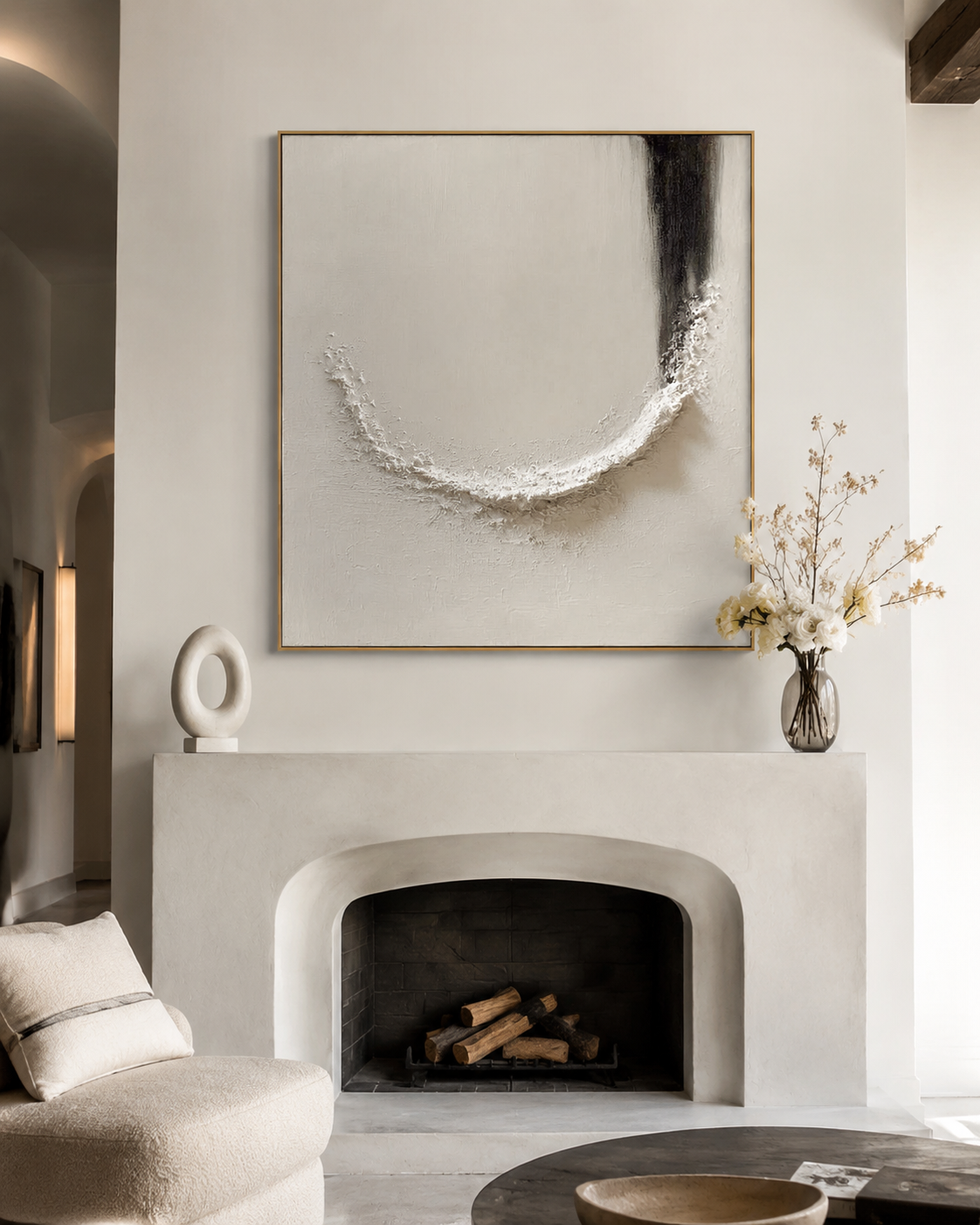
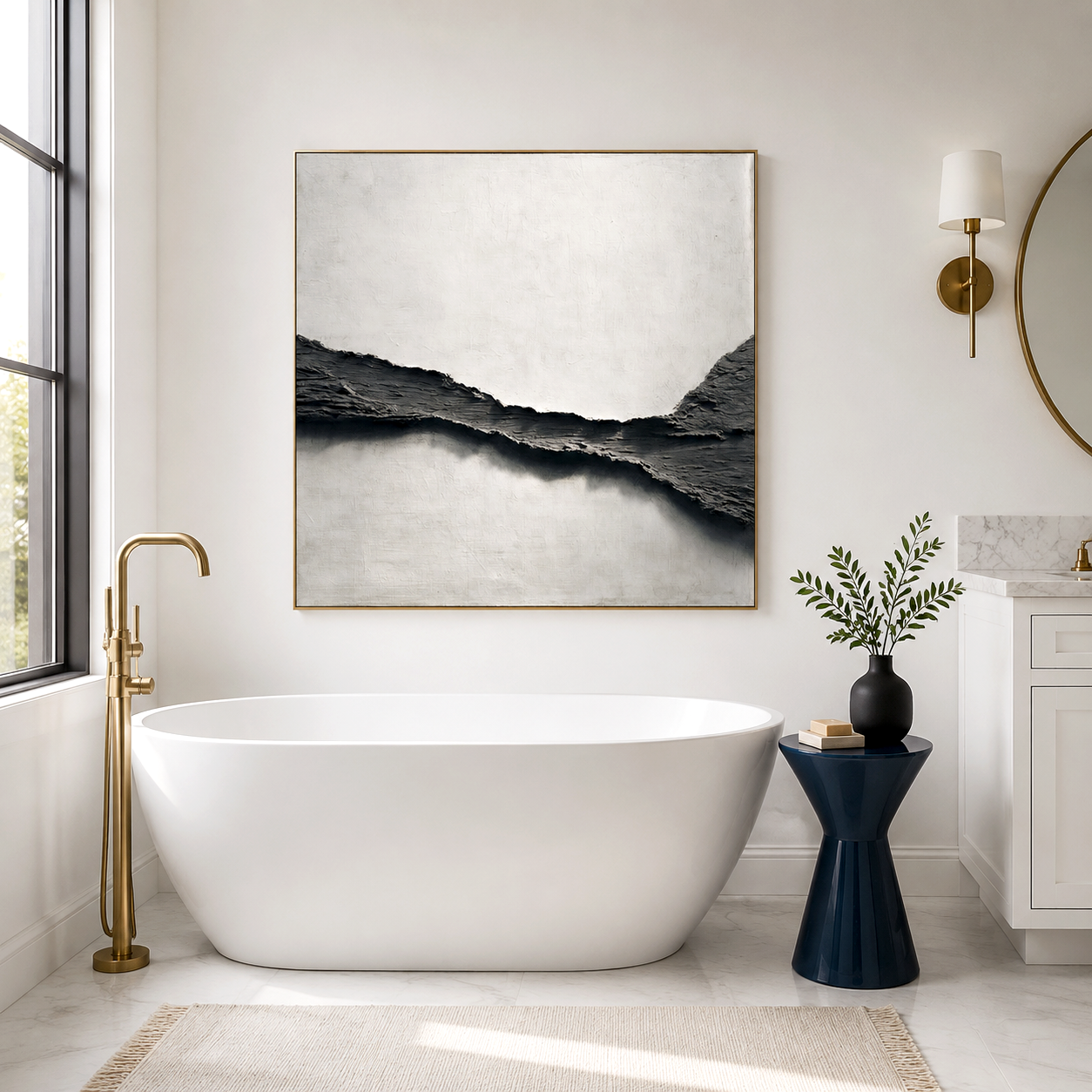
A sleek modern room often looks composed on paper—clean lines, polished surfaces, restrained color—but can feel visually cold once you live in it. Clay-style wall art answers that tension by introducing something modern spaces usually lack: irregularity. With matte, hand-worked surfaces and subtle tonal variation, this kind of piece breaks the perfection of glass, metal, and stone, making the room feel more grounded and human without undoing its simplicity.
What defines clay-style and plaster wall art visually
Clay-style wall art is less about imagery and more about surface. Instead of detailed scenes or bold graphics, the focus sits in the material effect—soft ridges, uneven planes, and muted, earthy tones that shift with light.
You will usually notice three defining qualities:
-
A tactile, hand-shaped look, even when mounted on canvas or panel
-
A matte finish that absorbs light rather than reflecting it
-
A restrained palette—chalky whites, sand, clay, taupe, and weathered neutrals
This combination creates what many designers describe as “quiet depth.” The piece does not compete with the room; it slows it down.
Why primitive textures work so well in modern spaces
Modern interiors tend to rely on precision—straight edges, smooth finishes, and consistent materials. That clarity is part of their appeal, but when every surface behaves the same way, the room can feel flat.
Clay-style wall art introduces controlled imperfection. The uneven texture catches light differently throughout the day, creating subtle shadows that shift as you move through the space. This gives even a monochrome room a sense of movement.
In design terms, this is a contrast strategy. You are pairing:
-
Hard with soft
-
Smooth with textured
-
Precise with organic
That contrast is what makes the artwork feel intentional rather than decorative filler.
How to integrate clay-style wall art without disrupting minimalism
Minimalist interiors are often misunderstood as empty. In reality, they are carefully edited. Adding textured, earthy artwork works best when you treat it as a focal anchor rather than an accessory.
Start by considering visual weight. A single large plaster-style piece above a sofa or console can replace the need for multiple smaller decorations. Its texture does the work that color or pattern would normally do.
Lighting plays a major role here. Soft, angled lighting—like a nearby floor lamp or wall washer—will emphasize the surface texture and bring out its dimensional quality. Overhead lighting alone tends to flatten the effect.
Spacing matters just as much. Give the piece room to breathe. When surrounded by too many objects, the subtle texture loses its presence.
Placement that creates real impact
Certain areas of the home naturally benefit from the grounded feel of clay-style wall art because they act as visual transition zones.
Entryways are a strong starting point. A textured piece above a console table immediately sets a tone that feels calm and intentional rather than purely functional.
Living rooms, especially those with low-profile furniture, benefit from a larger horizontal piece that echoes the scale of the seating without overpowering it.
Bedrooms are another natural fit. Above the bed, clay-style art can replace traditional framed prints, creating a softer, more restful backdrop.
In open-plan spaces, these pieces can also act as subtle visual anchors, helping define zones without adding physical dividers.
Balancing rough texture with clean architectural lines
The goal is not to make a room feel rustic. The strength of clay-style wall art lies in how it coexists with modern architecture.
Pair it with:
-
Low, structured furniture in neutral upholstery
-
Natural materials like linen, wood, or stone
-
Simple silhouettes without ornate detailing
Avoid pairing it with overly busy patterns or high-gloss finishes in the immediate vicinity, as those compete with the artwork’s understated texture.
A helpful mental model is this: let the walls carry the texture, and let the furniture carry the structure.
Where plaster wall art fits in your design choices
If you are drawn to this aesthetic, curated collections like Explore our Plaster Wall Art collection provide a range of tonal and textural variations that align with modern organic design. Some pieces lean more sculptural, while others stay closer to flat, tonal compositions.
This flexibility makes it easier to match the artwork to your space rather than forcing the room to adapt to the art.
Clay-style pieces tend to work best for homeowners who want a quieter statement—something that adds presence without introducing strong color or narrative imagery.
Common mistakes that flatten the effect
A frequent misstep is treating clay-style wall art like a standard print—hanging it in tight gallery walls, placing it under harsh direct lighting, or surrounding it with competing textures. The result is a piece that looks unexpectedly dull rather than dimensional.
Another common issue is scale. Small pieces often fail to deliver the tactile impact that defines this style. If the texture cannot be read from a natural viewing distance, the effect is lost.
Finally, placing these works on already textured walls (like heavy brick or patterned wallpaper) can dilute their presence. They perform best against clean, neutral backdrops.
Does it work beyond the living room
Clay-style wall art is not limited to one type of space. In dining areas, it adds warmth without distracting from the table setting. In home offices, it softens the sharpness of screens and hard surfaces. Even in hallways, it can turn transitional space into something more intentional.
The key is consistency. If you introduce this texture in one part of an open-plan home, echoing it subtly elsewhere helps the space feel cohesive rather than segmented.
Finding the right piece for your space
Choosing the right clay-style artwork is less about matching colors and more about matching atmosphere. Look at the existing materials in your room—floors, furniture, finishes—and ask whether the space needs contrast or continuity.
If your interior already includes natural materials, a lighter, more minimal plaster piece can maintain harmony. If the room is dominated by sleek finishes, a deeper, more textured piece can introduce the contrast it lacks.
When browsing broader options, View all decorative painting options to compare styles beyond plaster and understand how different textures influence the same space.
Frequently Asked Questions
Is clay-style wall art difficult to maintain?
No, it is generally low-maintenance. Most pieces only require occasional light dusting with a dry cloth. Avoid moisture or abrasive cleaning, as the surface texture is part of the design.
Does plaster-style art work well with minimalist interior design?
Yes, it often works exceptionally well. Its restrained color and subtle texture align with minimalist principles while preventing the space from feeling too stark or clinical.