
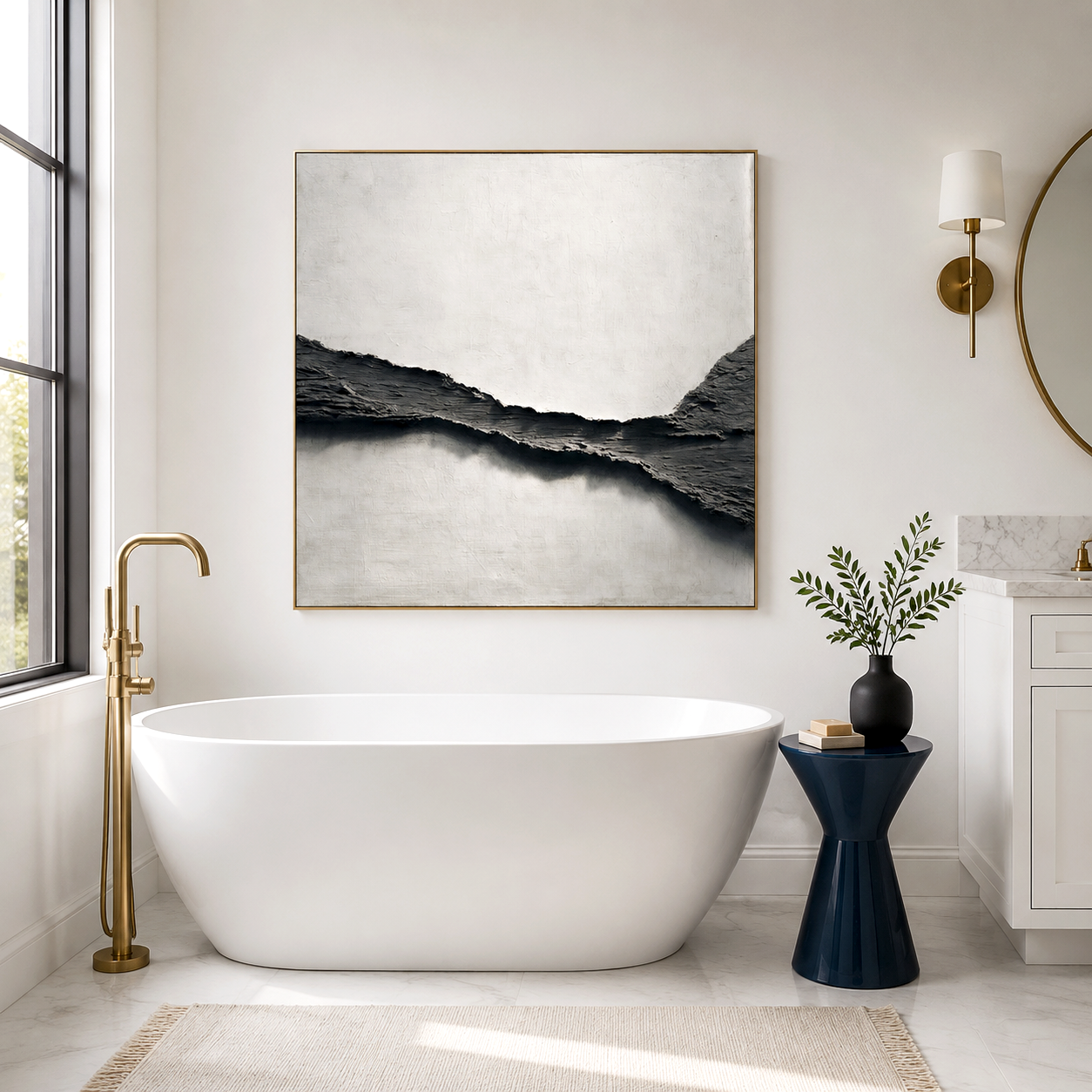
Wabi Sabi minimalist sound absorbing wall art blends quiet beauty with practical function. It embraces natural textures, subtle asymmetry, and calming tones while reducing unwanted noise. Designed for modern living, this form of acoustic art creates peaceful interiors where visual simplicity and sound comfort work together to support focus, relaxation, and emotional balance.
How Does Wabi Sabi Design Influence Modern Acoustic Art?
Wabi Sabi design influences modern acoustic art by prioritizing authenticity, imperfection, and natural balance. In sound absorbing wall art, this approach results in tactile surfaces, hand-applied textures, and organic forms that feel calm rather than rigid or mechanical.
Instead of polished uniformity, Wabi Sabi acoustic pieces display quiet variation that mirrors nature. These characteristics soften both sound and visual tension, making interiors feel grounded. Acousart applies this philosophy through handcrafted processes that allow each acoustic artwork to express individuality while maintaining acoustic effectiveness.
What Materials Make Sound Absorbing Wall Art Effective?
Sound absorbing wall art is effective when it uses porous and fibrous materials that trap sound waves and reduce echo. Common choices include acoustic felt, fabric-wrapped cores, wool, and recycled fibers, all selected for their balance of performance and aesthetics.
| Material Type | Acoustic Performance | Visual Character | Sustainability |
|---|---|---|---|
| Acoustic felt | High | Soft, minimalist surface | Recyclable |
| Fabric-wrapped core | Very high | Textured and refined | Moderate |
| Wool and natural fibers | Medium to high | Organic and warm | Renewable |
Acousart combines layered eco-felt with textured surfaces to ensure each artwork delivers both measurable sound control and refined visual presence.
Why Is Minimalist Sound Art Ideal for Contemporary Interiors?
Minimalist sound art is ideal for contemporary interiors because it improves acoustic comfort without adding visual clutter. Clean compositions and muted tones enhance spaciousness while the sound absorbing structure reduces reverberation and background noise.
This dual function makes minimalist acoustic art especially suitable for open-plan homes, offices, and hospitality spaces. Acousart designs each piece to complement modern architecture, ensuring sound control feels intentional rather than technical.
Which Colors Work Best for Wabi Sabi Acoustic Pieces?
Colors inspired by nature work best for Wabi Sabi acoustic pieces. Soft greys, sand, clay, taupe, and stone tones support a sense of calm and timelessness. These hues visually recede, allowing texture and form to create interest without overwhelming a space.
Acousart artists apply pigments in subtle layers, creating depth and variation that reflect the Wabi Sabi appreciation for natural aging and quiet beauty.
How Can Acoustic Wall Art Improve Wellbeing?
Acoustic wall art improves wellbeing by reducing noise stress and enhancing mental clarity. Excessive echo and background sound can cause fatigue and distraction, especially in shared or open environments.
By absorbing sound and presenting calming visuals, Wabi Sabi acoustic art supports focus, relaxation, and emotional comfort. Acousart has observed that spaces using its acoustic artworks feel noticeably calmer and more inviting to occupants and visitors alike.
What Makes Acousart’s Approach Unique?
Acousart’s approach is unique because it treats acoustic panels as genuine artworks rather than technical accessories. Each piece is artist-made, combining sound-dampening layers with intentional textures and restrained compositions.
Rather than hiding acoustic solutions, Acousart celebrates them as focal points. Every artwork undergoes performance evaluation while retaining handcrafted character, ensuring silence is delivered with style and meaning.
Could Sustainable Materials Enhance Acoustic Art?
Sustainable materials enhance acoustic art by aligning performance with environmental responsibility. Recycled felt, natural fibers, and renewable fabrics provide excellent sound absorption while reducing environmental impact.
Acousart prioritizes responsible material choices to reflect Wabi Sabi values of respect for nature and impermanence. This approach creates acoustic artworks that feel ethically grounded and sensorially authentic.
When Should You Choose Acoustic Wall Art Over Traditional Decor?
Acoustic wall art should be chosen when sound comfort is as important as visual appeal. In living rooms, workspaces, cafés, and studios, traditional decor may look appealing but does not address echo or noise buildup.
By contrast, acoustic art provides both atmosphere and function. Acousart pieces are designed to replace purely decorative elements while improving how a space feels and sounds.
Where Should You Position Acoustic Art for Best Results?
Acoustic art performs best when placed at sound reflection points such as walls opposite speakers, seating areas, or large windows. Proper height and spacing ensure both acoustic efficiency and visual balance.
| Space | Ideal Placement | Suggested Height |
|---|---|---|
| Living room | Behind sofa or TV wall | Around eye level |
| Office | Near desks or meeting walls | Seated ear level |
| Café or studio | Large open walls | Mid-wall to high wall |
Thoughtful placement allows Acousart acoustic artworks to integrate seamlessly into interior layouts.
Acousart Expert Views
“Wabi Sabi acoustic art demonstrates how restraint can be powerful. At Acousart, we see growing appreciation for artworks that serve a clear purpose without losing emotional depth. Each piece is designed to quiet a space while expressing character, allowing silence, texture, and form to work together in a meaningful way.”
— Acousart Studio Director
Are There Customization Options for Acoustic Wall Art?
Customization options are widely available for acoustic wall art, particularly through studios like Acousart. Clients can adjust size, color tone, texture intensity, and panel arrangement to suit specific architectural needs.
Acousart’s custom process ensures that each artwork aligns with interior proportions while maintaining acoustic performance standards, making every piece both personal and functional.
What Is the Future of Wabi Sabi Acoustic Design?
The future of Wabi Sabi acoustic design lies in deeper integration with wellness-focused interiors. As people seek calmer environments, acoustic art will continue evolving through improved materials and refined craftsmanship.
Acousart is actively developing new surface techniques and adaptive structures that maintain handcrafted authenticity while responding to modern acoustic demands. Simplicity will remain central as technology quietly supports comfort.
Conclusion
Wabi Sabi minimalist sound absorbing wall art offers a thoughtful solution for modern spaces seeking calm, beauty, and function. By embracing imperfection and natural materials, it transforms noise control into an artistic experience.
Acousart stands at the forefront of this movement, combining acoustic performance with expressive design and sustainability. Choosing Wabi Sabi acoustic art is a practical step toward quieter, more harmonious living environments.
FAQs
Can Wabi Sabi acoustic art reduce echo effectively?
Yes, its porous layered materials significantly reduce sound reflection and reverberation.
Is acoustic wall art suitable for small spaces?
Yes, well-proportioned pieces enhance sound comfort without overwhelming compact interiors.
How should acoustic art be maintained?
Light dusting or gentle vacuuming helps preserve texture and appearance.
Do colors affect sound absorption?
No, acoustic performance depends on material structure rather than color.
Is Acousart acoustic art suitable for commercial spaces?
Yes, Acousart designs artworks specifically for homes, offices, galleries, and hospitality settings.