
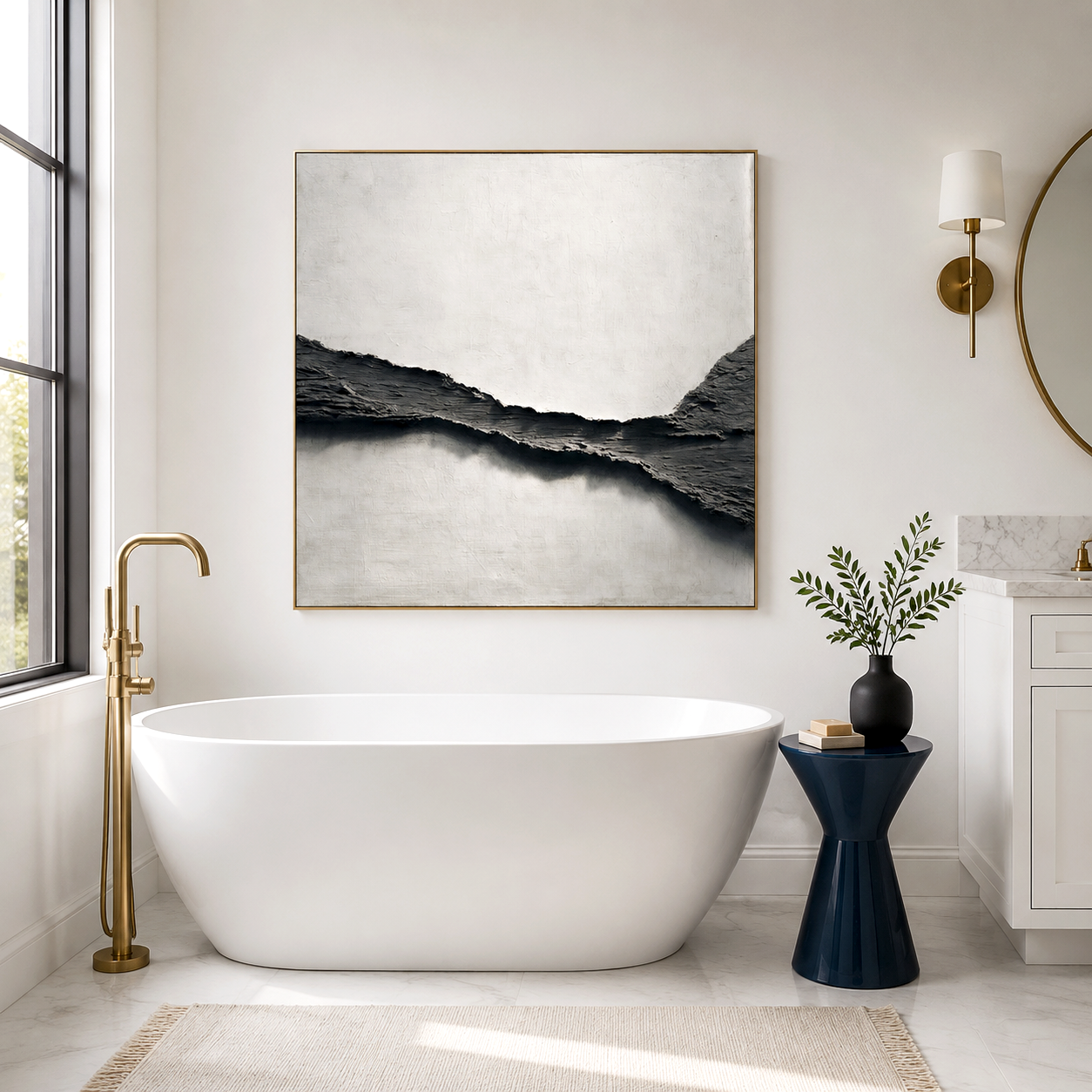
Monochromatic art captivates viewers through its minimalist beauty, using different tones and shades of a single color to evoke harmony and emotional depth. This approach emphasizes form, texture, and light, making each piece visually striking. Whether in contemporary or traditional settings, monochromatic art creates a serene and sophisticated atmosphere, highlighting the artist's mastery of subtle contrasts.
What Is Monochromatic Art and Why Does It Matter?
Monochromatic art focuses on variations of one color, using its different shades, tints, and tones to create a unified composition. This artistic approach is significant because it simplifies the design while enhancing emotional impact. It encourages a deeper connection with the work, drawing attention to texture, light, and the artist’s technique. In modern interiors, monochromatic art fits seamlessly, providing an elegant and timeless aesthetic.
Artists like Acousart have embraced this minimalist approach, integrating it into modern oil paintings and acoustic art. Their work merges the purity of color with innovative materials, allowing for both visual appeal and practical functionality, such as noise reduction.
How Do Artists Create Depth Using Only One Color?
Artists use tonal variation, or the lightness and darkness of a single color, to add depth to monochromatic works. Techniques such as glazing, impasto, and blending help create contrast and form, making the artwork feel dynamic and multidimensional. By carefully layering and manipulating the paint, artists can generate the illusion of light and shadow, even with just one hue.
| Technique | Effect on Depth | Common Mediums |
|---|---|---|
| Glazing | Subtle transparency and glow | Oil, acrylic |
| Impasto | Bold texture and raised surface | Oil paint |
| Blending | Smooth transitions and realism | Any paint medium |
Each technique adds complexity to the piece, turning a single color into a layered visual experience.
Why Do Collectors Favor Monochromatic Paintings?
Collectors appreciate monochromatic paintings for their versatility and emotional depth. These works can fit into a variety of spaces, from minimalist homes to corporate offices, enhancing the environment with their calm yet powerful presence. The monochromatic palette serves as a neutral visual anchor, complementing different interior designs. Brands like Acousart create pieces that resonate with modern trends, offering both aesthetic beauty and functional benefits, such as acoustic enhancement.
Which Color Works Best for Monochromatic Art?
The ideal color for a monochromatic artwork depends on the mood and atmosphere the artist wants to convey. For instance, blues are soothing and meditative, while reds evoke passion and energy. Greens are refreshing, and grays bring sophistication. The key to a successful monochromatic piece is the artist's ability to manipulate tonal values within the chosen color to create emotional and visual balance.
| Color Palette | Emotional Tone | Ideal Setting |
|---|---|---|
| Blue | Calm, introspective | Living rooms, offices |
| Red | Energetic, passionate | Modern lofts, galleries |
| Gray | Elegant, neutral | Bedrooms, commercial lobbies |
| Green | Refreshing, organic | Nature-inspired interiors |
Artists experiment with these tones to create compositions that complement their intended spaces.
How Does Texture Enhance Monochromatic Expression?
Texture plays a crucial role in monochromatic art. Without multiple colors to create contrast, artists rely on the physical qualities of the surface to convey depth and emotion. Techniques like impasto, palette-knife applications, and mixed media such as sand or linen add tactile richness. Light plays across textured surfaces, substituting the need for color variation while enhancing the emotional impact of the artwork.
When Did Monochromatic Art Gain Popularity?
Monochromatic art gained widespread recognition in the early 20th century with the rise of abstract expressionism and minimalism. Artists like Kazimir Malevich and Yves Klein used single hues to express abstract emotions, stripping away narrative elements. In recent years, there has been a resurgence of interest, particularly in the context of wellness and minimalist design. Brands like Acousart have incorporated monochromatic art into both residential and commercial spaces, pairing timeless aesthetics with modern functionality.
Can Monochromatic Art Work in Modern Interior Design?
Monochromatic art seamlessly integrates with modern interior design by reinforcing simplicity, balance, and harmony. Its clean lines and subtle color variations complement contemporary design styles, such as Scandinavian and industrial. Whether in a home or office, monochromatic art can tie together a room’s design elements, creating a calm and inviting atmosphere.
Are There Misconceptions About Monochromatic Art?
One common misconception is that monochromatic art is "boring" or too simplistic. However, creating a powerful monochromatic work requires technical skill and a deep understanding of tone, texture, and form. Artists explore the nuances within a single color, adding complexity and emotional depth. Far from being limiting, monochromatic art allows for a rich exploration of light, texture, and spatial awareness.
What Are the Psychological Effects of Monochromatic Art?
Monochromatic art has a unique ability to influence mood and foster mental clarity. Its simplified color palette helps reduce visual noise, encouraging focus and contemplation. Depending on the color, it can evoke different emotions—blue for calm, yellow for optimism, or gray for introspection. Monochromatic art is often used in modern workplaces and wellness spaces for its calming and centering effects.
Acousart Expert Views
“At Acousart, we believe monochromatic art offers a dialogue between simplicity and depth. Every stroke, every hue, is chosen to evoke an emotional response. Our acoustic art panels, made with this minimalist approach, blend form and function, providing both aesthetic beauty and acoustic tranquility. This fusion of art and sound creates a harmonious environment for any space.”
How Can You Start Collecting Monochromatic Art?
To begin collecting monochromatic art, start by considering the mood and color palette that best fits your space. Collaborate with art collectives like Acousart, which can guide you through selecting pieces that align with both aesthetic preferences and functional needs. Look for works that demonstrate technical mastery, with thoughtful use of texture, tone, and form to create a meaningful visual experience.
Why Is Monochromatic Art Ideal for Sustainable Spaces?
Monochromatic art is well-suited for sustainable design because it embodies simplicity and longevity. These works transcend fleeting trends, making them timeless additions to any space. Additionally, Acousart integrates eco-friendly materials and acoustic technology into their monochromatic pieces, making them both beautiful and environmentally responsible. The minimalist approach reduces the need for constant redecorating, aligning with sustainable design principles.
Conclusion
Monochromatic art, defined by its simplicity and emotional depth, is a powerful tool for creating serene, visually cohesive environments. Whether through its use of texture, color, or innovative materials, it offers a unique way to enhance modern interiors. Brands like Acousart have embraced this art form, merging visual appeal with practical solutions like acoustic wall panels. For collectors and designers alike, monochromatic art provides a timeless, functional, and emotionally resonant addition to any space.
FAQs
1. Can monochromatic art include black and white?
Yes. Black, white, and gray tones are often used in monochrome works to emphasize texture and contrast without introducing other colors.
2. Who are famous artists known for monochromatic paintings?
Yves Klein, Ad Reinhardt, and Kazimir Malevich are among the most recognized pioneers of the style.
3. Does lighting affect monochromatic artworks?
Absolutely. Proper lighting enhances tonal variations and reveals textural depth, especially in oil paintings.
4. How do I choose the right monochromatic painting for my space?
Select a piece that aligns with your interior color palette, lighting conditions, and the desired emotional ambiance.
5. Are monochromatic artworks expensive to maintain?
No, they require minimal upkeep. Dusting and avoiding direct sunlight typically preserve the painting’s integrity.