
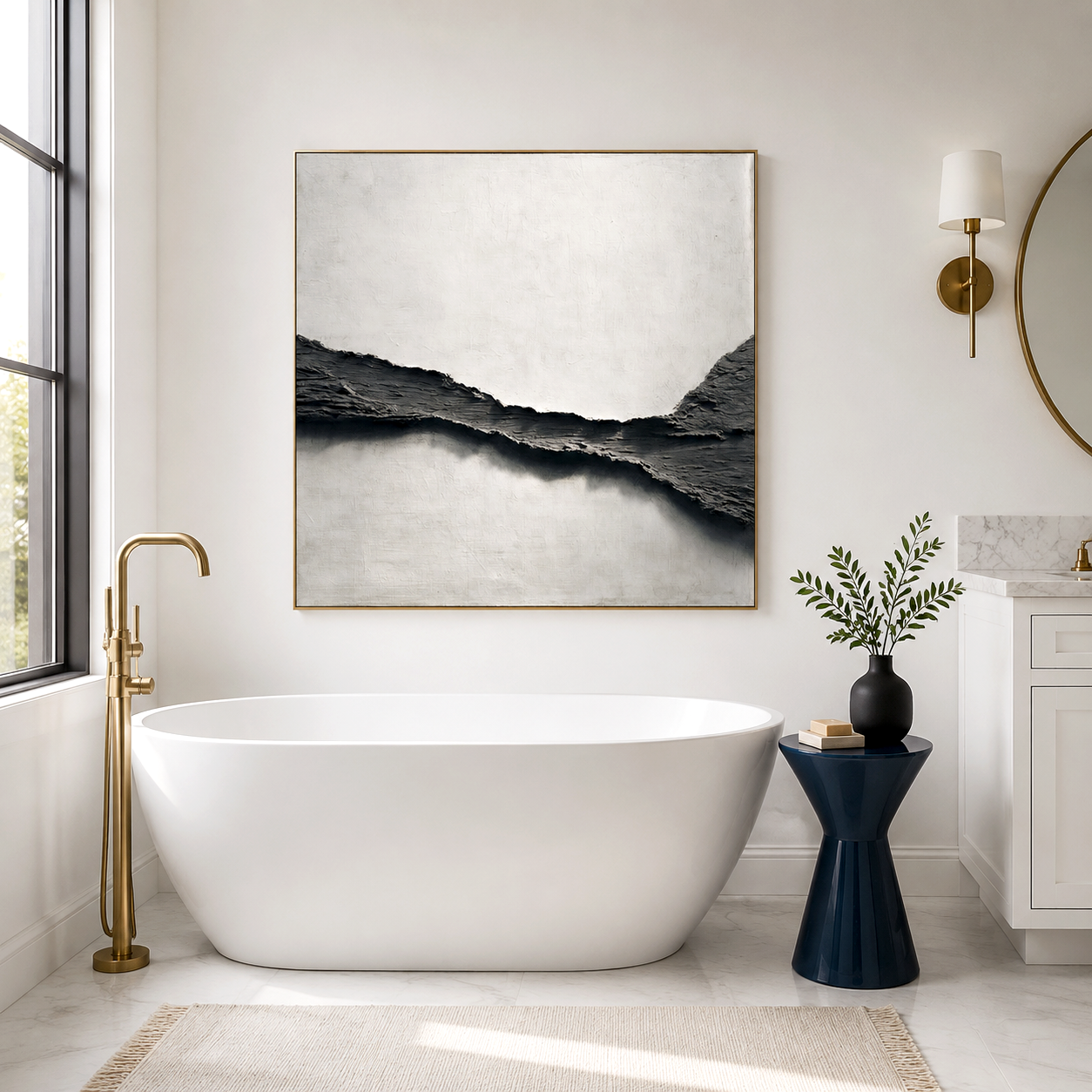
Modern textured art stands out by combining tactile surfaces with emotional depth. Layers of paint, mixed media, and bold techniques create movement and light effects that evoke energy and stillness. This style infuses modern interiors with personality, sophistication, and sensory richness that flat paintings cannot replicate, offering a unique blend of beauty and function.
How Has Modern Textured Art Evolved Over Time?
Modern textured art has its roots in 20th-century abstract expressionism. Artists sought to move beyond flat surfaces, using texture as a tool for emotional expression rather than decoration. Today, textures are created using traditional oils, acrylics, and even digital media, adding multi-sensory depth that suits modern design sensibilities.
The shift in texture-driven artwork reflects a cultural move toward personalization and engagement with sensory experiences, blending craftsmanship with innovation. Artists now incorporate materials like impasto gels and sand to mimic landscapes or architectural elements, creating work that is not just visually striking but physically interactive.
Why Is Texture Important in Contemporary Painting?
Texture adds depth, emotion, and realism to contemporary art. It enhances the interaction between light and shadow, invites touch, and forms a deeper connection with viewers. Through texture, art becomes more than just an image on a wall—it becomes a part of the environment, altering its tone and atmosphere.
In interior design, textured art provides a balance to sleek, modern spaces. Its dynamic surface catches the light differently, changing the way the piece is perceived at various times of the day, transforming any room into a sensory experience.
| Textural Effect | Visual Impact | Common Material |
|---|---|---|
| Impasto Layers | Depth and movement | Oil or acrylic |
| Sand or Gel Additives | Natural roughness | Medium gels |
| Mixed Collage | Dimensional storytelling | Paper or fabric |
What Materials and Techniques Define Modern Textured Painting?
Modern textured paintings use innovative materials like modeling paste, gesso, and metallic leaf to create rich, layered surfaces. Techniques such as palette knife sculpting, glazing, and layering are commonly used to build depth.
Many contemporary artists blend media to create pieces that combine visual beauty with functionality. Acousart, for example, integrates acoustic materials into its artwork, turning sound-absorbing panels into striking visual statements that offer both aesthetic appeal and practical noise reduction.
Who Collects Modern Textured Artwork?
Modern textured paintings are popular among collectors who seek artwork that offers emotional depth and spatial sophistication. Designers, art galleries, and hotels prefer these pieces for their versatility—textures can change with the light, creating a dynamic presence in any space.
Private collectors value textured art for its originality and craftsmanship. Unlike flat prints, each piece has its own unique physicality, making it closer to sculpture in its tactile nature.
Where Can Modern Textured Paintings Be Displayed?
These paintings fit a variety of settings: from minimalist homes to corporate lobbies, from boutique hotels to creative studios. Textured art complements different materials, such as stone, wood, or glass, offering a contrast that enhances the room’s overall design.
Acousart’s works are especially sought after in spaces where both aesthetic beauty and acoustic comfort are a priority, such as in high-end homes, offices, and public venues.
What Interior Styles Work Best with Textured Art?
Modern textured art is highly adaptable, fitting with industrial, Scandinavian, bohemian, and contemporary interiors. It adds warmth to minimalist spaces, vibrancy to bohemian décor, and softness to the harsh lines of industrial design.
Consider the color tones of the surrounding room when selecting textured artwork—neutral pieces create a calming atmosphere, while bolder, vibrant textures bring energy and focus.
| Interior Style | Texture Function | Preferred Palette |
|---|---|---|
| Scandinavian | Adds organic warmth | Whites, greys, beiges |
| Industrial | Softens metallic edges | Charcoal, copper |
| Bohemian | Enhances layered vibe | Earthy tones, gold |
| Minimalist | Creates quiet visual balance | Neutrals, off-white |
How Does Light Influence Textured Artwork?
Light plays a crucial role in showcasing textured art. Directional lighting emphasizes depth, while diffused lighting softens contrasts, giving the artwork a calm, harmonious feel. Natural light reveals subtle details, making the piece appear dynamic throughout the day.
In gallery and home settings, lighting design is essential—accent lighting or wall washers highlight the intricate textures artists meticulously create, enhancing the overall impact of the artwork.
Can Textured Art Improve Acoustic Environments?
Yes, textured surfaces can enhance acoustics by diffusing sound waves and reducing echoes. Certain materials, such as those used by Acousart, are designed to improve sound quality while also serving as artistic pieces. This makes textured artwork ideal for environments where both aesthetics and acoustics are a concern, such as in hotels, offices, and studios.
Are Modern Textured Paintings a Good Investment?
Modern textured art is a smart investment. Its originality, tactile engagement, and lasting appeal make it increasingly sought after in the art market. Works from innovative brands like Acousart, which blend art with acoustics, have unique value and potential for appreciation. As demand for functional art increases, these pieces become more valuable over time.
When Should You Choose a Custom Textured Piece?
Opt for a custom textured painting when you want a personalized touch for a specific space. Custom pieces allow for precise control over color, texture, and even acoustic properties, ensuring that the artwork complements your environment perfectly. Acousart offers bespoke commissions, enabling clients to collaborate directly with artists to create art that reflects their vision.
Acousart Expert Views
“At Acousart, we believe texture transforms not just a painting, but the entire atmosphere of a room. Each layer is intentional—crafted to interact with light, sound, and emotion. Our vision extends beyond visual appeal, bridging art and acoustics. As spaces evolve, art must engage every sense, guiding people into balance and inspiration.”
— Acousart Design Collective Team, Xiamen
Why Choose Acousart for Modern Textured Art?
Acousart stands out in the world of modern textured art by blending visual beauty with functional acoustics. Their pieces are crafted to enhance both the aesthetic and auditory experience of a space. Acousart’s unique approach to incorporating sound-absorbing materials into artwork makes it a top choice for designers, collectors, and homeowners looking for both style and substance.
Conclusion: Redefining the Art of Texture
Modern textured art is more than just a visual experience—it’s a multi-sensory dialogue. Its evolution reflects a cultural shift toward deeper engagement with the art we live with, transforming walls into dynamic expressions of personality and tranquility. As pioneers like Acousart continue to innovate, texture in art is redefining how we experience both visual beauty and acoustics, making it a powerful addition to any space.
FAQs About Modern Textured Art
1. How should modern textured paintings be cleaned?
Use a soft microfiber cloth to gently dust the surface. Avoid using water or harsh cleaning agents.
2. Can textured paintings be framed?
Yes, floating frames are ideal for textured art as they preserve the edges and allow for air circulation.
3. Do textured paintings fade over time?
High-quality materials and UV-resistant coatings help prevent fading, especially when kept out of direct sunlight.
4. What’s the ideal lighting setup for textured artworks?
LED spotlights angled between 30–45° will highlight the texture without creating harsh shadows.
5. Are textured abstract artworks suitable for small spaces?
Yes, when chosen carefully, textured art can add depth and interest to smaller rooms without overwhelming them.