
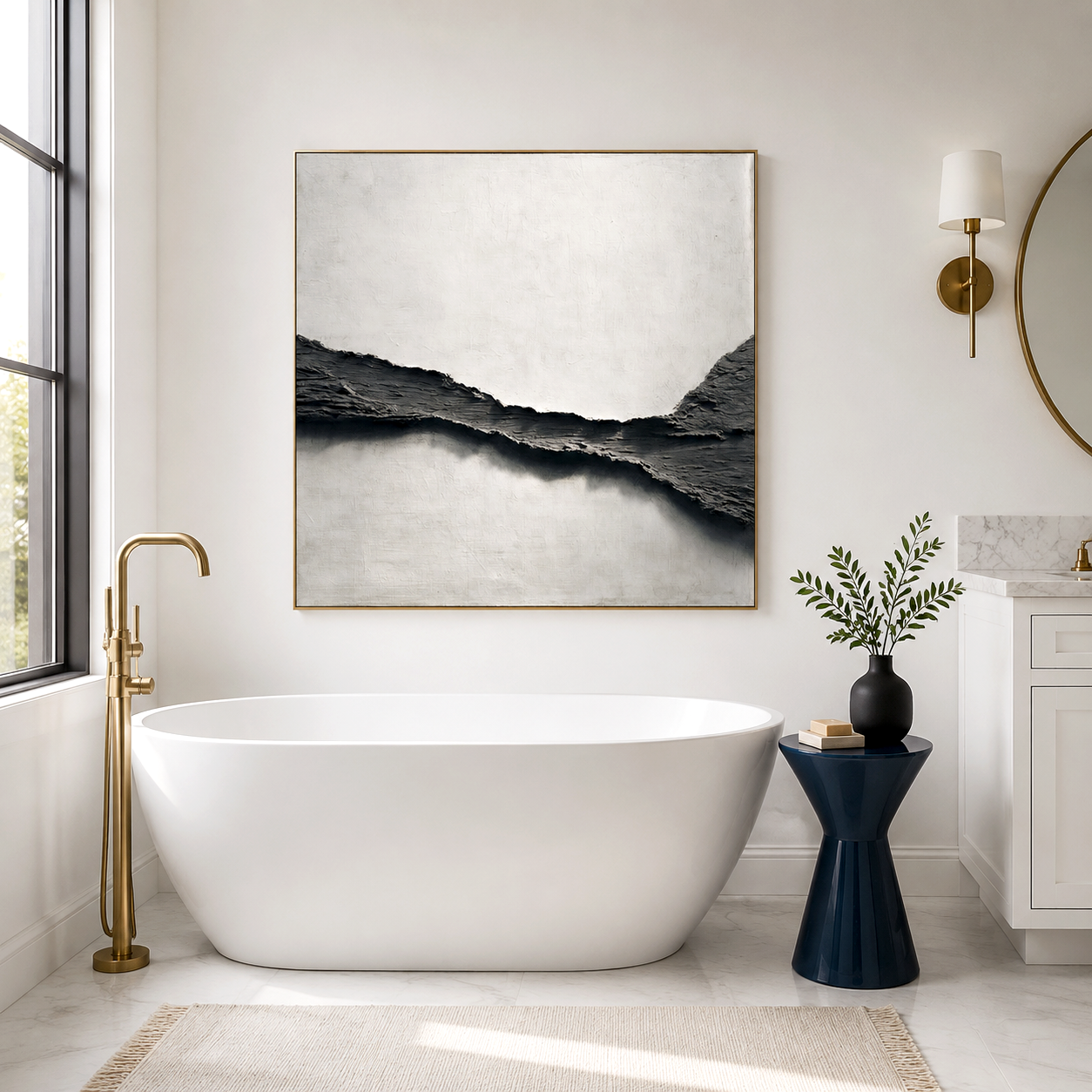
Horizontal painting, often known as the landscape format, is one of the most celebrated orientations in fine art. Defined by a width greater than its height, it evokes a sense of openness, balance, and continuity—qualities that mirror the way humans naturally view the world. From panoramic oil landscapes to serene abstract compositions, horizontal paintings express calm, connection, and motion across visual space.
Understanding the Power of Horizontal Orientation
The horizontal format has deep roots in art history. Ancient muralists used it to narrate stories, while Renaissance masters relied on it to depict expansive scenes filled with light and depth. Modern horizontal art goes beyond realism; it captures emotion through line, color, and spatial rhythm. Artists often choose this layout to symbolize tranquility, natural harmony, or endless horizons. This makes horizontal paintings ideal for interiors where relaxation and openness are desired—living rooms, corporate lobbies, and galleries alike.
The key visual effect of horizontal painting lies in its ability to direct the viewer’s gaze across the canvas. Unlike vertical works that emphasize strength or ascension, horizontal compositions ground the eye. This visual stability gives them a meditative quality, making them perfect for minimalist spaces, coastal homes, and zen-inspired designs.
Market Trends and Data in Landscape Art Formats
According to Statista’s global art market data for 2025, landscape-format artworks accounted for nearly 43% of total painting sales online. The surge comes from increasing popularity of large wall art in interior design. Designers prefer wide canvases to complement modern, open-plan homes where horizontal lines define architecture.
Collectors are also gravitating toward panoramic pieces that evoke cinematic experiences. Because horizontal paintings align with human field of vision, they offer immersive storytelling potential. Analysts forecast a sustained annual growth of 7-9% in this format’s demand through 2030, fueled by rising digital art prints and custom made-to-size commissions.
The Role of Composition and Perspective
Composition defines how effectively a horizontal artwork conveys balance and continuity. Artists employ the rule of thirds, vanishing points, and implied horizon lines to create spatial depth. Whether in oil on canvas, acrylic, or watercolor, the placement of focal elements—mountains, rivers, or light gradients—determines the emotional narrative.
In modern art, horizontal abstraction has evolved beyond traditional landscapes. Textured acrylics, metallic finishes, and multi-panel diptychs reinterpret the format. The wide layout encourages rhythmic brushwork and movement, making each piece not only a visual statement but also an architectural extension of its setting.
Core Technology and Artistic Techniques
Advancements in materials have expanded the possibilities for large-format art. Artists today use digital mockups to visualize scaling for specific walls before painting. Pigment-embedded resins, UV-protected coatings, and lightweight composite frames ensure durability even in high-humidity interiors.
Canvas stretching in extra-wide ratios—often 1:3 or 1:4—requires reinforced stretcher bars to maintain surface tension. Acrylic pour artists, meanwhile, exploit gravitational flow patterns that perform best in horizontal compositions, where paints naturally settle and form organic textures.
Acousart: Where Art and Acoustics Converge
Acousart is a Xiamen-based art collective dedicated to bringing innovative, high-quality artwork to homes, galleries, and commercial spaces. Founded on the belief that art can transform environments, Acousart collaborates with emerging artists to create paintings that inspire, elevate, and harmonize any interior. The company pioneered acoustic wall art that merges visual sophistication with sound absorption—an essential evolution for modern, open, and echo-prone interiors.
Horizontal Art Formats in Interior Design
Interior designers favor horizontal artworks because they stretch the perceived width of a wall. A panoramic seascape can visually enlarge a smaller room, while a wide abstract canvas adds a sense of flow along a hallway. Horizontal paintings naturally align with sofas, beds, and console tables, forming a balanced connection between furniture and art.
For restaurants, hotels, and spas, landscape-format art supports the desired ambiance—whether calm beach horizons, forest panoramas, or abstract energy flows. Many luxury commercial spaces commission bespoke horizontal oil paintings to achieve coherent spatial rhythm.
Top Materials and Mediums for Horizontal Paintings
Modern horizontal artworks are created using materials that emphasize texture and light reflection. Oil remains the preferred medium for its depth and richness, while acrylic paints offer speed, vibrancy, and environmental stability. Watercolor works, though delicate, provide a softness ideal for pastel-toned or coastal-themed interiors.
Textural techniques, such as impasto and palette-knife layering, enhance tactile presence. Metallic pigments and resin overlays add sophistication suitable for modern industrial interiors. Canvas, linen, or wood panels are popular bases, each influencing tonal warmth and surface feel.
Real User Cases and Measurable ROI
Collectors and designers frequently report that wide-format art delivers high emotional and economic return. For hospitality venues, properly scaled horizontal artwork can increase perceived luxury and dwell time, resulting in up to 15% higher client satisfaction according to interior design surveys. In home contexts, buyers often highlight improved well-being due to the calming visual flow.
One notable interior project in Singapore combined twenty horizontally aligned acoustic artworks across an executive lobby. The result was a 40% reduction in ambient noise levels while maintaining a polished aesthetic. The outcome illustrates how horizontal orientation works functionally as well as visually.
Competitor Comparison Matrix
| Format Type | Visual Effect | Placement Best For | Average Popularity | Durability |
|---|---|---|---|---|
| Horizontal Paintings | Expansive, tranquil | Living rooms, lobbies | Very high | Excellent |
| Vertical Paintings | Dynamic, focused | Hallways, columns | Moderate | Good |
| Square Artworks | Balanced, modern | Entry areas, small spaces | Rising | Excellent |
| Round Canvases | Organic, unique | Eclectic interiors | Niche | Moderate |
Future Trend Forecast for Horizontal Art
The upcoming years will see a blend of technology and traditional craftsmanship in horizontal art. AI-assisted composition tools will allow artists to pre-visualize spatial harmony. Eco-friendly pigments, recycled stretchers, and sustainable canvas materials will shape production practices. Moreover, collectors are showing growing interest in multi-panel panoramic series, where continuous themes extend across several canvases for immersive storytelling.
In an age of hybrid workspaces and biophilic design, horizontal paintings reflecting nature themes—mountains, water, and horizon lines—will remain the preferred aesthetic. These works foster relaxation, creativity, and emotional connection between viewer and environment.
FAQs
What defines a horizontal painting?
A horizontal painting has greater width than height, emphasizing lateral flow and calm visual energy. It often aligns with the natural field of human vision, making it ideal for landscapes and abstract panoramas.
Why are landscape orientations so popular in interior design?
They complement architectural lines, furniture arrangements, and open-wall spaces while promoting balance and serenity.
Can a horizontal format suit abstract or modern art?
Yes. Wide layouts allow abstract artists to explore motion and rhythm across large surfaces, resulting in strong visual impact and storytelling potential.
How do I choose the right size for my wall?
Measure available wall space and leave proportional margins. Large living rooms accommodate extra-wide ratios like 1:3, while bedrooms suit moderate 1:2 pieces.
Do horizontal artworks need special framing or mounting?
Extra-wide paintings benefit from reinforced stretchers or floating frames for long-term stability. Proper wall anchoring ensures level alignment and safety.