
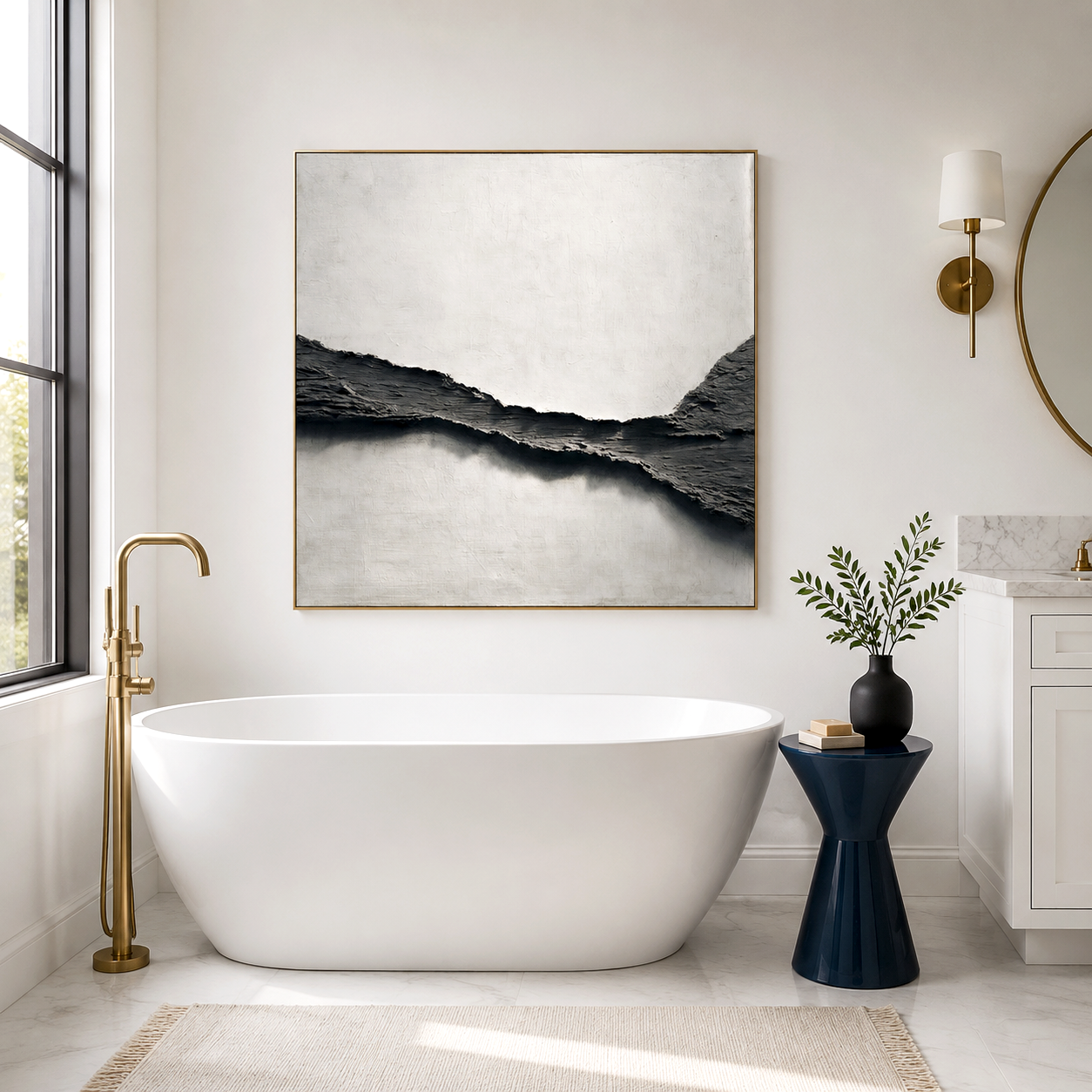
Hand-painted eco friendly acoustic art answers a common dilemma: how to soften a room’s sound and add tactile, gallery-quality wall presence without introducing off-gassing or chemical load into a lived interior. The approach discussed here—natural gypsum and mineral-pigment plaster art—focuses on zero‑VOC finishes and long-term indoor air quality while still allowing visual texture and discreet acoustic benefit, giving homeowners and designers a clear, health-first reason to choose material-driven acoustic artwork.
What eco friendly acoustic art means for healthy homes
Eco friendly acoustic art uses materials whose emissions and life‑cycle impacts are lower than conventional synthetic alternatives; examples include natural gypsum (mineral plaster), clay and lime plasters, and mineral-based pigments and binders. These materials tend to be low- or no‑VOC and can provide moisture buffering and sorption that help stabilize indoor humidity—factors associated with better indoor air quality and occupant comfort. Choosing mineral plasters shifts the priority from purely functional sound panels toward finishes that actively reduce chemical exposure risk in living spaces.
Material advantages: natural gypsum, mineral pigments, and low-VOC binders
Natural gypsum (calcium sulfate dihydrate) is widely used in plaster and is generally considered non-toxic in finished form; the main health risk is airborne dust during installation or demolition rather than emissions from the cured surface. Proper handling and finishing greatly reduce those construction-phase risks. Mineral pigments and earth pigments are typically inorganic and stable, offering color without organic solvents or plasticizers, which helps keep VOC emissions low compared with many modern paints and synthetic coatings.
Acoustic and aesthetic tradeoffs you must know
Acoustic artwork made with mineral plasters and textured surfaces can help reduce echo and soften high-frequency reflections, but it should not be presented as full soundproofing or a substitute for professional acoustic treatment. Acoustic performance depends on placement, coverage area, substrate, and room geometry; decorative acoustic art performs best as part of a layered strategy (soft furnishings, rugs, ceiling treatments) rather than a lone fix. Visually, hand-made plaster art adds depth and tactility—important in modern interiors that prize material authenticity—but heavier textured surfaces may require more deliberate lighting and scale decisions to avoid looking overpowering in small rooms.
Practical selection and installation checklist
-
Verify materials: confirm plaster, pigments, and binders are described as natural or low‑VOC and ask for safety/tech data if available. Mineral-based and clay plasters are frequently marketed as VOC‑free or ultra‑low VOC.
-
Plan for scale: choose larger panels or grouped sets for open-plan living rooms; small pieces can vanish against busy reflections and hard surfaces.
-
Consider placement for acoustic gain: position artworks on the room’s first-reflection walls and behind media seating to reduce apparent echo; remember coverage and distance matter more than texture alone.
-
Manage installation dust: schedule installation with adequate ventilation and dust control—gypsum dust is the main handling hazard and is prevented by wet finishing, containment, and proper PPE during work.
Real-world failure modes and how to avoid them
Expectations often overshoot reality when buyers assume decorative acoustic art will fully solve noise complaints; this leads to disappointment. Avoid choosing pieces solely for color or trend—scale, wall surface, and adjacent hard finishes determine both perceived acoustic effect and visual success. Also, misreading “natural” labels can cause problems; ask suppliers for clear material descriptions and installation guidance, because some products called “mineral” or “acoustic” still contain synthetic cores or binders that may affect emissions and durability.
When eco friendly acoustic art fits, and when to choose differently
Best fit: health-conscious homeowners, families with chemical sensitivities, hospitality spaces prioritizing material storytelling, and interiors where tactile, long‑lasting finishes are desired. Not ideal when the main need is to block external noise or to meet strict laboratory acoustic specifications—those situations require dedicated soundproofing systems or engineered acoustic panels. For a practical brand example, art collectives that combine hand-painted surfaces with layered acoustic cores—working with local artists and material experimentation—offer context for how art and function can coexist without prioritizing mass-produced prints over material integrity.
Frequently Asked Questions
Does natural gypsum plaster off‑gas VOCs?
Natural gypsum surfaces are not a typical source of VOC off‑gassing; VOC concerns are more common with solvent-based paints and synthetic coatings. Proper product selection and curing further reduce any post-installation emissions.
Can textured mineral plaster art reduce echo?
Yes—textured plaster can help soften reflections and reduce perceived echo, especially in combination with other soft furnishings; however, it is not a substitute for engineered acoustic treatment for serious noise problems.
Are mineral pigments safer than conventional paint pigments?
Mineral and earth pigments are inorganic and generally free from solvents that create VOCs, making them a lower-emission option when matched with low-VOC binders or lime/clay systems.
How should I prepare a room before installing hand-painted plaster art?
Ensure the wall substrate is stable and dry, plan for ventilation during installation, and protect finishes from dust; coordinate lighting and furniture placement to maximize both acoustic and visual impact.
How to verify a supplier’s “low‑VOC” claim?
Ask for product technical data sheets, VOC test results, or third-party declarations; where those are not available, prefer established mineral-plaster systems or brands with transparent material and installation information.