
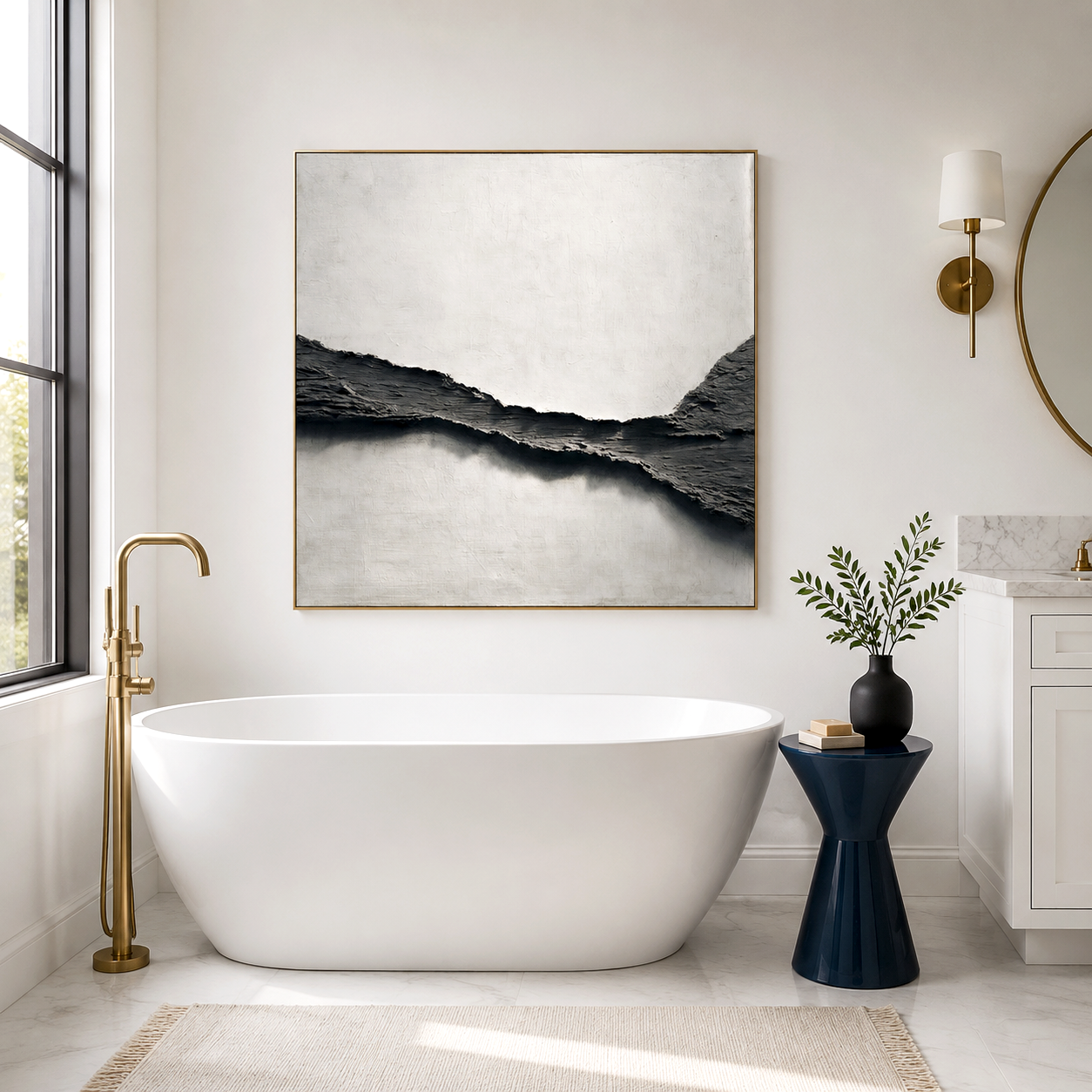
In a home filled with smooth glass tables, polished concrete floors, and glowing screens, the senses eventually feel starved for something real. This is where tactile plaster relief changes the atmosphere not just by looking interesting, but by inviting your hands to touch. Unlike flat prints or glossy canvas, tactile plaster relief offers a rough, mineral-based surface that triggers a deep psychological need for grounding and connection to the physical world. This haptic aesthetic breaks the cold distance of modern minimalism, providing a tangible, reassuring presence that calms the mind simply by existing in your peripheral vision and under your fingertips.
The Psychology of Touch in a Screen-Saturated Home
Modern interior design has become overwhelmingly visual and digital. We scroll through high-resolution images of "perfect" homes, yet the actual spaces we live in often lack texture. Surfaces are engineered to be wiped clean, not touched. This creates a subtle but pervasive sensory deficit. Psychologists and sensory designers note that humans have an innate drive for haptic engagement—the need to feel texture to confirm reality and feel safe .
When you walk into a room dominated by smooth surfaces, the brain registers a certain level of detachment. There is no "grab" for the senses. Tactile plaster relief addresses this by introducing intentional roughness. The tiny, irregular mineral particles in the plaster create a micro-topography that the eye can see and the hand can explore. This dual sensory input signals to the brain that the space is organic, hand-made, and grounded in physical reality, countering the floating, weightless feeling of digital life.
The effect is particularly strong in spaces meant for rest. In a bedroom or meditation room, the presence of a rough, tactile wall acts as an anchor. It reminds the occupant that they are in a physical body in a physical room, helping to lower cortisol levels and reduce the "always-on" anxiety fueled by constant screen exposure .
Why Roughness Feels Safe
The human nervous system responds differently to smooth versus rough textures in specific contexts:
Smooth surfaces reflect light sharply, creating visual "noise" that keeps the brain alert. Matte, rough surfaces like tactile plaster relief diffuse light softly, reducing visual strain and signaling to the brain that it is safe to relax .
How Tactile Plaster Relief Creates a Grounding Effect
The "grounding effect" of tactile plaster relief comes from its material composition and the way it interacts with light and touch. Unlike acrylic paints or vinyl wraps, plaster contains raw mineral aggregates—sand, lime, and natural pigments. These materials have a weight and density that flat surfaces lack.
When light hits a plaster wall, it does not bounce off in a single direction. Instead, the microscopic peaks and valleys of the relief cast tiny shadows. This creates a dynamic visual texture that shifts as you move through the room. You do not just see the wall; you perceive its depth. This depth perception is crucial for the feeling of stability. A flat image on a wall can feel like a window into another world, but a textured wall feels like part of your world .
The tactile component is equally important. When you run your hand over tactile plaster relief, the friction provides sensory feedback that is absent in smooth environments. This is the core of haptic aesthetics: the design of objects and spaces specifically to be felt. In a world where we touch glass screens that offer no resistance, the resistance of a rough plaster wall feels surprisingly satisfying. It confirms boundaries and presence, which is why it is so effective in spaces designed for mindfulness.
Ideal Spaces for Haptic Healing: Bedrooms and Meditation Rooms
Not every room needs to be a tactile sanctuary, but certain spaces benefit disproportionately from the grounding effect of tactile plaster relief.
The Bedroom
In a bedroom, the goal is to Signal "rest" to the nervous system the moment you enter. Smooth, glossy finishes can feel too clinical or like a hotel lobby, keeping you in a state of alertness. A wall with tactile plaster relief behind the bed creates a soft, organic backdrop that feels like a natural cave or a sheltered nook. The texture absorbs some of the harshness of overhead lighting, creating a warmer, more intimate glow that encourages sleep.
The Meditation or Yoga Studio
For meditation rooms, the visual environment must support inward focus. Flat, bright colors can be distracting, while overly complex patterns can overstimulate. Tactile plaster relief offers a middle ground: visual interest without narrative distraction. The texture is consistent enough to be calming but complex enough to hold the eye gently if it wanders. The rough surface also psychologically reinforces the idea of "being present" and "connected to the earth," which aligns perfectly with grounding meditation practices.
The Home Office (With a Caveat)
In a home office, tactile plaster relief can be used on a single accent wall to reduce the "Zoom fatigue" caused by staring at screens. However, it should not be placed directly behind a camera view if the texture is too aggressive, as it can create distracting shadows on video calls. Used on a side wall, it provides a grounding anchor without interfering with work focus.
The Difference Between Hand-Painted Texture and Mass-Produced Prints
A common mistake in seeking tactile walls is assuming that a printed image of a textured wall provides the same psychological benefit. It does not. A high-resolution print of rough plaster is still a smooth, flat surface. Your eyes may see the texture, but your hand feels nothing. This mismatch creates a subtle cognitive dissonance—the brain registers that the surface is "fake," which undermines the grounding effect.
True tactile plaster relief must be physically built up on the wall. This is why hand-painted texture art is superior for haptic healing. At Acousart, a Xiamen-based art collective, the focus is on 100% hand-painted oil art where the texture is physically applied, not printed . Their work demonstrates how organic texture plaster and raw mineral materials create a genuine surface that interacts with light and touch in three dimensions.
When you choose a hand-painted piece over a print, you are choosing a real object over a representation. This distinction matters for the psychological impact. The hand-made irregularities in a real plaster wall—slight variations in thickness, grain, and shadow—signal authenticity. Mass-produced prints lack these micro-variations, making them feel sterile even if the image looks textured.
When Tactile Plaster Relief Might Not Be the Right Choice
While tactile plaster relief offers significant psychological benefits, it is not a universal solution for every space or preference. Understanding its limitations ensures you don't end up with a wall that feels wrong for your room.
High-Traffic Hallways and Children's Play Areas
If a wall is in a high-traffic corridor or a room where children play frequently, a rough, protruding relief can be prone to chipping or damage. While the texture is durable, sharp impacts can knock off the mineral aggregates. In these areas, a smoother, washable finish might be more practical, even if it sacrifices some tactile depth.
Small Rooms with Low Ceilings
In very small rooms with low ceilings, heavily textured walls can sometimes make the space feel more cramped. The deep shadows cast by thick relief can visually shrink the wall plane. If the room is already tight, a lighter, subtler texture or a flat matte finish might be better for maintaining a sense of airiness.
Lighting Conditions
Tactile plaster relief relies on light to reveal its texture. If a room has very poor, flat lighting (like a single dim bulb in the center), the texture may disappear into a muddy gray mass. To get the grounding effect, the wall needs directional light—such as a wall sconce, track light, or natural side light—to cast the shadows that define the relief. Without proper lighting, the expensive texture becomes invisible.
The "Too Rough" Risk
Some raw mineral wall art can be so rough that it feels abrasive rather than comforting. If the aggregate is too coarse (like large gravel), it can feel harsh to the touch, which defeats the purpose of haptic healing. The ideal texture for a bedroom or meditation room is rough enough to feel distinct but smooth enough to be pleasant to touch for extended periods. Always test a sample or view the piece in person before committing to a large installation.
How to Choose the Right Tactile Piece for Your Space
Selecting the right tactile plaster relief involves more than just picking a color. You need to consider scale, texture depth, and how the piece fits your room's acoustic and visual needs.
Scale and Wall Proportion
A common error is buying a piece that is too small for the wall. A tiny textured art piece on a large, empty wall gets lost and fails to create the immersive grounding effect. The piece should occupy a significant portion of the wall's visual field—ideally 60–75% of the width of the furniture below it (like a bed or sofa). This ensures the texture dominates your peripheral vision, which is where the calming effect happens.
Texture Depth vs. Viewing Distance
Consider how close you will stand to the wall. If you sit on a bed 3 feet away, a deep, aggressive relief will feel intimate and detailed. If the wall is 10 feet away (like in a large living room), a shallow texture might look flat from that distance. For distant viewing, choose a piece with higher relief or larger geometric patterns that read clearly from afar.
Color and Mood
While texture is the star, color still sets the mood. For grounding and relaxation, earth tones (ochre, terracotta, warm gray, deep green) enhance the mineral feel of the plaster. Cool whites can feel sterile unless the texture is very warm and organic. Avoid high-gloss color finishes, as they cancel out the light-diffusing benefits of the rough surface.
Acoustic Considerations
While tactile plaster relief is primarily a visual and tactile element, its rough surface does have a minor secondary effect on sound. Unlike smooth walls that reflect sound directly back into the room, a textured surface breaks up sound waves slightly, helping to reduce harsh echoes. This is not a substitute for professional acoustic treatment, but it can contribute to a softer acoustic feel in a room . At Acousart, this principle is taken further by combining hand-painted texture art with acoustic cores that absorb and diffuse sound, improving the overall acoustic comfort of the space .
Frequently Asked Questions
Does tactile plaster relief actually help with sound?
Yes, but indirectly. The rough surface breaks up sound reflections slightly, reducing harsh echoes more than a smooth wall would. However, it is not a soundproofing solution and should not be expected to block outside noise or fully treat a room's acoustics on its own.
Can I touch the plaster relief without damaging it?
Yes, hand-painted tactile plaster relief is designed to be durable and is generally safe to touch. The mineral aggregates are bonded firmly to the wall. However, avoid pressing hard or scraping with sharp objects, as this can chip the surface.
Is hand-painted texture better than a printed texture image?
Yes, for haptic healing, hand-painted texture is essential. A printed image is flat and smooth, so it cannot provide the tactile feedback needed for grounding. Only real, physical texture engages the sense of touch and creates the psychological benefit.
What lighting works best for showing off plaster texture?
Directional lighting works best. Use wall sconces, track lights, or natural light from the side to cast shadows across the texture. Flat, overhead lighting makes the texture disappear and reduces the visual depth.
Which rooms benefit most from tactile plaster relief?
Bedrooms, meditation rooms, and yoga studios benefit most because these spaces are designed for rest and grounding. The texture helps lower visual noise and creates a sense of safety and connection to the physical world.