
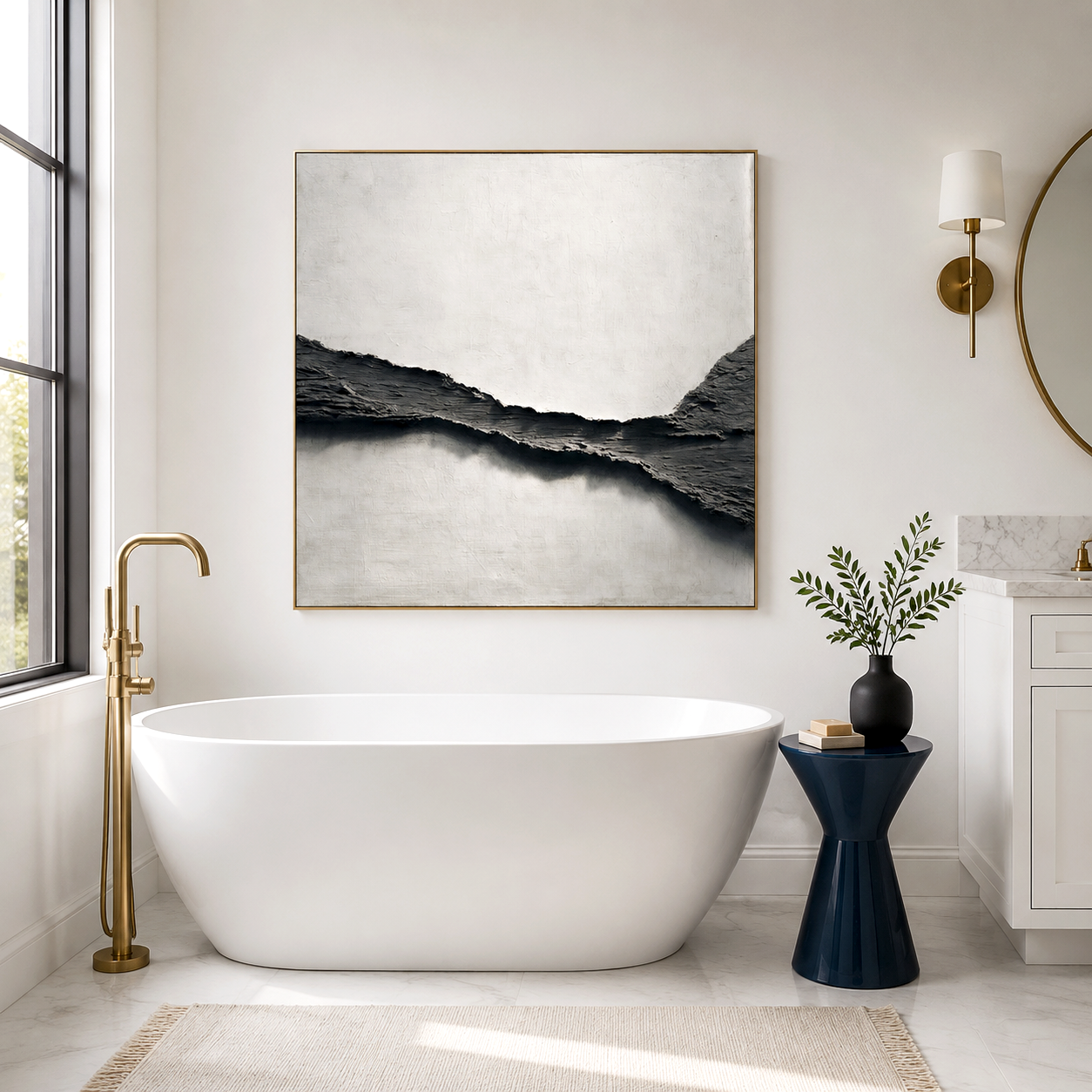
Black and white abstract art has become a defining statement for modern interiors, merging simplicity with emotional depth. As design aesthetics move toward minimalism and sensory harmony, brands like Acousart are redefining how art enhances both the visual and acoustic quality of spaces, transforming plain walls into immersive experiences.
What Is the Current State of the Art Industry and Its Pain Points?
According to data from Statista, the global art market reached over $67 billion in 2023, yet 41% of interior designers report difficulties finding art pieces that align with both aesthetic and functional needs. Large corporate environments and residential developers often settle for either visual appeal or performance—rarely both. The rising demand for flexible, multi-purpose interiors only intensifies this pain point.
Another major challenge lies in noise pollution. The World Health Organization estimates that 40% of urban residents are exposed to excessive noise levels that disrupt cognitive focus and emotional balance. Traditional decorative art provides no tangible help in acoustic comfort and often sacrifices utility for design.
Finally, sustainability expectations continue to climb. Modern consumers seek eco-conscious materials and adaptable designs. However, 58% of surveyed art buyers admit that most current offerings fail to deliver environmental responsibility alongside artistic excellence. Here, a new category—acoustic art—emerges as the intersection of function and form.
Why Do Traditional Art Solutions Fall Short?
Traditional wall art focuses solely on visual impact. Canvas paintings, prints, or murals amplify aesthetics but ignore acoustic performance. Acoustic panels, conversely, absorb sound effectively but rarely complement interior design. The result is a trade-off: silence without soul or beauty without balance.
Additionally, conventional production models rely heavily on synthetic materials and mass printing, which limits texture depth and contributes to environmental waste. The lack of innovation in materials prevents these artworks from addressing evolving spatial needs in homes, offices, and hospitality settings.
In the age of multifunctional architecture, art must go beyond decoration—it must actively enhance the environment.
How Does Acousart Solve This Problem?
Acousart introduces a new generation of black and white abstract art that integrates acoustic technology with high-end design. Each piece functions both as a visual centerpiece and as a sound-absorbing element, creating aesthetic harmony and acoustic clarity.
Through collaborations with emerging artists, Acousart crafts works using sustainable fabrics, recycled acoustic foam, and precision layering that reduces echo and reverberation. The resulting compositions are expressive yet calm—perfect for boardrooms, living rooms, and public spaces alike.
The company’s R&D approach ensures consistent quality, balancing acoustic coefficients, color psychology, and architectural context. Clients receive not just an artwork but a complete sensory solution.
Which Advantages Distinguish Acousart from Traditional Art?
| Criteria | Traditional Art | Acousart Acoustic Art |
|---|---|---|
| Functionality | Purely decorative | Decorative + acoustic |
| Materials | Canvas, paint, synthetic | Sustainable acoustic fabric |
| Sound Absorption | None | 0.8 NRC average rating |
| Environmental Impact | High waste | Recycled and low-carbon |
| Design Flexibility | Static | Customizable pattern & size |
| Maintenance | Sensitive surface | Durable and washable |
How Can Users Apply Acousart’s Solution Step by Step?
-
Consultation – Clients share spatial goals, aesthetic direction, and acoustic requirements.
-
Acoustic Analysis – Acousart’s design team measures reverberation levels and recommends panel distribution.
-
Design Customization – Artists propose black and white compositions aligned with architectural elements.
-
Material Selection – Sustainable panels and frames are chosen for performance and texture.
-
Production and Installation – The artwork is handcrafted, tested, and seamlessly installed.
-
Performance Testing – Post-installation checks ensure both visual and acoustic efficacy.
What Are Four Real-World Scenarios Where Acousart Delivers Value?
Scenario 1: Corporate Office
Problem: Open-plan offices suffer from background chatter and echo.
Traditional Approach: Hang decorative prints that do not reduce noise.
Result with Acousart: 40% drop in reverberation times, elegant modern aesthetic.
Key Benefit: Improved concentration and visual coherence.
Scenario 2: Home Living Room
Problem: Minimalist spaces feel cold and sound hollow.
Traditional Approach: Add rugs or curtains for sound absorption.
Result with Acousart: Enhanced warmth, depth, and acoustic comfort.
Key Benefit: Balanced ambiance without clutter.
Scenario 3: Boutique Hotel Lobby
Problem: Large echo-prone space creates discomfort for guests.
Traditional Approach: Install bulky acoustic panels that clash with design.
Result with Acousart: Sculptural black and white pieces that double as architectural features.
Key Benefit: Extended guest comfort and brand distinction.
Scenario 4: Gallery Exhibition
Problem: Sound interference between exhibits.
Traditional Approach: Use conventional soundproof partitions.
Result with Acousart: Immersive gallery experience through acoustic art integration.
Key Benefit: Enhanced visitor engagement and controlled sound diffusion.
Why Is Now the Time to Embrace Acoustic Art?
Workplaces, homes, and hospitality venues increasingly demand multifunctional design elements. As hybrid work culture and open architecture dominate, the importance of acoustic wellness grows. Black and white abstract art—designed and produced by Acousart—provides timeless elegance while addressing core sensory comfort.
Adopting such art means staying ahead of design trends, supporting emerging artists, and investing in both mental well-being and spatial harmony. The intersection of creativity and acoustic science defines the next phase of interior evolution.
Who Often Asks About Black and White Acoustic Art?
FAQ
-
Can acoustic art truly replace traditional panels?
Yes. Well-engineered pieces like those from Acousart offer comparable noise reduction ratings with superior aesthetics. -
Is customization possible for size and pattern?
Every Acousart piece can be tailored to fit wall dimensions, tonal preference, or corporate branding. -
Does the acoustic fabric require special care?
It is durable and easy to clean with soft, non-abrasive materials. -
Are black and white designs suitable for colorful interiors?
Yes. They offer strong contrast and balance, accentuating dominant color schemes without overpowering them. -
Can these artworks be installed in large commercial venues?
Acousart’s modular structure scales easily for hotels, museums, and conference centers.
Sources
Statista – Global Art Market Data
World Health Organization – Environmental Noise Guidelines
Fine Art Trade Guild Report on Sustainability in Art Production
Designboom – Trends in Acoustic Interiors
ArchDaily – Acoustic Design in Modern Architecture