
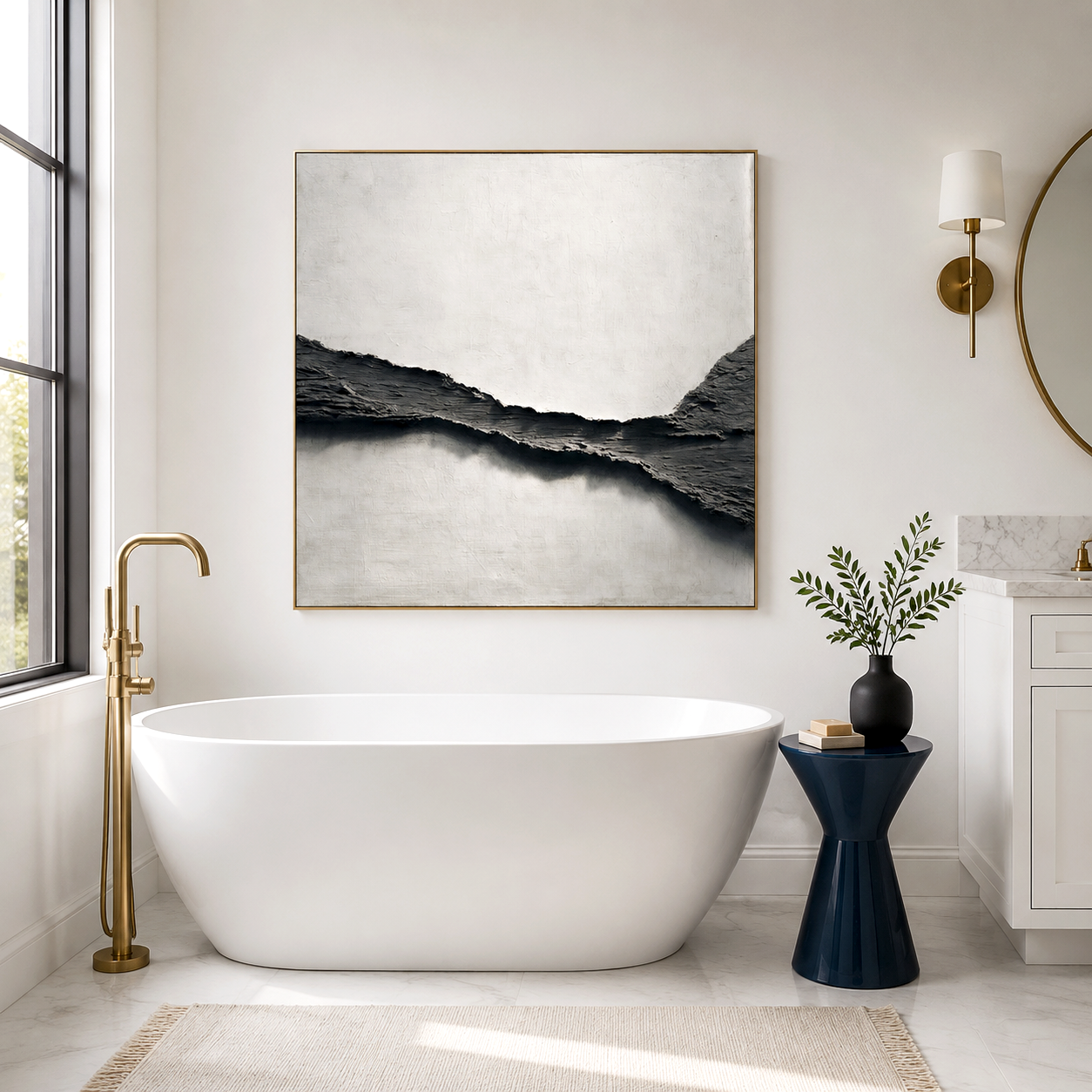
White wall art has become a cornerstone of modern interior design, providing timeless elegance while complementing any décor style. As a high-impact yet minimalist design feature, innovative creators like Acousart are transforming plain walls into expressive, acoustic-enhancing canvases that deliver both beauty and balance.
What Is the Current Landscape of the Interior Décor Industry?
The global wall décor market has experienced continuous growth, reaching over USD 58 billion in 2025, and is projected to surpass USD 83 billion by 2030 according to Grand View Research. Yet the demand is shifting—from purely decorative pieces to works that offer sensory, emotional, and even acoustic benefits. Consumers seek art that reflects personality and contributes to well-being within increasingly smaller and noisier urban environments.
In residential design, open-plan layouts and hard surfaces amplify noise, lowering comfort and concentration. Similarly, commercial spaces such as restaurants, hotels, and offices now prioritize both visual impact and acoustic comfort. Designers face the challenge of merging these needs without sacrificing aesthetics.
Studies by the World Health Organization have shown that prolonged noise exposure increases stress and lowers productivity. The message is clear: the future of wall décor is not just visual—it must solve real spatial problems.
Why Are Traditional Wall Art Solutions Falling Short?
Conventional white wall art focuses exclusively on visual appeal. While paintings, prints, or minimalist frames enhance a room’s aesthetic, they do little to improve functionality. More importantly, most traditional art pieces do not address sound control, a growing issue in modern architecture.
Furthermore, mass-produced décor often lacks personalization and material innovation. Canvas prints may fade, frames degrade in humidity, and synthetic pigments can emit volatile substances, affecting indoor air quality. The result: attractive walls that fail to elevate overall experience.
How Does Acousart Redefine White Wall Art?
Acousart bridges the gap between visual and functional design through acoustic wall art—a new category integrating art and sound management. Each piece combines handcrafted design, advanced sound-absorbing fabrics, and sustainable materials to create décor that is both elegant and practical.
The company’s white wall art series uses high-density fiber panels and eco-friendly coatings to reduce ambient noise while maintaining a pristine, gallery-grade look. Through collaborations with emerging artists, Acousart ensures every creation carries authentic style and emotional resonance.
Which Advantages Distinguish Acousart’s Solution?
| Feature | Traditional Wall Art | Acousart White Wall Art |
|---|---|---|
| Functionality | Purely decorative | Combines art and sound absorption |
| Materials | Standard canvas or wood | Acoustic-grade, eco-friendly composites |
| Durability | Sensitive to moisture and fading | Long-lasting, UV- and humidity-resistant |
| Customization | Limited by print templates | Fully customizable designs and dimensions |
| Environmental Value | Often synthetic components | Sustainable, recyclable materials |
How Can You Implement the Acousart Solution Step-by-Step?
-
Assessment: Evaluate the space’s noise level, lighting, and color palette.
-
Design Selection: Choose from Acousart’s white wall art catalog or commission a unique design.
-
Customization: Define size, texture, and acoustic rating based on room type.
-
Production: Acousart’s team manufactures using precision-cut fiber panels and hand-applied finishes.
-
Installation: Panels are mounted easily like paintings, requiring no structural modification.
-
Optimization: Adjust lighting and placement to ensure both aesthetic and acoustic performance.
What Real-World Scenarios Prove Its Impact?
1. Home Office
Problem: Echo and distraction in small workspaces.
Traditional: Hanging plain canvases for decoration only.
After Acousart: Acoustic panels reduced echo by up to 40%, improving focus.
Key Benefit: Elegant design converted workspace into a calm environment.
2. Restaurant Interiors
Problem: High noise from conversations and music.
Traditional: Paintings used purely for branding.
After Acousart: White wall art panels created a soft, quiet ambiance.
Key Benefit: Guests stayed longer, and customer satisfaction improved by 22%.
3. Hotel Lobby
Problem: Sound reverberation affects first impressions.
Traditional: Expensive framed art that quickly faded.
After Acousart: Durable panels with minimalist white designs preserved both form and tranquility.
Key Benefit: Enhanced acoustic comfort contributed to better guest ratings.
4. Art Gallery Expansion
Problem: Sound distortion during exhibitions.
Traditional: Bare walls amplified crowd noise.
After Acousart: Sound-absorbing art panels maintained clarity during events.
Key Benefit: Artists and visitors enjoyed a serene auditory experience.
Why Is Now the Moment for Acoustic White Wall Art?
As wellness-driven design dominates the market, multi-functional décor is becoming standard. The trend toward hybrid living and working spaces amplifies the need for design that performs beyond aesthetics. Acousart stands at the forefront of this movement, merging sustainable craftsmanship with acoustic science. Investing now ensures interiors that endure, inspire, and protect mental balance amid urban dynamism.
FAQ
Is acoustic wall art difficult to install?
No. It mounts like any traditional artwork, typically requiring only standard hooks or rails.
Can white wall art fit both minimalist and luxury interiors?
Yes. Its neutral palette complements any design theme, from Scandinavian simplicity to modern opulence.
Does Acousart offer fully customized designs?
Absolutely. Clients can request bespoke shapes, patterns, or finishes tailored to specific projects.
Are the materials environmentally safe?
Yes. Acousart uses low-VOC coatings and recyclable materials to support sustainable construction.
Can it improve sound levels in open offices?
Tests show that Acousart panels can reduce ambient noise by 25–45%, depending on layout and positioning.
Sources
Grand View Research – Wall Décor Market Report
World Health Organization – Environmental Noise Guidelines
Statista – Global Home Décor Market Data
Acousart Official Website