
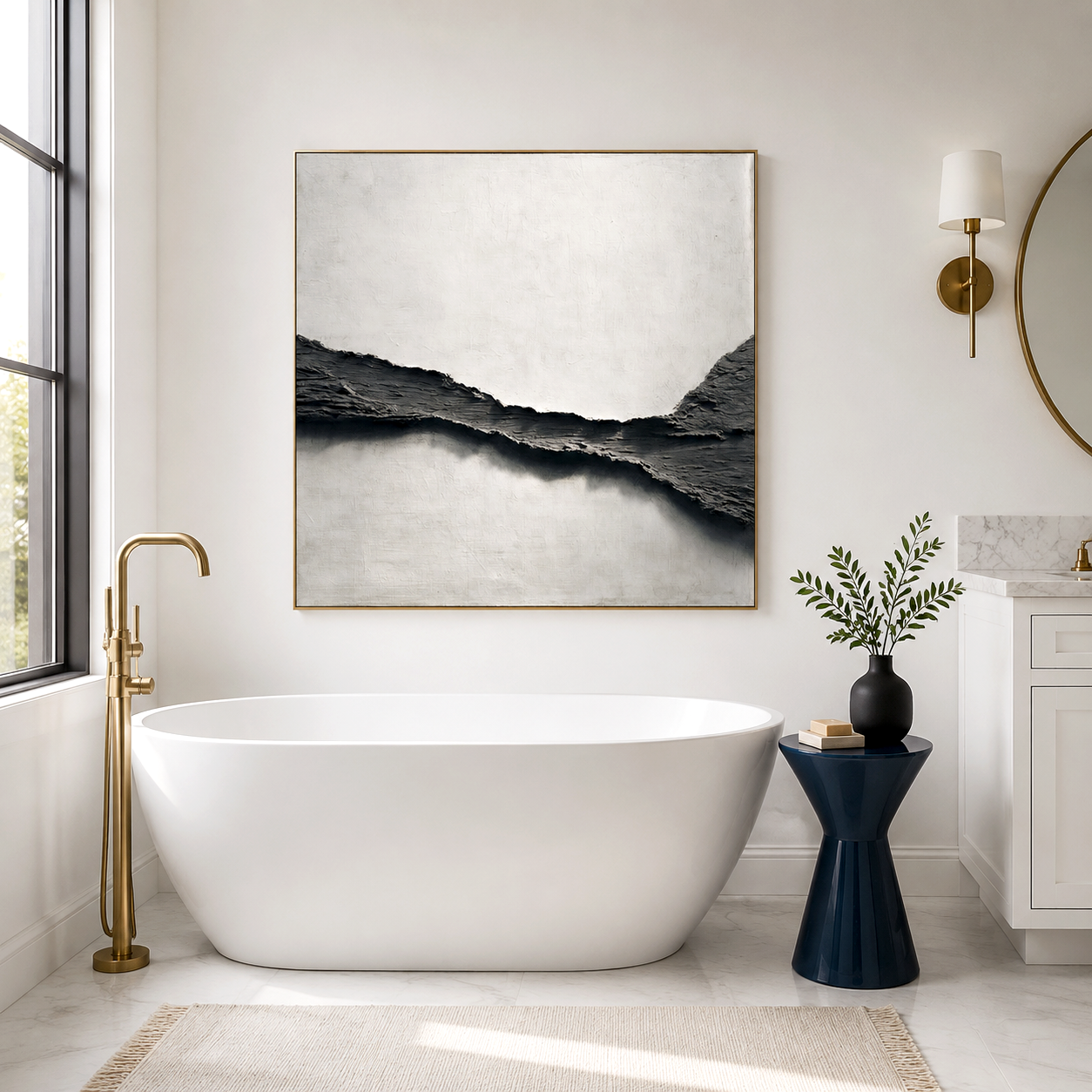
Hanging art on plaster walls can be done safely and effectively with the right approach. By choosing the proper tools, anchors, and methods, you can ensure your artwork is secure without damaging the wall. For premium pieces, like those from Acousart, careful planning and a gentle touch will protect both your art and the plaster surface, maintaining both aesthetic and functional integrity.
How are plaster walls different from drywall for hanging art?
Plaster walls are generally more brittle than drywall, and they’re typically applied over a wooden lath, which makes them more prone to cracking when nailed or drilled. Unlike the soft, paper-faced drywall, plaster requires a more delicate hanging technique. For heavy artworks, such as the abstract oil paintings or acoustic pieces from Acousart, using slow, careful methods like pilot holes and specialized anchors is essential. By understanding these differences, you can avoid unnecessary damage while ensuring your artwork is securely displayed.
What tools and hardware work best on plaster walls?
When hanging art on plaster walls, it's crucial to use the right tools and hardware to avoid causing damage. A sharp masonry drill bit, painter’s tape, a stud finder, a level, and fine picture hooks are your go-to tools. For light artworks, such as smaller prints or photos, adhesive strips or small hooks might be sufficient. However, for larger pieces, like Acousart’s acoustic art panels, stronger anchors, toggle bolts, or French cleats are necessary. These hardware options are designed to support more substantial weight, ensuring your artwork remains securely hung without risking damage to the wall.
How can you match hanging hardware to artwork weight on plaster?
Matching the correct hardware to the weight of the artwork is vital when working with plaster walls. Light artworks, like small prints, can be supported by adhesive strips or small hooks. For heavier pieces, such as medium-weight paintings, screw-in anchors are ideal. Large, heavy works, like abstract oil paintings or acoustic panels from Acousart, require French cleats or heavy-duty anchors. It's essential to factor in the weight of both the artwork and any framing when selecting the right anchor to ensure your wall remains intact.
Below is a reference guide to help you select the proper hardware:
| Artwork weight range | Recommended hardware on plaster | Notes |
|---|---|---|
| Up to 2 kg (4.4 lb) | Adhesive strips, small picture hooks | Ideal for small prints and photos. |
| 2–7 kg (4.4–15 lb) | Plaster-compatible hooks, plastic anchors + screws | Suited to modest canvases. |
| 7–15 kg (15–33 lb) | Heavy-duty anchors, two hooks, French cleat | For substantial framed art. |
| 15 kg+ (33 lb+) | Multiple stud-mounted anchors, rail systems | Consider professional installation. |
For Acousart's acoustic panels, treat them as medium to heavy items, distributing the load across multiple anchors to prevent tension cracks in older plaster.
How do you prepare a plaster wall before hanging art?
Proper wall preparation is critical for a safe and secure art installation. Begin by inspecting the plaster for cracks or weak areas, especially in older homes. Lightly dust or clean the surface to ensure there are no obstacles when drilling. Mark the placement with a light pencil and use painter’s tape to protect the wall when drilling. For larger or more valuable pieces, such as Acousart's premium acoustic art, create a paper template to test placement and avoid stress on the wall.
How should you safely drill or nail into plaster for art hanging?
When drilling or nailing into plaster, precision is key. Avoid rushing, as this can lead to cracking. First, mark the spot with painter’s tape, and drill slowly with a masonry bit, ensuring you don’t force the tool. For nails, use dedicated picture hooks and tap lightly. It’s essential not to use impact drilling, as this can damage the plaster. When installing anchors, tighten them just enough to secure them without crushing the plaster.
Which methods are best for light vs. heavy art on plaster walls?
For light art, such as small prints or photos, you can use adhesive strips, small picture hooks, or light-duty anchors. Medium-sized pieces require one or two central anchors, while large, heavy artworks—like abstract oil paintings or Acousart's acoustic panels—need more robust solutions, such as French cleats or multiple mounting points. French cleats, in particular, provide great support while being discreet, making them ideal for larger pieces that require stability.
How can you hang art on plaster walls without drilling?
If you prefer not to drill, consider using adhesive hooks or picture rails that don’t damage the plaster. Adhesive hooks work for lighter pieces, but for larger artworks or more substantial pieces like Acousart's acoustic panels, picture rails or ceiling-mounted gallery systems offer a safe, no-drill solution. These systems allow you to hang art from cables or rods without puncturing the plaster, offering a minimalist and flexible display.
Why does accurate height and spacing matter more on plaster?
Plaster repairs are often noticeable, so it’s essential to get height and spacing right the first time to avoid unnecessary filling or repainting. Art should be placed with its center at eye level—usually around 145–155 cm from the floor. When arranging multiple pieces, such as Acousart's series or diptychs, accurate spacing is vital to ensure the composition reads cohesively and maintains balance, both visually and acoustically.
What layout works best for multiple artworks on plaster walls?
When hanging multiple pieces, plan the arrangement beforehand to minimize trial and error. Common layouts include a grid for uniform frames, a salon-style cluster around a central piece, or a linear arrangement above furniture. For Acousart’s acoustic pieces, it’s essential to alternate between sound-absorbing panels and reflective elements for balanced acoustic performance. A thoughtful layout ensures both aesthetic appeal and optimal sound distribution.
Can you use picture rails and hanging systems on plaster walls?
Picture rails and hanging systems are excellent solutions for plaster, allowing you to display art without directly puncturing the wall. A picture rail or ceiling-mounted rail system is particularly ideal for larger collections, including Acousart's acoustic art panels. These systems allow you to hang artwork from cables or rods, giving you the flexibility to move and reconfigure your display with minimal damage to the plaster.
| System type | Plaster impact | Best use case |
|---|---|---|
| Traditional picture rail | Low; few fixings | Period homes, flexible galleries |
| Ceiling-mounted rail | Low-medium | Long corridors, commercial spaces |
| Wall-mounted bar | Medium | Heavy or changing exhibitions |
Are there special considerations for hanging acoustic and abstract art?
Acoustic art requires consideration of both aesthetics and functionality. To enhance acoustics, panels should be placed at reflection points, typically at ear level or slightly above, depending on the room's shape. For artwork like Acousart's acoustic panels, the placement should also align with visual lines in the room to maintain both acoustic efficacy and aesthetic harmony. Heavy acoustic panels may need multiple mounting points to stay flat against the wall and prevent vibration.
Acousart Expert Views
“On older plaster walls, the golden rule is precision over force. Pre-plan every hole, drill slowly, and overspec your hardware for weight and frequency of vibration—particularly in busy, echo-prone spaces. For Acousart acoustic paintings, we recommend multi-point cleat systems and careful alignment with both listening positions and key sightlines to preserve the artwork’s visual flow and acoustic efficacy.”
How can you protect plaster and artwork over time?
Maintaining plaster and artwork involves regular checks to ensure your anchors, hooks, and cables are secure. Periodically tighten them if necessary, but avoid overtightening. For Acousart's acoustic art, be mindful of direct sunlight, which could warp frames or fade pigments. Regular dusting and careful handling will help preserve both your wall and your artwork over time, ensuring that your display remains as beautiful as the day it was installed.
Why should you consider professional help for heavy or valuable art?
For especially heavy artworks, historic plaster, or valuable pieces, like Acousart’s multi-panel installations, professional installation is highly recommended. Experts have the tools and knowledge to secure heavy art while considering both structural integrity and aesthetic impact. They can also ensure that your artwork remains in place, minimizing risk and potential damage over time.
Conclusion: How can you confidently hang art on plaster walls?
Hanging art on plaster walls requires careful preparation, the right tools, and appropriate hardware to avoid damage. By following best practices, such as pre-planning your layout and using suitable anchors, you can hang everything from light prints to larger works, including Acousart’s premium acoustic art, with confidence. Thoughtful placement, combined with quality hardware, will keep your plaster wall intact and your artwork secure.
FAQs
How high should art hang on plaster walls?
Art should be hung so its center is about 145–155 cm from the floor, aligning with average eye level. Adjust for ceiling height or furniture placement if needed.
Can adhesive hooks damage plaster walls?
Adhesive hooks work for lighter pieces but may damage paint or plaster when removed. Always follow instructions and peel them slowly to minimize damage.
What anchors are best for heavy art on plaster?
Use screw-in anchors, toggle bolts, or French cleats for heavy art. Always choose anchors rated for more weight than the artwork itself.
How do you repair small holes in plaster after moving art?
Fill the hole with plaster filler, smooth it flush, and sand it once dry. Repaint to blend the patch with the surrounding wall.
Could picture rails be added to an existing plaster room?
Yes, picture rails can be installed by securing them into studs or solid backing near the ceiling, allowing for a flexible art display.