
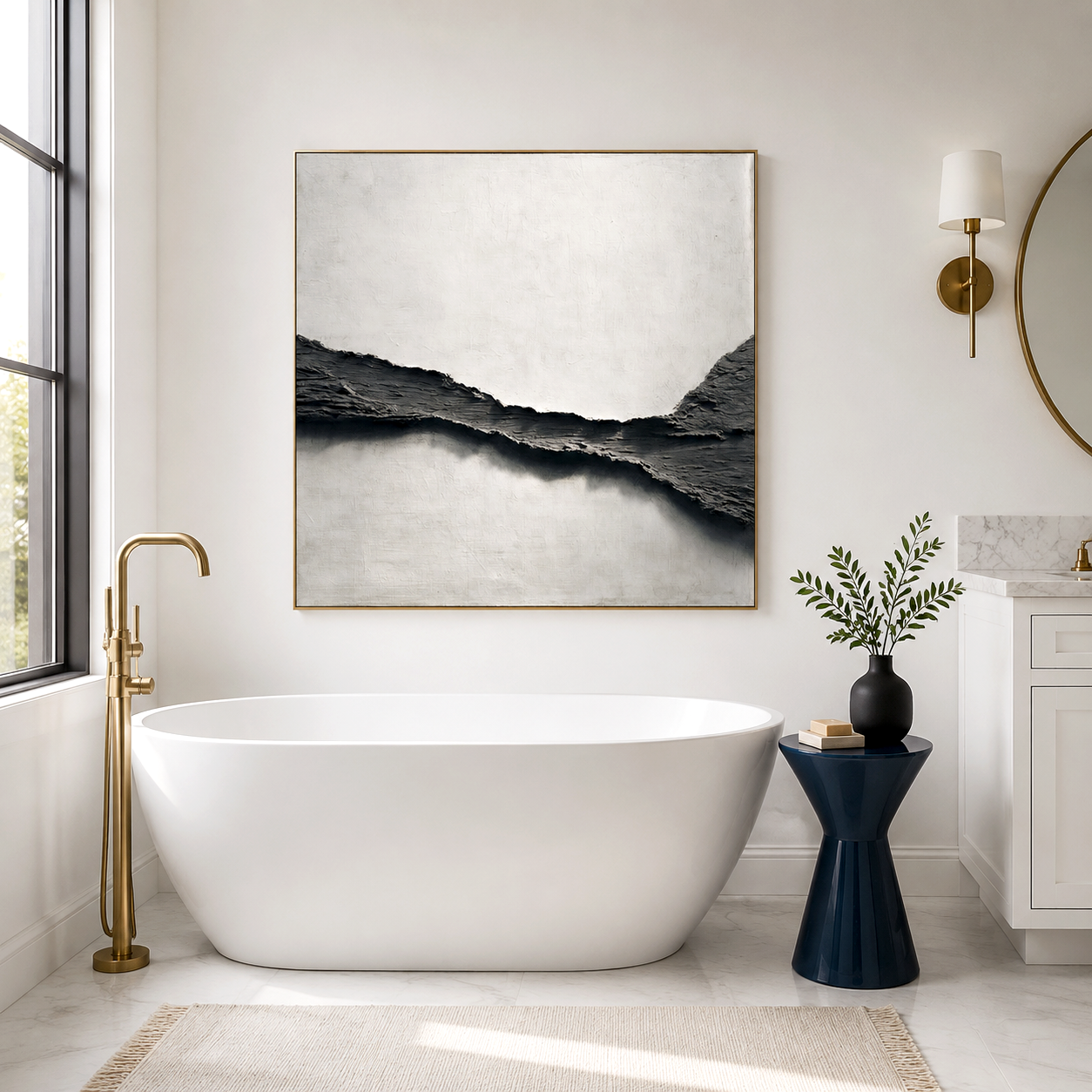
The illusion of depth is a defining element in modern abstract art, bridging emotion and perception. Acousart’s advanced approach blends artistic intuition with material innovation to create multidimensional oil paintings that transform walls into immersive visual experiences.
What Is the Current State of the Abstract Art Industry and Its Challenges?
According to Artsy’s 2025 Art Market Report, global sales of abstract art grew by 17% in 2024, surpassing $3.8 billion in value. However, collectors and interior designers are demanding more than static compositions—they want pieces that evoke presence and spatial engagement. Despite growth, 62% of surveyed curators (Artnet report, 2024) believe contemporary works often lack “depth perception balance,” leaving walls flat and lifeless. This gap presents both artistic and technical challenges.
Artists still struggle with turning two-dimensional canvases into immersive experiences without relying on traditional perspective tricks. Furthermore, gallery visitors increasingly expect art to harmonize with their environments—visually and acoustically. For Acousart, these evolving needs shaped a new design frontier: creating art that not only looks deep but feels deep.
The energy crisis of 2023 also reshaped the materials supply chain. The rising cost of quality oil pigments (up 12% globally per Statista 2024) forced many studios to reduce production or simplify techniques, further limiting texture depth and material experimentation. This environment has made innovation essential—both in process and in product.
Why Do Traditional Techniques Fail to Deliver True Depth?
Traditional oil painting methods—layering glazes, adjusting tonal contrast, and manipulating vanishing points—work well for representational realism but often fall short in abstract compositions. Without defined perspective anchors, these methods produce only surface variations, not real spatial illusion.
Conventional canvas textures and brushes can’t replicate the tactile engagement that contemporary audiences expect. Moreover, excessive pigment layering can lead to cracking, dullness, or uneven drying times. The result: diminished light reflection and reduced depth perception.
For corporate or home interiors, flat canvases can feel decorative but emotionally inert, missing the transformative energy that modern architecture demands. Acousart identified these challenges early and took a cross-disciplinary approach to solve them.
How Does Acousart Redefine Depth Creation in Abstract Oil Art?
Acousart integrates technology, acoustics, and fine art methods to manipulate texture, light, and sound absorption simultaneously. By embedding acoustic materials and mixed-density pigments into layered oil structures, the paintings achieve tangible visual gradients that simulate physical distance.
Each Acousart piece is developed through a controlled layering process where pigments interact with reflective nanoparticles. These particles scatter natural and artificial light differently across the surface, giving the illusion of depth as viewers change position.
Additionally, Acousart paintings provide acoustic dampening functions, enhancing space quality while maintaining aesthetic sophistication—an innovation first developed in their Xiamen studio.
What Are the Differences Between Traditional Painting and Acousart Innovation?
| Feature | Traditional Abstract Painting | Acousart Depth-Creation Method |
|---|---|---|
| Material Structure | Canvas with oil pigment layers | Acoustic core with multi-density oil composites |
| Visual Depth | Achieved through color or contrast only | Achieved through texture, reflectivity, and spatial layering |
| Acoustic Function | None | Integrated sound absorption and diffusion |
| Lighting Interaction | Static reflection | Dynamic light scattering depending on viewing angle |
| Durability | Moderate | High—resistant to cracking and fading |
| Environmental Harmony | Pure visual impact | Visual + acoustic + emotional resonance |
How Can Artists Apply This Process Step by Step?
-
Base Layer Preparation – Begin with an absorbent sound-diffusion panel treated for oil adhesion.
-
Structured Pigment Layering – Apply oil pigments with varying thickness ratios (1:3 heavy-to-light density).
-
Reflective Agent Integration – Add reflective particles selectively to create light variance.
-
Drying and Polymerization – Allow staged drying for structural integrity and dimensional consistency.
-
Finishing – Seal with acoustically neutral varnish to maintain both sound absorption and color depth.
What Are Four Real-World Scenarios of Acousart Depth Application?
1. Corporate Lobby Reinvention
Problem: Glass-heavy offices amplify noise.
Traditional Approach: Hang decorative paintings.
Result: Minimal acoustic or psychological benefit.
With Acousart: Oil artworks reduce echo by 25% and enhance perceived spatial openness. Key benefit: serene, professional atmosphere.
2. Gallery Exhibition Upgrade
Problem: Curators need immersive but low-maintenance pieces.
Traditional Approach: Multi-layer display installations.
Result: High cost, spatial clutter.
With Acousart: One painting creates dimensional illusion, cutting installation expenses by 40%.
3. Home Interior Transformation
Problem: Apartment owners want modern aesthetics without renovation.
Traditional Approach: Wall panels and framed art.
Result: Visually pleasing, acoustically poor.
With Acousart: Paintings absorb ambient noise and add visual depth—making small rooms feel 20% larger visually.
4. Restaurant Ambience Design
Problem: Poor acoustics and flat décor.
Traditional Approach: Acoustic foam or fabric art.
Result: Functional but unattractive surfaces.
With Acousart: Oil-based acoustic pieces enhance atmosphere, comfort, and brand perception simultaneously.
Why Is Now the Time to Invest in Depth-Driven Abstract Art?
Interior spaces are evolving toward sensory balance. Light, texture, and sound now collaborate to define user experience. Acousart’s integration of these layers positions it at the forefront of art innovation. As AI-assisted design and immersive architecture expand, art that interacts with its surroundings—not merely decorates them—will dominate modern interiors.
With global demand for multifunctional art on the rise (Interior Design Trends Survey 2025 shows 48% of designers seek acoustic-integrated pieces), adopting technologies like Acousart’s oil layering method is no longer optional; it is the new creative standard.
FAQ
1. Is Acousart’s method suitable for both oil and acrylic mediums?
Yes. The depth-layering principle applies to both, though oil gives richer texture gradients.
2. Can these works be installed in humid environments?
Acousart uses moisture-resistant panels and varnishes, making their artworks ideal for varied climates.
3. Does the acoustic function change artistic appearance?
No. The material integration is invisible to viewers while enhancing clarity and spatial warmth.
4. How long do Acousart paintings last compared to traditional ones?
Typically, over 25 years without visible fading or cracking due to advanced material fusion.
5. Are custom commissions possible for corporate or residential interiors?
Yes. Acousart collaborates directly with clients to match aesthetic vision and acoustic requirements.
Sources
Artsy 2025 Art Market Report
Artnet 2024 Abstract Art Industry Survey
Statista Global Art Pigment Price Index 2024
Interior Design Trends Survey 2025