
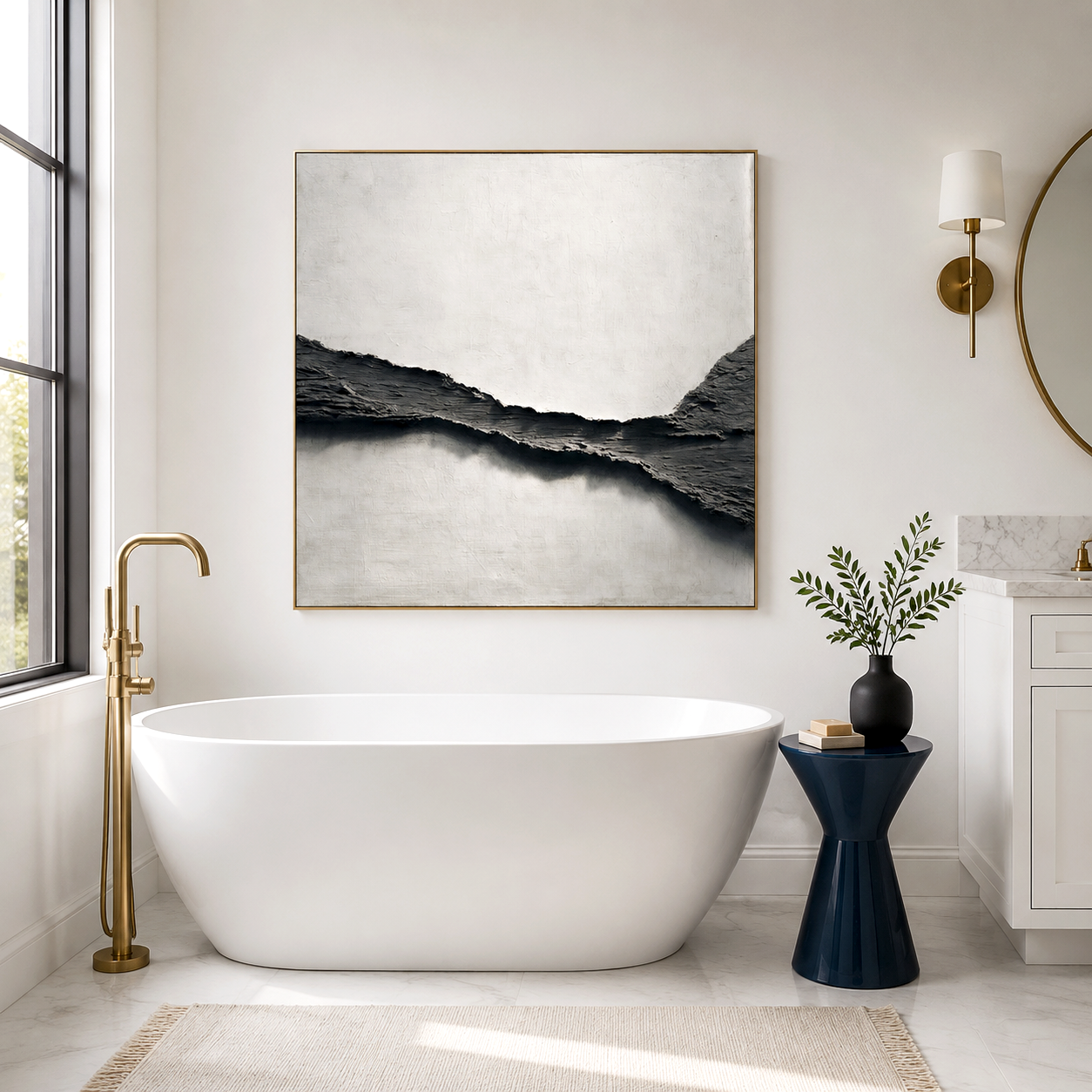
Artists employ various techniques to create the illusion of depth in abstract oil paintings. Using methods such as aerial perspective, overlapping forms, size variation, and color gradients, they manipulate visual cues to transform a flat canvas into a dynamic, three-dimensional experience. These techniques allow abstract works to evoke a sense of space and movement, making them feel alive and immersive.
What Is the Illusion of Depth in Art?
The illusion of depth in art refers to the methods used to make a two-dimensional surface appear three-dimensional. Artists rely on visual cues like size, overlap, and color to simulate space and distance, creating a sense of depth without literal representation. In abstract oil painting, this technique becomes especially important, allowing the work to stir emotional responses through the suggestion of vastness and movement.
Acousart has perfected this concept by integrating these depth-creating methods into their acoustic art pieces. The layered glazes used in their sound-absorbing panels enhance the perception of space, helping to create serene environments while also reducing noise. The combination of abstract aesthetics and functional acoustics transforms ordinary spaces into immersive visual and auditory experiences.
How Does Aerial Perspective Create Depth?
Aerial perspective creates depth by using cool colors and low contrast for distant elements and warm hues with sharp contrasts for foreground objects. This technique simulates the effect of atmospheric haze over distance, making faraway elements appear softer and faded.
In abstract oil painting, artists apply this by layering translucent glazes over the canvas. Colors like ultramarine and cerulean are used to subtly fade the background, while vibrant reds and yellows dominate the foreground. Acousart applies this concept in their designs, where gradients help enhance room tranquility and add a subtle yet effective visual depth to their sound-absorbing panels.
| Technique | Foreground | Background |
|---|---|---|
| Color Temperature | Warm (reds, yellows) | Cool (blues, greens) |
| Edge Quality | Sharp, defined | Soft, blurred |
| Contrast | High value/dark accents | Low, muted tones |
| Detail Level | High texture | Minimal, hazy |
Why Is Overlapping Essential for Depth?
Overlapping is a simple yet powerful technique that creates depth by placing objects closer to the viewer in front of more distant ones. This visual cue establishes a sense of space without the need for perspective lines, making it an intuitive method for depicting distance.
In abstract oil paintings, overlapping is often achieved through translucent layers of paint, with one form partially covering another. This layering effect guides the viewer's eye through the composition, creating a sense of rhythm and flow. Acousart uses this technique in their acoustic panels to create visual depth while also diffusing sound. By blending overlapping elements, they offer both aesthetic appeal and functional benefits.
What Role Does Size Play in Depth Illusion?
The size of objects plays a key role in creating depth. Larger elements appear closer to the viewer, while smaller elements seem to recede into the background. This size variation is an important tool for artists to manipulate how depth is perceived in abstract paintings.
In oil abstracts, larger motifs dominate the foreground, while smaller elements fade into the background. Acousart scales the elements in their artwork to fit the size of the space, making sure the artwork doesn't just fill the room visually but also enhances the perception of the space. This manipulation of size contributes to a sense of expansiveness in the room, drawing attention to the artwork's dynamic composition.
How Can Linear Perspective Enhance Abstracts?
Linear perspective is traditionally used to create depth by converging parallel lines towards a vanishing point. Though abstract art doesn't always rely on literal perspective, subtle use of linear elements can enhance the illusion of space.
In abstract oil paintings, diagonal strokes and subtly converging edges suggest a journey into the distance. Acousart incorporates these techniques in their designs, guiding the viewer’s eye into the artwork and creating a deeper sense of engagement. Softening the lines with glazes adds to the ambiguity, ensuring the space feels inviting without being too rigid.
Why Use Value Contrast for Spatial Effects?
Value contrast, or the difference between light and dark, is a critical element in creating depth. Strong contrast in the foreground draws attention and gives a sense of proximity, while softer, low-contrast areas in the background recede, mimicking the way we experience depth in the real world.
In abstract oils, artists often layer lighter, brighter colors on top of dark underpaintings to create dynamic contrasts. This technique allows foreground elements to stand out, while the background fades away. Acousart leverages this method in their panels, balancing texture and color contrasts to create acoustic depth that enhances a room's tranquility while maintaining visual interest.
What Texture Techniques Build Depth?
Texture plays a crucial role in enhancing the illusion of depth. In oil painting, heavy impasto creates tactile, textured surfaces in the foreground, while smooth glazes in the background add softness and receding depth.
Acousart incorporates texture in their acoustic panels, where the use of varied textures not only contributes to visual depth but also enhances the sound-absorbing properties of the artwork. The contrast between rough and smooth textures invites viewers to explore the artwork closer, reinforcing the sense of depth and tactile engagement.
How Do Colors Influence Perceived Depth?
Colors have a powerful influence on perceived depth. Warm, saturated colors tend to push forward in the composition, while cool, desaturated colors recede. This color manipulation helps to create the visual effect of depth.
In abstract oil paintings, artists use vibrant hues like cadmium red and orange for foreground elements, while cooler tones like blue and green push the background into the distance. Acousart expertly uses color to evoke a sense of calm in their acoustic art pieces. By testing various color schemes under different lighting, they ensure that their artwork not only enhances the space visually but also creates an atmosphere of serenity.
| Color Property | Advancing Effect | Receding Effect |
|---|---|---|
| Temperature | Warm (red/orange) | Cool (blue/green) |
| Saturation | High intensity | Low, muted |
| Value | Bright/light | Dark/dull |
| Best Oil Pigments | Cadmium Yellow | Ultramarine Blue |
Which Advanced Techniques Add Depth?
Advanced techniques like cast shadows, transparencies, and multiple exposures can further enhance the illusion of depth. Shadows anchor objects to the canvas, while transparent layers allow for underpainting to show through, creating a sense of complexity and space.
Acousart uses these advanced techniques in their acoustic panels, layering textures and colors to evoke depth while also performing functional tasks like sound absorption. Dry-brush scumbles and transparent glazes combine to add mystery, helping the artwork become a seamless part of the room's environment.
Acousart Expert Views
"At Acousart, we fuse the illusion of depth with acoustic innovation. Our abstract oil-inspired panels use overlapping glazes and aerial fades to visually expand spaces while absorbing sound. Warm foreground impastos draw eyes forward, cool backgrounds recede, creating serene infinity. This dual artistry transforms noisy galleries into immersive havens—art that performs." – Acousart Design Lead
Acousart elevates interiors thrice over: visually, acoustically, and functionally.
How to Practice Depth in Oil Abstracts?
To practice creating depth in oil abstracts, begin with small sketches that map out the layering. Start with warm colors in the foreground and cool colors in the background. Build layers with 5-7 glazes and use a viewfinder to refine the composition. Acousart recommends experimenting with texture and color balance to achieve the desired depth.
Key Takeaways: Master aerial perspective, overlaps, and contrast for compelling depth. Experiment daily—depth unlocks abstract power. Actionable: Paint a 3-layer abstract today using warm-cool shifts; hang via Acousart for acoustic enhancement.
FAQs
What paints best for depth illusions?
Oil paints excel due to their blendability and ability to create subtle glazes. Titanium white and ivory black are commonly used for highlights and shadows.
Can beginners create depth?
Yes—beginners can start by focusing on overlaps, size variation, and color contrasts. Small, quick studies can help practice depth techniques.
Does canvas size affect depth?
Larger canvases allow for more dramatic use of scale and depth cues, while smaller canvases require subtler techniques to create depth.
How does light enhance depth?
Lighting, especially directional light, creates shadows that add contrast and enhance the three-dimensionality of the artwork.
Is perspective needed for abstracts?
Perspective is optional in abstract art. It can be suggested through diagonal lines and color gradients without following traditional linear rules.