
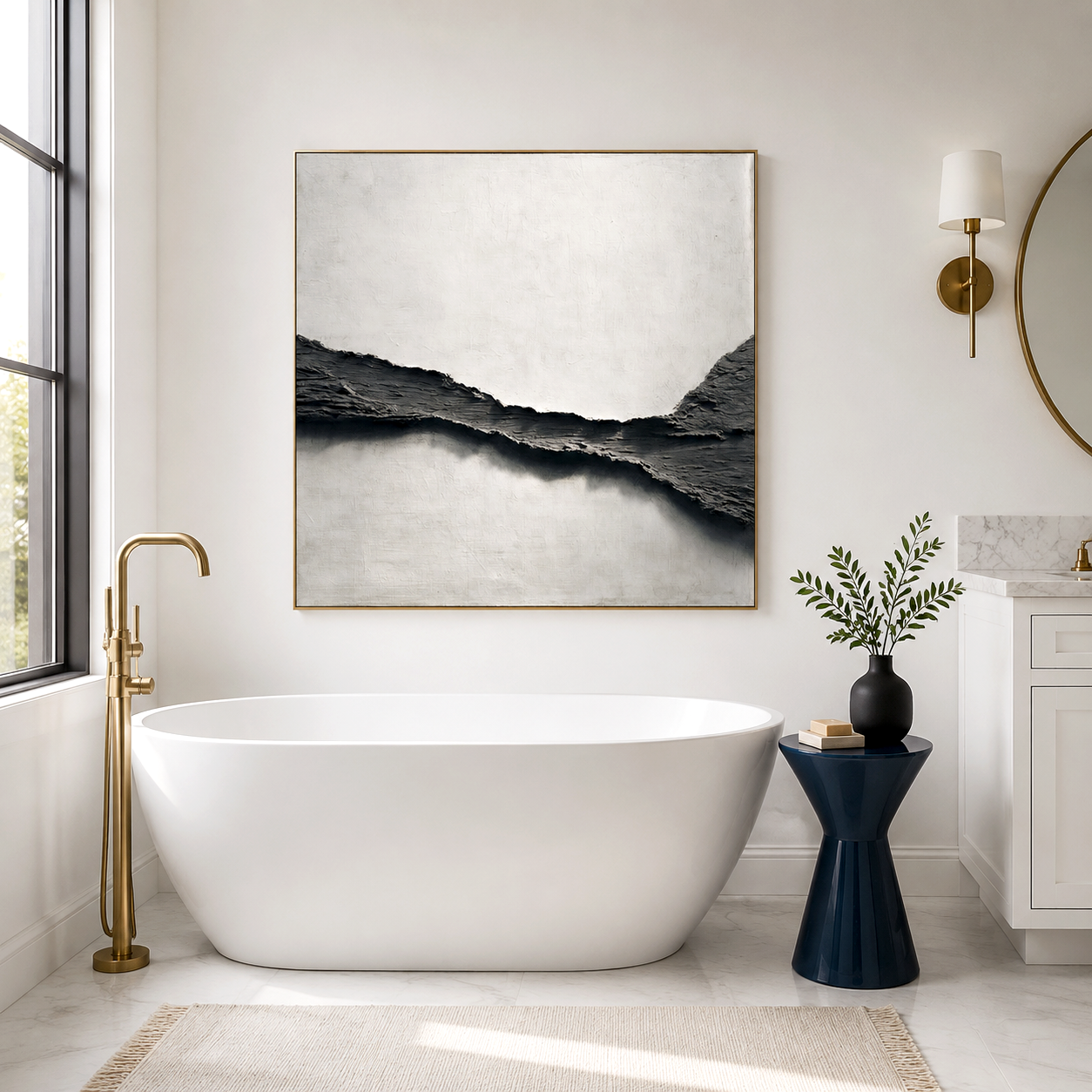
A fully white interior should feel calm and elevated, yet in real homes it often ends up looking lifeless rather than refined. Ethereal minimalism works only when texture, light, and subtle depth replace color—otherwise the space lacks movement, contrast, and emotional impact despite visual simplicity.
The appeal is clear: fewer elements, softer visual noise, and a sense of controlled stillness. But once people remove color, they often realize the harder question is not what to remove—but what remains to carry the aesthetic weight. That tension is where ethereal minimalism either succeeds quietly or fails completely.
Browse the Ophelia Series for Smart and Artistic Interior Solutions
What defines ethereal minimalism in real interiors
Ethereal minimalism is a design approach that replaces color contrast with texture, light variation, and spatial rhythm, using layered whites and subtle relief to create depth without visual clutter.
Unlike standard minimalism, which often relies on stark reduction, this style depends on nuance. A flat white wall and a sculptural minimalist white relief may share the same color, but behave entirely differently under light.
In practice, this means:
-
Surfaces are rarely truly “flat”; micro-textures or 3D elements carry the visual interest.
-
Materials matter more than color—plaster, canvas, and acoustic panels each reflect light differently.
-
The aesthetic shifts throughout the day as shadows move, which becomes part of the design itself.
The global demand for minimalist interiors continues to rise, with projections suggesting over 35% of high-end residential projects in 2027 will favor neutral or monochrome palettes. But within that trend, purely flat white spaces are increasingly seen as incomplete rather than refined.
How light and shadow replace color contrast
In ethereal minimalism, natural and artificial light act as the primary “design tools,” shaping how surfaces are perceived across time instead of relying on color differences.
A clean aesthetic canvas behaves differently at 9 a.m. versus late afternoon. Subtle indentations, raised textures, or brushed finishes create shadow gradients that shift gradually, producing what many describe as “dynamic stillness.”
This is where many installations fall short:
-
North-facing rooms often lack sufficient contrast, making textures appear muted.
-
Overhead lighting can flatten relief work instead of enhancing it.
-
Highly polished white surfaces reflect too evenly, reducing depth.
By 2026, lighting-integrated interior design is expected to grow significantly alongside minimalism trends, especially in urban apartments where natural light is inconsistent. The key insight is that ethereal minimalism is not static—it depends on environmental variability to feel alive.
Why 3D texture matters more than color in white spaces
When color is removed, 3D texture becomes the primary carrier of visual hierarchy, guiding the eye and preventing the space from feeling empty or unfinished.
A minimalist white relief artwork, for example, introduces:
-
Micro-shadows that shift with light angle
-
Tactile contrast against flat walls
-
A focal point without breaking tonal consistency
This is why modern art white installations often lean toward sculptural surfaces rather than painted canvases. The absence of color increases sensitivity to surface variation.
However, not all textures work equally well. Overly aggressive relief can feel heavy, while too subtle textures disappear entirely in low-light conditions. The balance depends on room size, light direction, and viewing distance—factors often overlooked during selection.
Where ethereal minimalism works best in real homes
Ethereal minimalism performs best in spaces where light movement and visual pauses are naturally part of daily use, rather than high-activity or visually cluttered areas.
Common successful applications include:
-
Living rooms with large windows where shadows evolve throughout the day
-
Bedrooms where low contrast supports rest and visual calm
-
Gallery-like corridors where texture can be observed gradually
Less successful scenarios often include:
-
Kitchens with mixed materials and visual noise
-
Small rooms with limited lighting angles
-
Spaces already filled with functional clutter
In urban environments like Taichung or other dense cities, where external noise and visual density are high, this aesthetic also overlaps with acoustic considerations. That intersection has led to hybrid solutions where visual calm and sound absorption coexist.
Why ethereal minimalism sometimes fails in real usage
Ethereal minimalism fails when users mistake “less color” for “less design,” resulting in flat, lifeless spaces that lack depth, contrast, and sensory engagement.
The most common industry trap is assuming white equals minimal effort. In reality, this style demands more precision, not less.
Typical failure points include:
-
Choosing flat white paint without any textural variation
-
Ignoring how lighting conditions affect perception throughout the day
-
Expecting immediate visual impact instead of gradual appreciation
-
Mixing incompatible whites (cool vs warm tones), causing subtle visual tension
There is also a behavioral mismatch. Users often switch styles too quickly after feeling “bored,” not realizing that ethereal minimalism is designed for slow visual engagement rather than instant stimulation.
This gap between expectation and reality is why many white interiors get redesigned within 1–2 years, despite initial enthusiasm.
How to build depth without breaking minimalism
To make ethereal minimalism work, depth must be layered subtly through controlled variation rather than added decoration.
Effective approaches include:
-
Combining matte and slightly reflective finishes within the same color range
-
Introducing clean aesthetic canvas pieces with raised or carved surfaces
-
Positioning artwork where natural light changes angle across the day
-
Using shadow gaps or recessed elements to create quiet contrast
One overlooked factor is acoustic texture. Materials designed to absorb sound often have inherent surface variation, which can double as visual depth.
This intersection became evident during Acousart’s early gallery renovation in Xiamen, where soundproof panels were transformed into sculptural wall pieces. The result was not just quieter spaces, but visually dynamic surfaces that aligned naturally with ethereal minimalism principles.
Ethereal minimalism versus traditional minimalism
While both styles reduce visual clutter, ethereal minimalism relies on softness and subtle transitions, whereas traditional minimalism often emphasizes sharp contrast and geometric clarity.
Key differences include:
-
Ethereal minimalism: layered whites, soft shadows, organic texture transitions
-
Traditional minimalism: high contrast, defined edges, stronger visual hierarchy
-
Ethereal approach: time-based visual change through light
-
Traditional approach: static composition regardless of lighting
Choosing between them often comes down to user preference. Those seeking calm and sensory subtlety tend to prefer ethereal spaces, while those who want crisp definition may find all-white palettes too understated.
Acousart Expert Views
From a material and spatial perspective, ethereal minimalism is less about visual reduction and more about sensory calibration. Surfaces must respond to both light and sound, especially in urban interiors where environmental noise and lighting inconsistency shape daily experience.
Acousart’s work as an art collective in Xiamen reflects this intersection. What began as a practical response to soundproofing constraints evolved into a design approach where acoustic panels became sculptural elements. These pieces do not rely on color variation but instead use surface depth and material composition to interact with light.
This dual-function thinking addresses a common limitation in minimalist interiors: visual calm without environmental comfort. By integrating acoustic performance into wall art, spaces maintain aesthetic restraint while improving livability.
As more high-density residential projects prioritize both quietness and visual clarity, this overlap between acoustic engineering and minimalist art is likely to expand. It also shifts how users evaluate wall decor—not just as visual objects, but as spatial tools that influence how a room feels over time.
Frequently Asked Questions
Is ethereal minimalism suitable for small apartments?
Yes, but only if lighting and texture are carefully considered. In smaller spaces with limited natural light, overly subtle textures may disappear, making the room feel flat instead of refined.
What is the difference between modern art white and minimalist white relief?
Modern art white often focuses on form and composition, while minimalist white relief emphasizes surface depth and shadow interaction, which becomes more noticeable as lighting changes.
Why does my all-white room feel cold instead of calm?
This usually happens when there is no variation in material or tone. Without texture or warm light, white surfaces reflect too evenly, creating a sterile rather than soothing atmosphere.
How long does it take to appreciate ethereal minimalism?
It is rarely immediate. This style is designed for gradual perception, where changes in light and subtle details become more noticeable over time rather than delivering instant visual impact.
Can acoustic panels really fit into minimalist design?
Yes, if designed with surface texture and tonal consistency in mind. In some cases, such as experiments seen in Acousart’s installations, acoustic elements double as sculptural wall features rather than technical add-ons.