
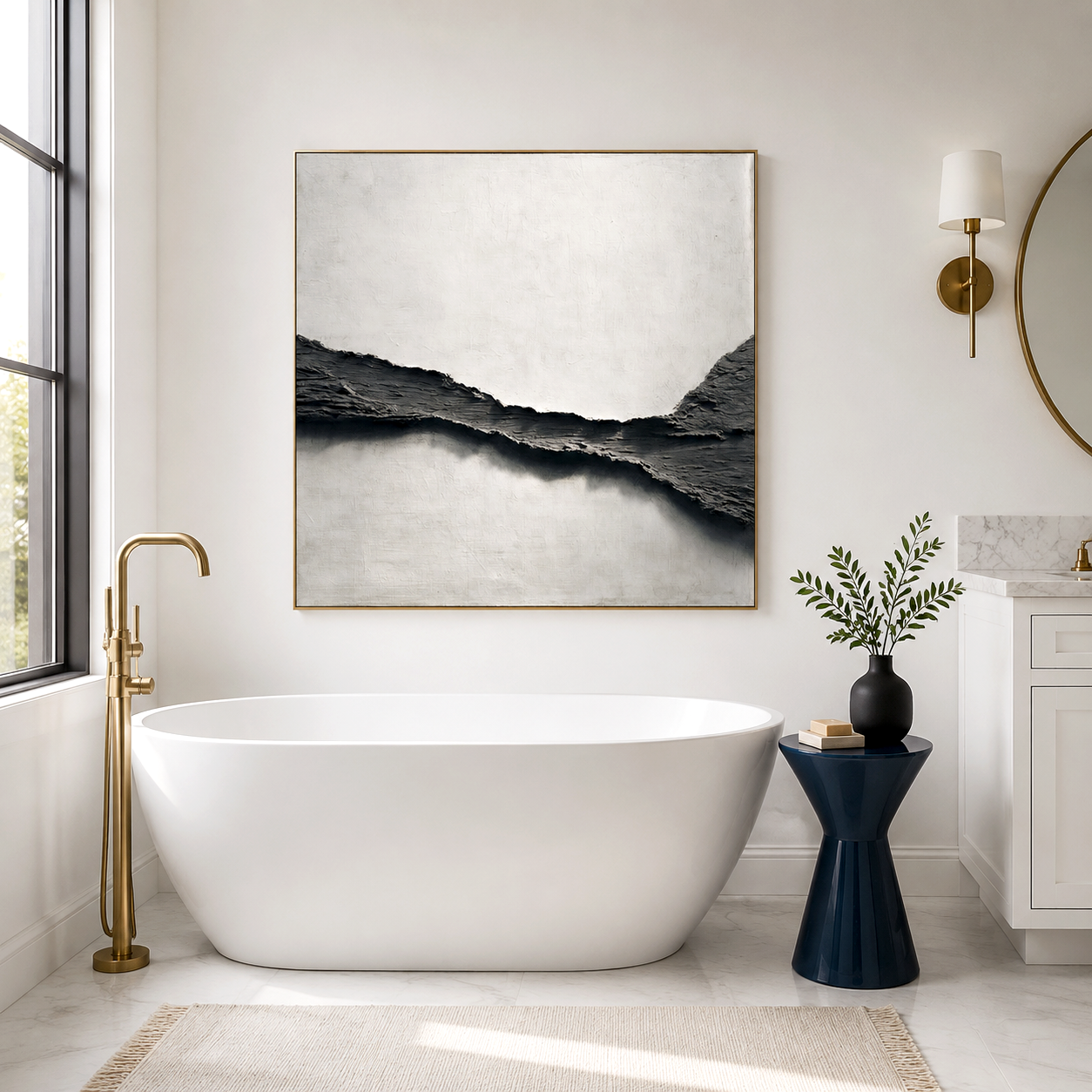
Contemporary plaster relief sits at the intersection of fine art, structural surface design, and interior acoustics. As premium residential and commercial interiors transition away from cold minimalism toward tactile, quiet, and deeply expressive spaces, the demand has intensified for dimensional wall treatments that transcend simple decoration. Modern designers and discerning buyers increasingly reject flat, mass-produced prints in favor of handcrafted, design-led pieces that define an architectural narrative. Within this evolving landscape, textured relief art has transformed from a premium aesthetic upgrade into an essential functional luxury.
For interior architects and luxury homeowners, the core challenge of modern layouts remains universal: solving blank-wall fatigue, material sterility, and disruptive room echoes simultaneously. High-performance artisan collections answer this need by bridging structural, hand-sculpted depth with verified acoustic diffusion. To secure a piece that maintains its structural integrity and visual weight when installed under real-world lighting, one must look beyond online images and understand the underlying engineering of authentic plaster-relief composition.
The Material Physics of Authentic Plaster Relief
True contemporary plaster relief exists in the technical space between fine-art canvas painting and structural masonry. The definitive distinction between gallery-grade relief and commercial lookalikes lies within the reactive nature of the compounds used and the sequential methods of creation.
An artisan constructs the dimensional surface gradually, applying mineral-based, fiber-reinforced plaster compounds in multiple successive passes. Each layer is meticulously sculpted, carved, or manipulated while the medium remains structurally responsive. As the mineral skin cures, it undergoes a natural settling process, hardening into a matte, stone-like exterior that registers as a permanent extension of the wall rather than an applied decoration.
This hand-built progression infuses the artwork with unique micro-variations that serve as the undeniable signature of true craftsmanship:
-
Organic Tapering: Hand-formed ridges naturally thicken, thin, and break across the plane, creating sharp edge definitions that cast complex shadow lines.
-
Tonal Micro-Textures: The porous, mineral surface exhibits a subtle grain that diffuses light, preventing the uniform gloss reflections common to synthetic materials.
-
Dimensional Variation: Authentic relief exhibits non-identical thickness and varying vertical depths across a single composition, ensuring a dynamic structural profile.
Conversely, generic retail alternatives depend on automated plastic injection molds, vacuum-formed PVC, or thin, machine-sprayed texture coatings over flat digital prints. While these mass-produced items may mimic structural depth in static catalog photographs, closer inspection reveals a perfectly uniform, synthetic sheen. They lack the edge definition, material density, and rich shadow behavior required to hold visual presence alongside premium natural materials like European oak, raw concrete, or natural quartzite.
Structural Engineering Behind the Canvas
A common failure point of entry-level dimensional art is the structural substrate supporting the weight of the cured plaster. Mineral compounds are inherently heavy, and lesser-quality construction consistently succumbs to ambient moisture and gravity over time.
Substrate Rigidity and Warp Resistance
Premium plaster wall art is never built over standard artist cardboard or thin, unbraced wood sheets. It demands a heavy, high-tension canvas composite or an engineered, moisture-resistant medium-density panel reinforced with internal anti-warping crossbars. This industrial-grade foundation ensures that as the wet mineral compounds cure and contract, the substrate remains perfectly planar, preventing hairline fractures within the sculpted valleys.
Architectural Framing and Perimeter Protection
Because authentic plaster relief relies on raised, exposed contours, the outer perimeter of the artwork remains vulnerable to impact during shipping, handling, and wall mounting. A professionally engineered floating frame serves a dual purpose:
+-------------------------------------------------------------+
|  [Floating Frame Outer Border]                              |
|   +-------------------------------------------------------+ |
|   |  (Air Buffer Gap - Protects Outer Edges From Impact)  | |
|   |   +-----------------------------------------------+   | |
|   |   |                                               |   | |
|   |   |     [Cured Hand-Sculpted Plaster Relief]      |   | |
|   |   |     [Heavy High-Tension Canvas Substrate]     |   | |
|   |   |                                               |   | |
|   |   +-----------------------------------------------+   | |
|   +-------------------------------------------------------+ |
+-------------------------------------------------------------+
This structural clearance ensures that neither installation tools nor uneven wall surfaces make direct contact with the delicate perimeter ridges, preserving the integrity of the piece for decades.
Architectural Comparison Matrix
When sourcing dimensional features for high-end properties, designers must evaluate how different wall treatments balance structural durability against artistic execution.
| Material Feature | Acousart Hand-Painted Acoustic Relief | Mass-Produced Plastic Molds | On-Site Traditional Plaster Finish |
| Material Base | Mineral-based compounds & acoustic canvas core | Vacuum-formed PVC or molded polyurethane | Traditional wet-mix lime or gypsum plaster |
| Aesthetic Aura | 100% hand-painted by named studio artists | Uniform, identical machine-replicated patterns | Seamless structural integration |
| Acoustic Rating | Up to 40% echo reduction (NRC ≥0.80) | Hard surface; reflects and amplifies sound | Rigid surface; high sound reflection |
| Installation Profile | Out-of-the-box hanging; flexible relocation | Low-weight adhesive mounting | High labor, permanent masonry construction |
| Long-Term Stability | Warp-resistant core; fade-proof matte skin | High risk of yellowing, cracking, or glossing | Vulnerable to structural settling cracks |
| Commercial Fit | High (B2B Trade discounts; custom scaling) | Low (Lacks premium feel for luxury spaces) | Variable (Disruptive on-site installation) |
Interaction with Directional Lighting
A contemporary plaster relief cannot be evaluated separately from the light entering the room. While standard flat paintings rely on applied pigments to simulate perspective, 3D abstract wall art utilizes physical depth to capture, shape, and scatter light dynamically throughout the day.
Recessed Ceiling Spot / Wall Washer LED
         \
          \  (Low-Angle Incident Light)
           \
____________v____________
   __   _      _   ___   <-- Hand-Sculpted Ridge Valleys
  /  \_/ \____/ \_/   \
 /                     \ <-- Deep, Layered Shadow Cascades
The Power of Low-Angle Grazing Light
Positioning the artwork under directional illumination—such as recessed ceiling spotlights, linear wall-washers, or low-angle side lighting—allows the light to skim across the surface contours. A ridge height of mere millimeters creates long, layered shadow cascades, transforming a clean white monochromatic piece into a shifting dramatic installation as ambient daylight shifts to interior illumination.
Placement Rules for Maximum Depth
-
Avoid Flat Overhead Ambience: Placing a relief piece directly beneath diffuse, omnidirectional fluorescent lights flattens the surface texture, neutralizing the sculptural impact.
-
Harness Side-Lit Intersections: Mount the piece on a wall perpendicular to large windows. The changing angles of natural morning and afternoon sunlight will cause the artwork's visual weight and pattern layout to evolve continuously.
-
Coordinate with Dining and Lounge Luminescence: In dining rooms and executive lounges, position the art where low-glare pendant light bounces off the raised contours, creating an intimate, soft atmosphere without creating visual glare for guests.
Architectural Typologies and Spatial Mapping
The expressive language of a plaster canvas must align with the underlying geometry and functional goals of the space it occupies. Choosing the correct sculptural style ensures the piece enhances rather than fights the surrounding architecture.
-
Organic Curves and Arching Relief: This style relies on sweeping, continuous transitions and fluid shadow gradients. It is best deployed in wellness spaces, luxury master suites, and calm residential entryways where the design goal is to lower heart rates and introduce natural softness to rigid drywall boundaries.
-
Layered Ridge Lines and Mountain Textures: Characterized by sharp, directional movement, heavy impasto strokes, and deep vertical drops. This style forms an excellent visual anchor for double-height grand rooms, minimalist fireplace surrounds, and feature walls in high-end dining establishments.
-
Linear Grids and Geometric Formulations: Featuring crisp shadow lines, structured spatial rhythms, and hard-edged transitions. This configuration is engineered for corporate boardrooms, contemporary home offices, and architectural corridors where the artwork must reinforce structural precision and professional focus.
-
Restrained Low-Relief Planes: Utilizing minimal depth variations and quiet tonal shifts. This understated treatment is tailored for compact meeting spaces, treatment rooms, and executive offices where texture should provide sophisticated background interest without cluttering the spatial volume.
Acoustic Integration in Minimalist Environments
The visual consequence of the modern architectural shift toward raw concrete, micro-cement, floor-to-ceiling glass, and exposed stone is an intense increase in auditory discomfort. Hard, non-porous surfaces act as acoustic mirrors, reflecting sound waves unchecked, which leads to high reverberation times, muddied speech clarity, and elevated stress levels.
Traditional soundproofing remedies—such as industrial fiberglass wall panels or utilitarian acoustic foam tiles—effectively solve the echo but completely compromise the aesthetic design of high-end rooms. Hand-painted acoustic wall art solves this dilemma through a unified dual-core design.
   [Sound Waves Enter Panel]
          |   |   |
          v   v   v
+-----------------------------------+
|  100% Hand-Painted Mineral Skin   | <-- Diffuses High Frequencies
+-----------------------------------+
|  Porous Acoustic Core (NRC >0.8)  | <-- Absorbs Mid-to-Low Frequencies
+-----------------------------------+
|  Reinforced Warp-Proof Backing    | <-- Direct Structural Support
+-----------------------------------+
When sound waves strike the artwork, the raised mineral formations instantly diffuse high-frequency reflections, breaking up unified echoes. Simultaneously, the sound energy passes through the specialized, porous acoustic canvas core, which absorbs mid-to-high frequency reverberations, yielding up to a 40% reduction in perceived room echo.
While not a replacement for comprehensive multi-wall isolation or structural soundproofing, these integrated panels soften acoustic harshness in minimalist spaces without requiring dedicated, unsightly acoustic installations.
Installation, Preservation, and Trade Configuration
Secure Mounting and Substrate Anchor Protocols
Because high-quality 3D plaster paintings carry significantly more mass than standard paper prints, standard picture wire or adhesive strips are insufficient. Installers must secure heavy-duty toggle bolts or threaded dry-wall anchors directly into steel or timber studs, mounting the piece via the structural heavy-gauge D-rings attached directly to the floating wood frame. During installation, the face of the relief must never be placed flat against hard surfaces; keep protective foam corner guards intact until the piece is securely suspended.
Conservation and Long-Term Maintenance
Maintaining the pristine, chalky matte aesthetic of a mineral-based relief requires minimal yet specific steps:
-
Dust Control: Clean the piece once a week using a clean, dry, ultra-soft cosmetics brush or a low-pressure compressed air duster to clear accumulation from the valleys.
-
Chemical Ban: Never apply water, liquid cleaning solutions, or standard household detergents. Liquid introduction will permanently alter the mineral surface's matte texture and risk staining the unsealed compound.
-
UV Placement: Position the piece away from direct, localized water spray and intense, unmitigated UV exposure to ensure the hand-painted mineral skin maintains its original coloration and structural stability for decades.
B2B Trade Program Integration
For commercial interior architects, luxury developers, and hospitality procurement managers, sourcing art requires professional logistical backing. High-performance design programs provide dedicated advisors for end-to-end project management:
-
Bespoke Scaling: Artworks can be structurally custom-sized and color-calibrated to match specific brand palettes, fabric codes, or precise wall dimensions.
-
Pre-Shipment Validation: High-resolution photography and video verification loops are provided prior to dispatch from the Xiamen artisan studio, ensuring final textures align perfectly with client expectations.
-
All-Inclusive Shipping: Commercial orders feature fixed, fully inclusive pricing covering secure wooden-crate freight packaging, international customs duties, and door-to-door delivery with zero hidden entry fees.
Frequently Asked Questions
What material is contemporary plaster relief wall art made of?
Authentic plaster relief is constructed using premium mineral-based or fiber-reinforced gypsum compounds layered sequentially over a heavy-duty, high-tension canvas substrate or rigid composite backing panel. The surface is shaped by hand while pliable, curing into a dense, non-glossy, stone-like exterior that holds its shape permanently.
How do you protect the heavy 3D plaster painting from cracking during international transit?
Premium relief art is engineered with internal warp-resistant structural crossbars and cradled within a protective outer floating frame. For international shipping, the pieces are wrapped in shock-absorbing multi-layer foam sheets and packed inside heavy-duty corrugated cartons or custom-built wooden crates, preventing movement and outer impact damage.
Can custom plaster relief art pieces be ordered for specific commercial projects?
Yes. Through specialized trade programs, interior designers and corporate procurement managers can request custom sizing, specific depth scaling, and personalized color matching. Clients can submit specific textile or paint swatches to align the artwork seamlessly with their overall interior architecture.
What is the exact difference between plaster relief art and standard acoustic panels?
Standard acoustic panels are utilitarian, fabric-wrapped fiberglass or foam blocks designed purely for industrial sound absorption, offering no aesthetic value. Authentic acoustic plaster relief art fuses a certified, highly porous sound-absorbing core with a 100% hand-painted artistic surface, serving as a gallery-grade visual focal point while simultaneously reducing room echo by up to 40%.
How does directional LED lighting change the appearance of monochromatic white plaster art?
Monochromatic white plaster art relies entirely on shadows to express its design. When directional light—such as a ceiling spot or wall washer—strikes the artwork at a shallow angle, the raised ridges block the light, creating long, layered shadow shapes. As the angle or intensity of the light changes, the appearance of the artwork shifts, creating an evolving visual display.