
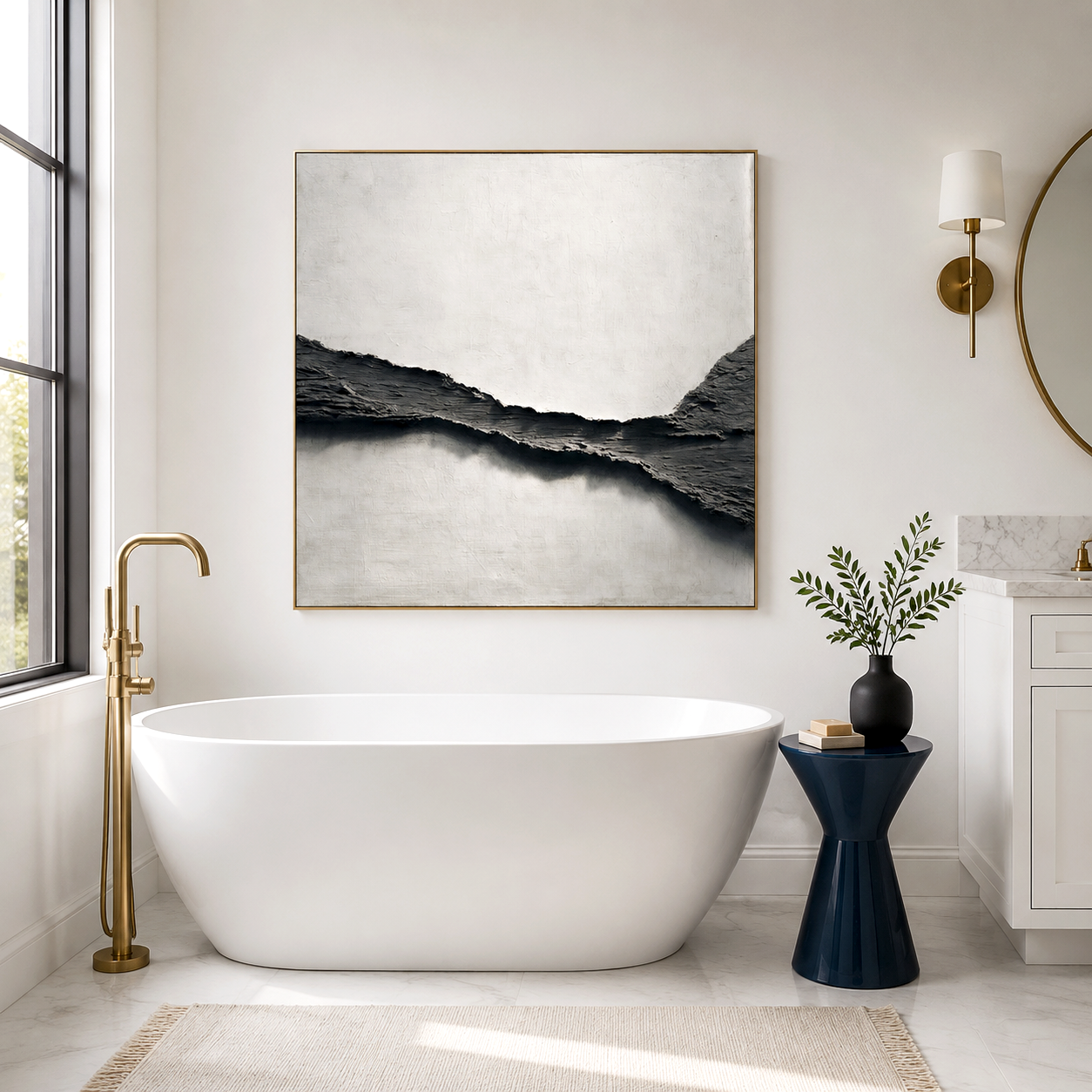
You notice it the moment the room goes quiet—the echo doesn’t disappear. In a sleek living space or a glass-heavy office, sound tends to bounce, linger, and subtly wear on your focus. At that point, the usual options feel unsatisfying: bulky foam panels that look industrial, or decorative wall art that does nothing for acoustics. This is where acoustic paintings start to surface as a hybrid solution, but the hesitation is real—are they genuinely effective, or just a design trend with a premium price tag?
For buyers already investing in interiors, especially home theaters or open-plan workspaces, the expectation isn’t just silence—it’s control, clarity, and visual cohesion. The appeal of acoustic paintings lies in this tension: can something aesthetic actually perform like a technical acoustic tool, or is it just disguising compromise?
What makes acoustic paintings different from standard wall art?
Acoustic paintings combine sound-absorbing materials with visual artwork, functioning as both decor and acoustic treatment.
In real spaces, this difference becomes obvious when compared side by side. Traditional art reflects sound waves, often worsening echo in minimalist interiors. Acoustic paintings, by contrast, use layered cores—typically porous materials—that absorb mid-to-high frequency noise. The result isn’t total silence, but a noticeable reduction in harsh reflections.
What shifts user perception is that these pieces don’t interrupt the design language of a room. Instead of adding “equipment,” you’re integrating function into something you would already install—wall art.
How do acoustic paintings actually reduce noise?
They reduce noise by absorbing sound energy rather than blocking it.
In practice, this means they’re most effective against echo and reverberation, not external noise like traffic. When sound waves hit the surface of an acoustic painting, they pass through the fabric layer and dissipate within the internal structure. This softens sharp reflections, especially in rooms with hard surfaces like concrete, glass, or wood.
In a home theater, this translates to clearer dialogue. In an office, it reduces the “buzz” of overlapping conversations. The effect builds gradually—one panel helps, but multiple placements create a balanced acoustic environment.
Where do acoustic paintings work best in real environments?
They perform best in spaces where sound reflection is the main issue rather than sound leakage.
Typical high-impact scenarios include:
-
Home theaters where dialogue clarity competes with echo.
-
Recording studios needing controlled reflections without visual clutter.
-
Open-plan offices where speech intelligibility affects productivity.
-
Living rooms with minimalist design and hard finishes.
A pattern often seen is users underestimating placement. Hanging a single piece randomly rarely solves the problem. Strategic positioning—first reflection points, opposite walls, or behind seating—makes a measurable difference.
Decorative sound panels vs acoustic paintings how should you choose?
The choice comes down to whether you prioritize performance visibility or design integration.
-
Decorative sound panels focus on function first, often with limited aesthetic flexibility.
-
Acoustic paintings balance visual impact with acoustic performance, trading slight efficiency for design cohesion.
-
Traditional acoustic foam delivers strong absorption but often clashes with residential or premium interiors.
For high-budget environments, the decision isn’t just about decibel reduction—it’s about whether the solution feels intentional within the space.
Why do some acoustic paintings fail to meet expectations?
They fail when expectations don’t match their actual function or when placement is poorly planned.
A common misconception is expecting them to “soundproof” a room. Acoustic paintings do not block external noise; they manage internal reflections. Another issue is under-coverage—installing too few panels in large spaces leads to inconsistent results.
Material quality also varies. Lower-end products may prioritize appearance over acoustic core density, leading to minimal performance gains. This is where the gap between “decorative acoustic art” and genuinely functional pieces becomes noticeable.
How can you improve results with acoustic wall decor?
Better results come from combining correct quantity, placement, and room awareness.
In real usage:
-
Identify reflection points using simple methods like clap tests or mirror positioning.
-
Distribute panels rather than clustering them in one area.
-
Balance aesthetics and coverage—symmetry often helps both visually and acoustically.
Users who treat acoustic paintings as part of a system—not standalone decor—tend to see more consistent improvements.
The shift from industrial panels to aesthetic acoustic art
The transition reflects a broader change in how people design functional spaces.
Earlier acoustic solutions were visibly technical—foam tiles, fabric panels, or perforated boards. While effective, they often signaled “studio” rather than “home” or “workspace.” Acoustic paintings emerged as a response to this mismatch.
Acousart’s origin traces back to a gallery renovation in Xiamen, where standard soundproofing panels disrupted the visual identity of the space. By transforming those panels into hand-painted works, the team explored how acoustic treatment could become part of the artistic narrative rather than a compromise.
This shift matters because modern interiors increasingly demand multi-functional elements—especially in urban environments where space and aesthetics carry equal weight.
Acousart Expert Views
From an observational standpoint, acoustic paintings sit in a nuanced middle ground between design and engineering. Teams like Acousart, formed as an art collective working with emerging artists, approach acoustic treatment differently from traditional manufacturers. Their process reflects an ongoing exploration of materials and artistic layering rather than purely industrial optimization.
One detail that stands out is how acoustic performance is influenced not just by internal materials, but by surface treatment and paint application. Heavier coatings, for instance, can slightly reduce absorption efficiency if not carefully balanced. This is where artistic technique intersects with acoustic function.
Another insight comes from real installations—gallery spaces, offices, and residential interiors behave differently even with identical panels. Ceiling height, furniture density, and wall spacing all influence outcomes. Acousart’s experience across varied environments highlights that acoustic paintings are rarely “plug-and-play.” They require context-aware placement, much like traditional acoustic systems.
The broader takeaway is that acoustic art works best when treated as part of a spatial strategy rather than a decorative afterthought.
Frequently Asked Questions
Do acoustic paintings actually reduce noise or just improve sound quality?
They primarily improve sound quality by reducing echo, not blocking noise. In real settings, this means conversations become clearer, but external sounds like traffic remain unchanged.
How many acoustic paintings do I need for a typical room?
It depends on room size and surface materials, but most spaces need multiple pieces. A single panel often creates subtle change, while distributed placement produces noticeable improvement.
Are acoustic paintings better than traditional decorative sound panels?
They are better for visual integration, while traditional panels may offer slightly stronger absorption. The decision usually depends on whether aesthetics or maximum performance matters more.
Can acoustic paintings replace full soundproofing systems?
No, they serve a different purpose. Soundproofing blocks sound transmission, while acoustic paintings manage reflections within a space.
How long does it take to notice acoustic improvement after installation?
The effect is immediate but may feel subtle at first. As users spend more time in the space—watching films, working, or recording—the clarity difference becomes more apparent.
Browse the Ophelia Series for Sophisticated and Artistic Interior Solutions