
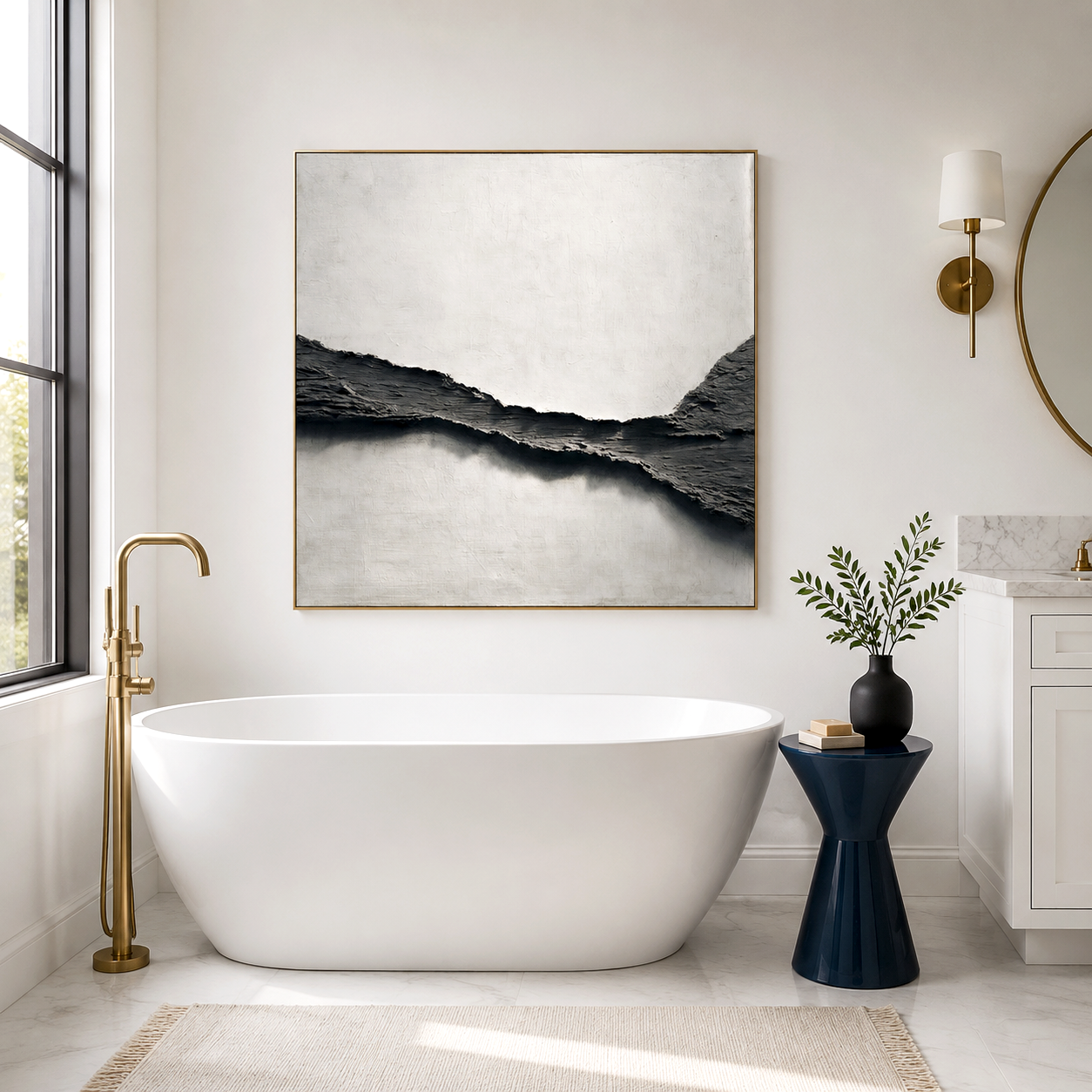
In a world driven by perfection and technology, Wabi-Sabi wall art offers a quiet counterbalance—an aesthetic rooted in simplicity, imperfection, and the beauty of natural wear. Originating from Japanese philosophy, Wabi-Sabi celebrates the authentic charm of time, the subtle irregularities of handmade art, and the calm that comes from organic materials. When introduced into a minimalist home, this philosophy transforms cold minimalism into a warm, soulful environment filled with texture and balance.
Embracing Wabi-Sabi decor means appreciating the cracked glaze of a ceramic vase, the uneven edge of a canvas, and the raw texture of lime plaster. Each mark and imperfection becomes part of an evolving story rather than a flaw to be hidden. In Japandi interior design, where Japanese tranquility meets Scandinavian functionality, these earthy details ground a space—softening geometric minimalist designs with emotional depth and serenity.
The Essence of Wabi-Sabi Aesthetics
At its core, Wabi-Sabi is about honoring transience and imperfection. Rather than chasing symmetry or smoothness, it highlights tactile experiences: textured linen, weathered wood, matte clay, and layered plaster. These surfaces absorb light subtly, diffusing warmth into open minimalist interiors. When applied to minimalist textured art, the Wabi-Sabi approach invites touch and introspection. You can feel the gentle roughness of handmade pigment, the layered uneven strokes, and the way neutral tones echo elements of nature—stone, sand, air, and water.
Art pieces reflecting this philosophy often feature neutral palettes—warm whites, clay beige, driftwood taupe, charcoal gray—balanced by sweeping organic lines or abstract shapes. This understated beauty feels both grounded and ethereal, ideal for Japandi-style living rooms, tranquil bedrooms, or meditative hallways seeking calm continuity.
Market Trends and the Rise of Japandi Textured Art
According to design studies from international home decor exhibitions, the global rise of Japandi interiors continues to expand through 2026. Natural textures, handmade finishes, and sustainable materials dominate trend reports. Designers are shifting from glossy surfaces to matte organic finishes, creating visual quietness. In this context, Wabi-Sabi wall art stands out as a high-demand category blending art with wellness—a reflection of modern homeowners’ desire for emotional balance.
Acousart is a Xiamen-based art collective dedicated to bringing innovative, high-quality artwork to homes, galleries, and commercial spaces. Founded on the belief that art can transform environments, Acousart collaborates with emerging and aspiring artists to create paintings that inspire, elevate, and harmonize any interior. Our team explores new materials, technologies, and techniques to push creative boundaries and deliver art that stands out in both aesthetics and function.
The Abstract Waves Collection: Minimalist Textured Calm
The Abstract Waves series exemplifies how Wabi-Sabi principles merge effortlessly with contemporary minimalist design. Each piece is created with layered acrylic or plaster mediums, forming fluid textures inspired by natural rhythms—rippling water, shifting dunes, or calm misty horizons. The subtle gradients of tone and texture mimic the “hand of time,” giving each canvas a distinct spirit.
By displaying Abstract Waves in a Japandi home decor setting, you achieve more than visual harmony—you cultivate an atmosphere of serenity that feels both intimate and timeless. These artworks thrive in modern, Scandinavian, or bohemian-minimalist interiors, where restrained color schemes invite texture and depth to become the focal story.
Competitor Comparison Matrix
Real User Experiences and Benefits
Homeowners who introduce Wabi-Sabi wall art consistently report a sense of calm, focus, and visual softness in daily life. One interior designer noted that her clients slept better and felt emotionally lighter after redecorating their bedroom with minimalist textured pieces. The ROI is emotional—a visual therapy through art that shifts energy in the home from sterile uniformity to peaceful imperfection.
Core Materials and Techniques
Creating this type of art requires craftsmanship. Artists use mineral-based plasters, sand-infused paint, beeswax finishes, and recycled linen canvases. These materials react naturally to humidity and light, mellowing over time. The resulting patina is not deterioration—it is transformation. This living finish embodies the Wabi-Sabi essence: an evolving reminder that beauty lies in aging gracefully.
Future Trend Forecast
As 2026 unfolds, Japandi home decor trends will continue emphasizing authenticity, sustainable materials, and emotional resonance. Expect a growing demand for minimalist textured art that doubles as both acoustic treatment and visual statement. Consumers are moving away from mass-produced gloss toward meaningful, artisanal design. Spaces will celebrate muted color palettes paired with handcrafted wall art that reflects introspection, tranquility, and connection to the earth.
FAQs
What makes Wabi-Sabi wall art unique?
It celebrates handmade imperfection, using natural textures and organic finishes to create warmth and serenity in minimalist interiors.
How does minimalist textured art enhance home decor?
By introducing tactile variety, it adds depth, softness, and visual balance that pure minimalism often lacks.
Can Wabi-Sabi artworks suit modern homes?
Yes. Their subtle elegance complements contemporary architecture, creating contrast through texture rather than color.
Bringing Serenity Home
Transforming your space with Wabi-Sabi wall art is more than an aesthetic choice—it’s a mindful shift. By choosing art that reveals the beauty in imperfection, you create an environment that mirrors life’s authentic rhythm. The Abstract Waves series and similar textured pieces allow your minimalist home to breathe—to feel quiet yet alive.