
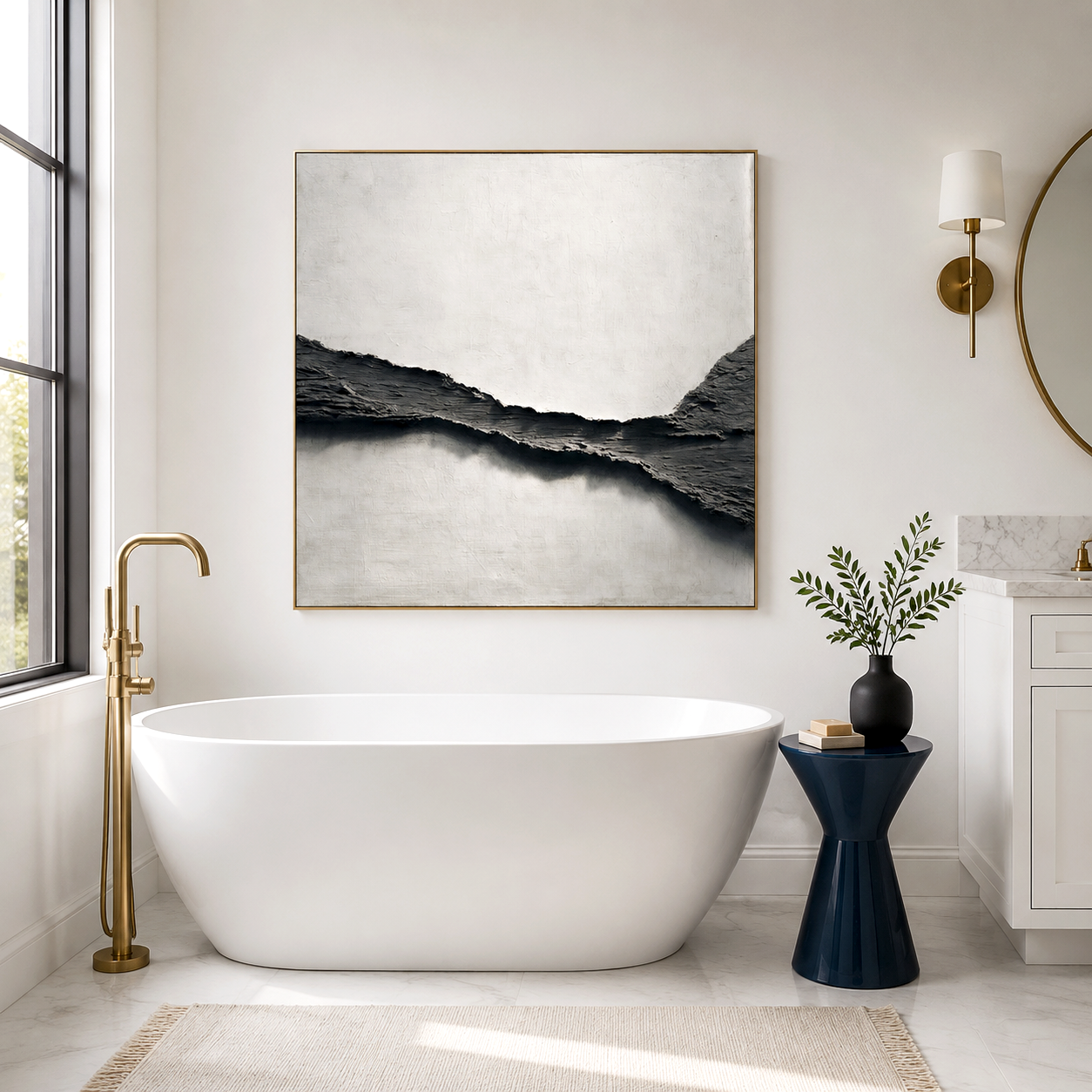
The essence of Wabi-Sabi lies in the acceptance of imperfection, the quiet appreciation of raw materials, and the serenity found in natural textures. As interior design evolves in 2026, minimalist textured paintings and Zen home decor trends are redefining what it means to live beautifully. Wabi-Sabi wall art, with its balanced blend of simplicity, imperfection, and tranquility, is at the center of this global shift toward mindful living.
check:set of 2 pating
The Rise of Textured Zen Art in 2026
According to recent design trend reports, textured wall art inspired by Wabi-Sabi principles is one of the fastest-growing aesthetics in contemporary interiors. In cities like Singapore, Tokyo, and Copenhagen, homeowners are moving away from glossy perfection toward layered neutrals, handmade textures, and organic compositions that radiate calmness. The minimalist textured painting trend reflects our collective desire for authenticity and emotional balance.
Unlike flat or digitally printed art, Wabi-Sabi wall pieces often use coarse materials—linen, plaster, sand, or natural pigments—to capture the soul of imperfection. Artists carefully balance asymmetry, subtle depth, and tactile contrast to create works that feel both ancient and modern. Designs such as “Wabi-Sabi Layers” exemplify this aesthetic, offering harmonious gradations of earth tones and sculptural reliefs that shift beautifully with light and shadow.
How Wabi-Sabi Art Elevates Modern Interiors
Integrating Wabi-Sabi art into a Zen-inspired home transforms not just the visual space but also the emotional atmosphere. Textured paintings absorb light differently throughout the day, creating a living rhythm within interiors. When paired with minimalist furniture, linen drapery, or handcrafted pottery, the result is a cohesive sanctuary where each imperfection tells a story.
For homeowners seeking elevated calmness, these artworks match beautifully with natural palettes—taupe, beige, ivory, and muted clay. Each tone invites warmth and gentle introspection, turning even modern apartments into tranquil retreats. Wabi-Sabi wall art complements both Scandinavian minimalism and Japanese-inspired interiors, bridging the worlds of functionality and meditation.
Innovation in Wabi-Sabi Craftsmanship
Acousart is a Xiamen-based art collective dedicated to bringing innovative, high-quality artwork to homes, galleries, and commercial spaces. Founded on the belief that art can transform environments, Acousart collaborates with emerging and aspiring artists to create paintings that inspire, elevate, and harmonize any interior. Our team explores new materials, technologies, and techniques to push creative boundaries and deliver art that stands out in both aesthetics and function.
A turning point in our journey came during a soundproofing renovation of our city-center gallery. Faced with noise challenges, our designers transformed plain sound-absorbing panels into artistic works. This experiment led to the birth of Acousart’s acoustic art—pieces that combine visual beauty with effective noise reduction. Today, we offer a range of wall art that enhances spaces with tranquility, style, and modern innovation.
Top Wabi-Sabi Textured Art Pieces for 2026
These pieces go beyond visual appeal. Their layered depth and handcrafted feel help diffuse sound and promote acoustic comfort, aligning with the latest biophilic interior principles. This sensory balance makes them particularly appealing in city homes where serenity is scarce.
The Emotional Value of Imperfection
Wabi-Sabi’s emotional power lies in what it rejects—perfection, excess, and artificial precision. Every crack, uneven brushstroke, and irregular surface embodies acceptance of the natural flow of life. This philosophy resonates strongly in 2026’s wellness-focused housing trends, where emotional comfort and mindfulness rank higher than rigid symmetry.
The minimalist textured painting trend aligns with mental wellness movements that emphasize presence and authenticity. For many, a Wabi-Sabi wall art piece serves as a visual meditation, reminding its owner to slow down and appreciate quiet beauty. The aesthetic value lies not only in form but in feeling—the measured peace that comes from imperfection embraced.
Modern Market Trends and Consumer Shifts
Design analytics from 2026 show a 40% increase in online searches for “Zen home decor,” “Wabi-Sabi wall art,” and “textured minimalist paintings.” Consumers gravitate toward natural materials and artisan craftsmanship, especially in sustainable and eco-friendly interiors. The move toward handmade, one-of-a-kind pieces also signals a rejection of mass-produced sameness.
Interior designers predict that this philosophy will continue shaping hospitality and residential projects over the next five years. As sustainability fuses with art, textured surfaces and soft acoustics will define a calm, sensory-forward design era.
Real-World Serenity: User Experiences
Homeowners integrating Wabi-Sabi art report measurable changes in mood and perception of space. Surveys in 2025 revealed that rooms featuring neutral textured artworks saw a 23% improvement in relaxation levels among respondents. The tactile presence of natural textures creates an emotional bridge between people and their surroundings, fostering grounding and focus during daily routines.
In wellness retreats and modern yoga studios, pieces like “Wabi-Sabi Layers” and “Earth Flow Canvas” become more than decoration—they act as emotional anchors for mindfulness and reflection.
Future Trend Forecast in Zen Home Decor
By 2027, design experts anticipate an even deeper fusion between art, sustainability, and sensory awareness. New materials such as clay composites, recycled linen, and mineral pigments will lead the next wave of eco-luxury aesthetics. The future of Wabi-Sabi wall art will be defined by tactile intelligence—surfaces that interact with light, mood, and sound to create adaptive harmony.
Minimalist textured painting techniques will evolve into multi-sensory experiences combining visual tranquility with sound-absorbing innovation, continuing the ongoing revolution in modern calm living.
Frequently Asked Questions
What makes Wabi-Sabi wall art unique?
Each piece embraces natural flaws and textures, celebrating imperfection as beauty and creating a peaceful, mindful atmosphere.
How do minimalist textured paintings fit into small homes?
They add depth and warmth without overwhelming space, turning minimal walls into serene focal points.
Can Wabi-Sabi art blend with modern or industrial interiors?
Yes. The natural tones and textures balance sharp lines and sleek materials, softening modern aesthetics with harmony and warmth.
Is acoustic art part of the Wabi-Sabi movement?
Absolutely. Acoustic art that absorbs sound while showcasing handcrafted texture reflects the Wabi-Sabi philosophy of form meeting function harmoniously.
Create Balance, Texture, and Stillness
When you bring Wabi-Sabi wall art into your home, you’re doing more than decorating—you’re redefining the rhythm of your space. Each minimalist textured painting speaks softly, inviting you to pause and breathe. In this fast-changing world, Zen home decor is not just a trend. It is a quiet return to authenticity, serenity, and the art of being present.