
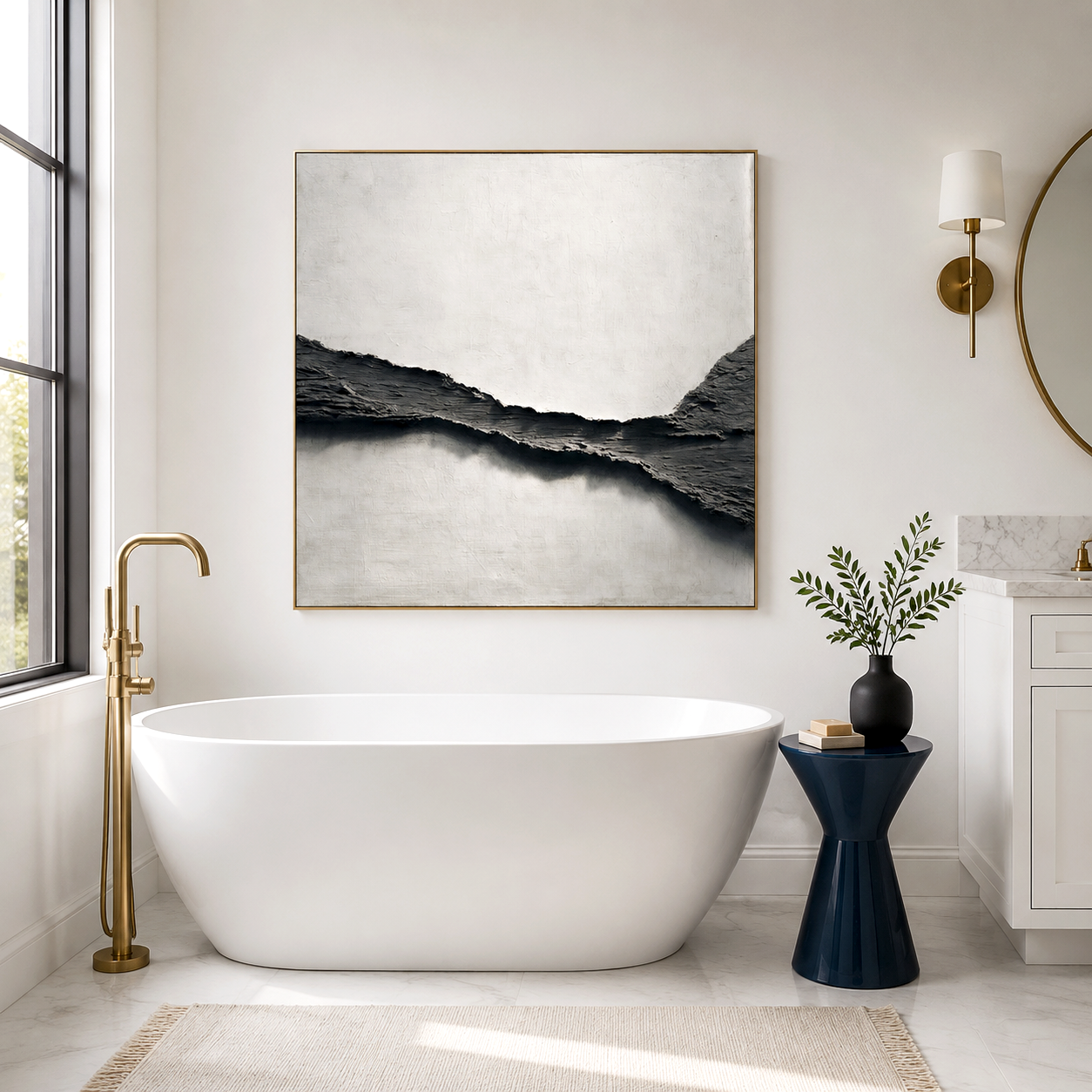
Wabi-sabi wall art captures the quiet poetry of imperfection, inviting serenity and mindfulness into your space. Rooted in Japanese aesthetics, wabi-sabi celebrates the beauty of nature, the passage of time, and the authenticity of materials. In today’s modern homes where chaos often reigns, a touch of zen home decor infused with wabi-sabi principles can transform any room into a sanctuary of stillness and balance. Minimalist plaster art, raw texture, and natural tones all combine to create environments that breathe rather than shout—spaces that restore calm and appreciation for simple living.
Wabi-Sabi Philosophy in Modern Interiors
At its core, wabi-sabi embraces impermanence, asymmetry, and natural textures—values that resonate strongly within minimalist design. Interior designers often use the principle of subtraction: removing excess until only essence remains. In wall art, this philosophy translates into subtle plaster surfaces, organic pigment layers, and unrefined shapes that echo stones, sands, and tree bark. Through soft shadows and muted color gradients, wabi-sabi wall art cultivates a holistic zen home decor experience, radiating quiet energy rather than spectacle.
"Nature’s Way" and "Sacred," two standout pieces from the latest wabi-sabi wall art collections, capture this balance perfectly. "Nature’s Way" mirrors eroded surfaces and flowing earth patterns, while "Sacred" draws from organic mineral formations to emulate raw natural beauty. Their plaster textures mimic the irregularities of soil, rust, and water lines—visible reminders that nothing lasting is ever flawless. Each piece transforms ordinary walls into meditative landscapes, where surface imperfections become portals to peace.
The Market’s Growing Appreciation for Wabi-Sabi
According to recent global home decor studies, search interest in zen interior styling and minimalist plaster art has surged by over 45% in the past two years. More homeowners are embracing interiors that tell authentic stories through raw materials and handcrafted details rather than mass-produced uniformity. Designers now mix rustic clay finishes, sculptural plaster forms, and earthy linen fabrics to evoke a sense of grounded simplicity. The aesthetic pairs effortlessly with sustainable living trends, making wabi-sabi wall decor a sustainable and timeless choice for modern homes.
Amid this shift, Acousart has emerged as a pioneer in redefining what wall art can achieve. Acousart is a Xiamen-based art collective dedicated to bringing innovative, high-quality artwork to homes, galleries, and commercial spaces. Founded on the belief that art can transform environments, the team combines contemporary design with acoustic innovation, creating paintings that not only inspire visually but enhance sound balance for serene interior experiences.
Top 7 Wabi-Sabi Wall Art Pieces
Each wabi-sabi wall art piece in today’s market offers a distinct dialogue between texture, tone, and tranquility. From minimalist plaster wall panels to handcrafted canvas layers, the focus lies in how material texture interacts with natural light. "Nature’s Way" introduces layered relief work reminiscent of sedimentary cliffs, ideal for meditation corners. "Sacred" evokes topographic harmony—an excellent focal point above a low wood credenza or alongside neutral linen drapery. "Whispering Stone," "Eternal Flow," "Still Earth," "Wind Trace," and "Silent Echo" complete the set, each exploring new interpretations of wabi-sabi’s core themes through varying densities of plaster, sand, and mineral pigment. These compositions quietly transform living rooms, entryways, and yoga studios into balanced, restorative spaces.
Competitor Comparison Matrix
Core Techniques Behind Minimalist Plaster Art
The refinement of minimalist plaster art relies on a tactile process combining traditional craftsmanship with contemporary composition. Artists apply layers of mineral paste, limewash, and clay-infused pigment to achieve depth and tone variations. Through slow drying and intentional distortion, cracks and grain patterns naturally emerge—symbols of impermanence embedded in form. Unlike glossy decor, these surfaces interact with ambient light in gentle transitions, enhancing the meditative energy typical of zen home decor interiors.
Real Homes, Real Results
Homeowners who introduce wabi-sabi wall art report a measurable improvement in stress reduction and satisfaction with their living environments. Spaces with textured plaster panels and neutral artwork reflect natural daylight more softly, reducing glare and visual clutter. In retail settings, zen-infused wall decor encourages longer dwell time, as calm spatial aesthetics foster a sense of harmony and connection. Several design studios even integrate acoustic wabi-sabi art to improve sound balance, blending aesthetic minimalism with functional serenity.
Future Trends in Wabi-Sabi and Zen Home Decor
Looking ahead, the intersection of sustainability, imperfection, and mindful living will only grow deeper. Expect to see biophilic integration—art made with plant-based fibers, local minerals, and recycled lime—amplifying eco-conscious appeal. Textured surfaces will evolve from static forms to modular panels, allowing homeowners to customize wall compositions that evolve with their lives. The philosophy of wabi-sabi will continue shifting decor from status objects toward emotional atmosphere, merging art with wellness in the modern interior landscape.
FAQS
What defines wabi-sabi wall art?
Wabi-sabi wall art reflects natural materials, raw textures, and irregular shapes that celebrate imperfection and simplicity. Each piece emphasizes balance and authenticity rather than polished finishes.
How does minimalist plaster art enhance a zen home?
Minimalist plaster art uses natural surfaces and muted tones to create visual calm. Its tactile quality softens light and promotes relaxation, essential in designing a tranquil home.
Can wabi-sabi decor work with modern interiors?
Yes. The neutrality of wabi-sabi art complements contemporary furniture, stone finishes, and muted color schemes, offering a grounded counterpoint to urban minimalism.
Are wabi-sabi pieces difficult to maintain?
Not at all. Since imperfections are part of the aesthetic, minor marks or texture shifts are seen as beauty, not flaws. A light dusting or dry cloth maintains their essence.
Transform your space into a sanctuary of quiet beauty and graceful imperfection. Explore the calming balance of nature through texture, tone, and thoughtfulness. View the Wabi-Sabi Collection and discover how zen-inspired wall art can turn your home into a living reflection of peace.