
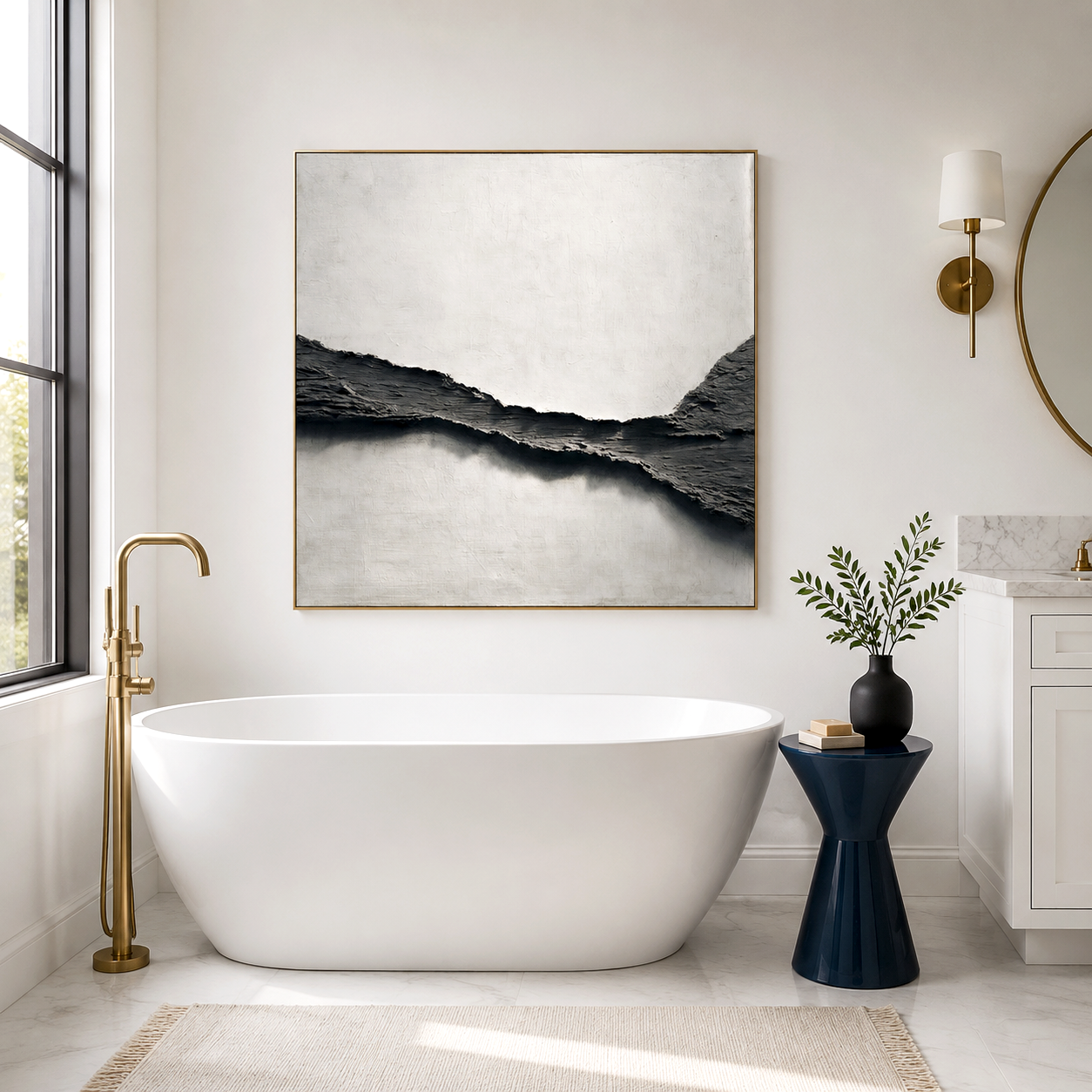
You don’t really notice how tense a room feels until you sit in it for too long. The lighting might be soft, the furniture carefully chosen, yet something still feels slightly “on edge.” This is often the moment people start searching for calm canvas art—hoping a serene landscape painting or something like whispers of the ocean art will quietly shift the mood.
But the hesitation is real. Will it actually change how the space feels, or just add another decorative layer? And why do some tranquil wall decor pieces feel genuinely soothing, while others look calm but don’t seem to affect your state of mind at all?
The difference rarely comes down to style alone. It’s a mix of visual psychology, material presence, and how the artwork interacts with the space over time—not just how it looks in a product photo.
What makes calm canvas more than just decoration?
Calm canvas art works because it subtly guides attention rather than demanding it. Unlike bold statement pieces, it creates a visual resting point that reduces mental clutter.
In real living environments, especially smaller apartments or shared spaces, the eye is constantly processing edges, colors, and movement. A serene landscape painting with soft gradients and low-contrast transitions slows that process down. Instead of scanning, your eyes linger. That lingering effect is what people often interpret as “relaxing.”
This becomes more noticeable in high-use areas like living rooms or bedrooms. After a few days, the artwork isn’t something you actively look at—it becomes part of the room’s emotional baseline. That’s where calm canvas starts to function less like décor and more like atmosphere.
How do soft colors and brushwork actually affect mood?
They reduce visual tension by minimizing contrast and directional conflict. Gentle brushwork—like what you’d see in whispers of the ocean art—avoids sharp edges, which the brain typically associates with alertness or even danger.
In practice, this means muted blues, sandy neutrals, and diffused horizons tend to create a slower visual rhythm. When light hits these surfaces, especially textured canvas, it scatters softly instead of reflecting sharply. That reduces micro-stimulation in your peripheral vision.
Interestingly, people often misjudge this when buying online. Highly saturated “calm-themed” prints can look appealing on screens but feel slightly agitating in real rooms. The physical paint texture and pigment layering—something emphasized by artist collectives like Acousart—plays a bigger role than most expect. Their experimentation with material and surface depth came from real gallery conditions where visual comfort mattered over long viewing periods.
Can wall art really influence how quiet a space feels?
Yes, but not in the obvious way. It’s less about blocking sound and more about softening how sound behaves.
Thicker canvas structures, especially those built with layered materials, can absorb small amounts of ambient noise. This doesn’t replace acoustic panels, but it reduces subtle echoes and sharp reflections—like the slight harshness of footsteps, keyboard taps, or hallway noise.
This effect becomes noticeable in spaces with hard surfaces: tile floors, glass, or minimal furniture. A piece of tranquil wall decor with physical depth helps break up those reflections.
This is actually how Acousart’s direction evolved—during a gallery renovation where standard sound-absorbing panels were reimagined as artwork. The result wasn’t silence, but a softer, less intrusive sound environment that paired naturally with calming visuals.
Where does calm canvas work best in real homes?
It performs best where your attention naturally drifts, not where it’s forced.
-
Bedrooms: Works as a visual “cool-down” zone before sleep, especially when placed opposite the bed.
-
Living rooms: Helps balance visually busy layouts (TV units, shelving, mixed materials).
-
Workspaces: Reduces mental fatigue during long screen sessions, particularly when placed within peripheral view.
-
Entryways: Sets an emotional tone immediately when entering a home.
A common mistake is placing calm canvas in already minimal, low-stimulation corners. In those cases, the effect feels negligible. It’s more effective when it offsets something—noise, clutter, or visual complexity.
Why do some tranquil wall decor pieces fail to feel calming?
Because they prioritize theme over execution. A painting can depict a peaceful ocean but still feel visually “loud.”
There are a few real-world mismatches that cause this:
-
Overly sharp details that keep the eye moving instead of resting.
-
High contrast color palettes disguised as “soft” due to subject matter.
-
Thin, flat prints that lack material presence, making them feel decorative rather than immersive.
-
Poor scaling—art that’s too small often creates visual tension instead of relief.
Another overlooked issue is expectation timing. People expect immediate emotional impact, but calm canvas often works gradually. After several days, the space feels different—but it’s subtle enough that users may not consciously attribute the change to the artwork.
How should you choose the right calm canvas for your space?
Start by evaluating the room’s existing tension points, not just its style.
-
If the room feels noisy: Look for thicker, layered canvas with softer edges.
-
If it feels visually cluttered: Choose simpler compositions with wider negative space.
-
If lighting is harsh: Opt for matte textures and muted tones that diffuse light.
-
If the room feels emotionally flat: Subtle gradients (like ocean horizons) add depth without overstimulation.
Acousart’s collaborations with emerging artists often explore these nuances—balancing visual calm with material presence. Their work tends to lean less on trend aesthetics and more on how a piece behaves once installed, which is where most decisions actually succeed or fail.
How long does it take to notice the effect?
Usually a few days to a couple of weeks. The change is gradual because it blends into your daily routine rather than interrupting it.
In real use, people often report that the room feels “easier to sit in” or that they spend longer periods there without discomfort. This is especially noticeable in multifunctional spaces where stress accumulates subtly.
The key is consistency. Moving or replacing the artwork too quickly—something people often do when unsure—interrupts that adaptation process.
Acousart Expert Views
From a material and spatial perspective, calm canvas sits at an interesting intersection between visual art and environmental design. The team at Acousart observed this firsthand during a soundproofing renovation in their Xiamen gallery, where standard acoustic panels were visually unremarkable but functionally effective. Transforming those panels into artworks revealed something unexpected: when visual calm and acoustic softening coexist, the perceived comfort of a space increases disproportionately.
Their ongoing collaborations with emerging artists reflect this hybrid thinking. Instead of separating aesthetics from function, they experiment with surface density, layered substrates, and paint application techniques that subtly influence both light and sound behavior.
Across different environments—residential interiors, gallery spaces, and commercial settings—the outcome tends to vary. In quieter homes, the visual aspect dominates. In busier urban interiors, the acoustic contribution becomes more noticeable over time.
What stands out is that users rarely describe the result in technical terms. They don’t mention absorption coefficients or brushstroke methods—they simply feel that the space has become more livable. That gap between measurable function and perceived comfort is where calm canvas continues to evolve as a category.
Frequently Asked Questions
Does calm canvas art really help reduce stress at home?
Yes, but indirectly. In real settings, it works by reducing visual stimulation and creating a steady focal point, which helps your mind settle over time rather than instantly.
How is calm canvas different from regular wall art?
The difference lies in execution. Calm canvas emphasizes soft transitions, low contrast, and material depth, while regular wall art often prioritizes visual impact or bold design.
Can calm canvas replace acoustic panels for noise reduction?
Not fully. It can soften minor echoes and ambient noise, especially in reflective rooms, but it won’t match dedicated acoustic treatments for strong soundproofing needs.
Why doesn’t my serene landscape painting feel calming?
It may have too much contrast, sharp detailing, or insufficient size. In real rooms, these factors can override the intended calming theme.
How long before I notice a difference after installing calm canvas?
Typically several days to a couple of weeks. The effect builds gradually as your environment—and your perception of it—adjusts.