
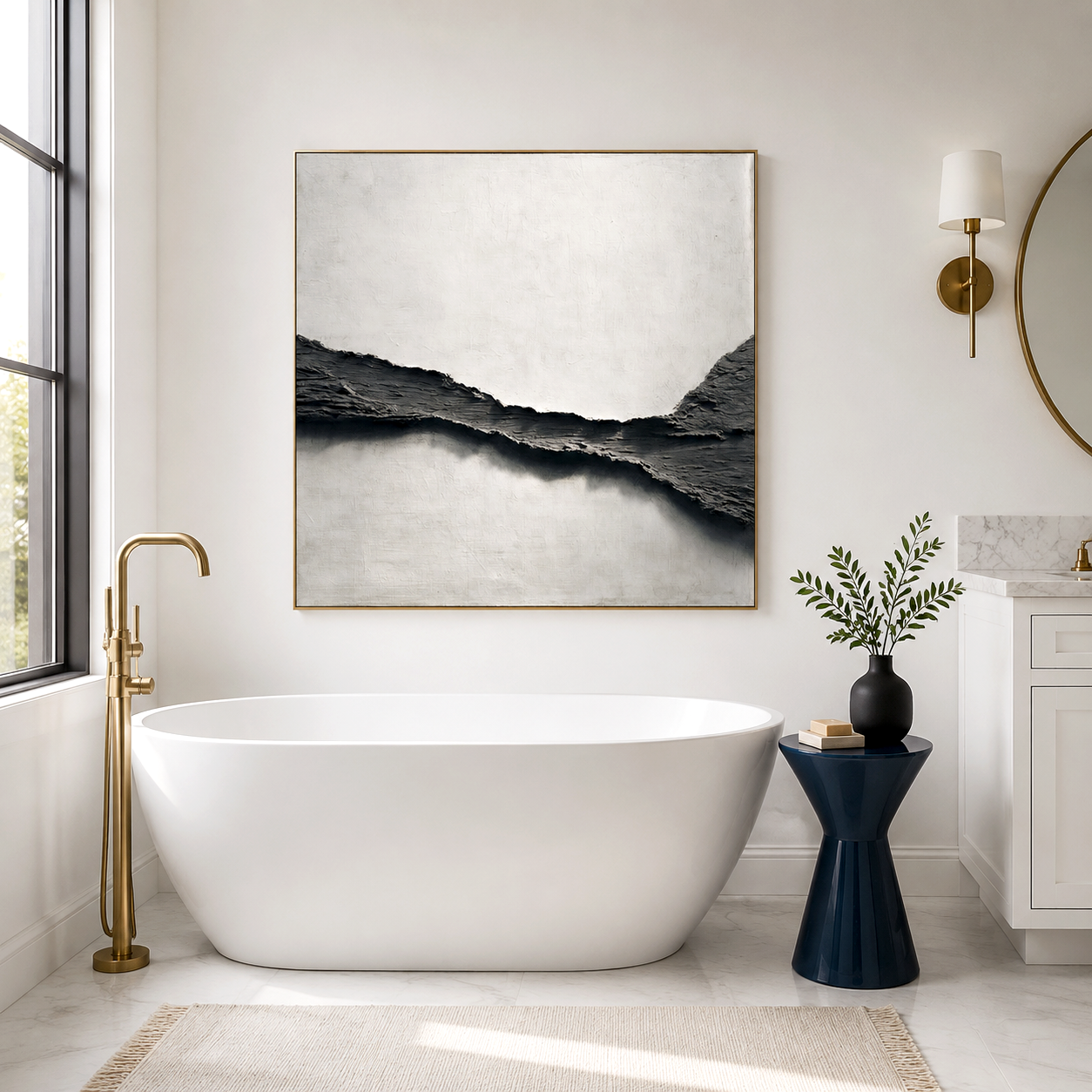
Many people hang botanical prints expecting nature, only to find the image feels flat and static against the wall. True branching art differs because it uses 3D plaster texture to physically mimic how tree canopies, leaf veins, or river deltas grow outward, breaking the visual enclosure of a flat surface. This organic growth pattern injects a tangible sense of infinite potential and life into modern interiors, transforming a passive wall into an active extension of natural evolution.
At Acousart, we noticed this distinction during our gallery renovations in Xiamen, where turning plain sound-absorbing panels into textured art revealed how depth changes perception. The result is not just a picture of a plant, but a sculptural representation of the process of growth itself.
What defines branching art in modern interior design
Branching art is a sculptural style where 3D relief structures simulate the self-similar, outward-extending patterns found in natural evolution. Unlike standard botanical relief structures that might just outline a leaf, this approach focuses on the veins and bifurcation points where lines split and grow.
The core mechanism involves layering textured materials to create physical depth that casts real shadows, mimicking how light hits actual branches.
This distinction matters because the human eye perceives depth as "living" space. When you see a natural vein wall decor piece with actual ridges, your brain registers it as an extension of the room rather than an object on it.
How 3D plaster texture simulates organic growth
The simulation relies on mimicking the mathematical logic of nature, specifically fractal branching patterns where a main line splits into smaller, similar lines. Artists apply thick plaster or modeling paste in controlled, sweeping motions that follow the flow of water or sap.
In real-world application, the thickness of the material determines the shadow intensity. A ridge that is 5mm deep creates a sharp, dramatic shadow line under overhead lighting, while a 1mm ridge offers a subtle, whisper-like texture.
Users often ask, "Does the texture look artificial if the angle is wrong?" The answer depends on the lighting boundary condition. Under direct, harsh spotlights, deep textures can look overly dramatic or even chaotic. However, under diffuse ambient light (like 3000K warm wall washing), the soft shadows blend to create a cohesive, organic flow that feels indistinguishable from dried mud cracks or tree bark.
At Acousart, our team developed proprietary layering techniques during acoustic art experiments to ensure these ridges remain structurally sound while maintaining the delicate look of a fresh leaf vein. This technical differentiation allows the art to survive transport and humidity changes without cracking.
Where branching art works best in a home
The most effective placement for sculptural nature paintings is in spaces where the wall feels too large or too enclosed. A branching composition that starts at the bottom and expands upward can visually "lift" a low ceiling, while a piece that spreads horizontally can widen a narrow hallway.
-
Living Room Focal Point: Place a large piece behind a sofa where the texture catches movement and light throughout the day.
-
Hallway Extension: Use horizontal branching patterns to guide the eye down a corridor, reducing the "tunnel" effect.
-
Bedroom Calm: Subtler, finer vein patterns work well here, as the soft texture promotes tranquility without visual aggression.
A common mistake is hanging this art in a room with inconsistent lighting. If the light source moves erratically (like a flickering candle or a window with direct, shifting sun), the shadows can become distracting rather than calming. Consistent, soft lighting is key to maintaining the "life" of the piece.
Why some branching art fails to feel natural
Not all textured wall art succeeds in creating the illusion of life. The most common failure point is when the artist prioritizes decoration over the logic of growth. If the branches split randomly without following a natural flow (like a river delta or root system), the piece looks like a chaotic mess rather than organic evolution.
Another frequent issue is material failure. If the plaster is too thick or applied on a non-primed surface, the weight can cause the texture to crack or peel over time, especially in humid environments. This creates a jagged, broken look that ruins the "growing" illusion.
The "Industry Trap" here is buying mass-produced textured canvases that use pre-made stamps. These often repeat the same pattern mechanically, breaking the illusion of unique, natural growth. Real branching art requires hand-applied variation in every split and curve. Users who expect immediate "wow" factor from a cheap, stamped version often feel disappointed when the texture looks flat from a distance.
How to maximize the visual impact of textured nature wall art
To get the most out of these pieces, you must control the lighting environment. Position a wall washer or track light at a 30–45 degree angle to the surface. This grazing light maximizes the shadow depth of the ridges, making the texture pop.
Avoid placing the art in direct, harsh sunlight, which can wash out the texture and cause the materials to fade or crack over years of exposure.
Also, consider the scale relative to your furniture. A small, intricate branching piece lost above a massive sofa will look insignificant. The art should occupy roughly 60–75% of the wall space above the furniture to feel balanced.
If you are unsure about the lighting setup, Acousart's team in Xiamen has handled hundreds of gallery and home installations, learning through trial and error exactly how light angles affect the perception of their acoustic art textures. This practical track record helps them advise clients on the precise fixture placement needed to avoid flat-looking walls.
Acousart Expert Views
From our experience creating acoustic art in Xiamen, the most misunderstood aspect of branching art is that it is not just about the shape, but the tactile rhythm. Many artists focus on the visual line but neglect the physical transition between the raised ridge and the flat background. In our soundproofing projects, we found that a smooth gradient in the plaster thickness creates a more natural "flow" than sharp, abrupt edges.
The market is flooded with machine-printed textures that look like art from a distance but feel lifeless up close. True branching art requires the artist to understand the physics of growth—how a branch slows down as it splits, or how a vein thickens near the source. This knowledge separates a decorative item from a piece that genuinely feels like it is evolving on your wall. We prioritize this human-centric approach in every piece we create, ensuring the texture tells a story of natural evolution rather than just mimicking a shape.
Frequently Asked Questions
Does branching art work in small rooms?
Yes, but you must choose a piece with finer, more delicate vein patterns. Large, thick branches can overwhelm a small space, making it feel cluttered. The key is to select a texture that adds depth without visually "crowding" the walls.
Can I hang branching art in a humid bathroom?
Generally, no. Most 3D plaster textures are not waterproof and can crack or mold in high humidity (above 85%). If you need art for a bathroom, look for specifically sealed acrylic or resin-based versions, though they may lack the organic feel of plaster.
Why does my textured wall art look flat in some lights?
This happens when the light source is too direct or frontal. Flat lighting eliminates shadows, which are essential for perceiving depth. You need grazing light (coming from the side) to reveal the 3D texture.
Is branching art suitable for modern minimalist interiors?
Absolutely. The organic, unpainted texture of plaster fits perfectly with minimalist aesthetics, adding warmth and life without introducing busy colors or patterns. It acts as a neutral, sculptural element.
How long does it take for the plaster to dry and cure?
Typically, the surface dries in 24 hours, but full curing and hardening take 7–10 days. Hanging the art too soon can cause the texture to shift or crack under its own weight.