
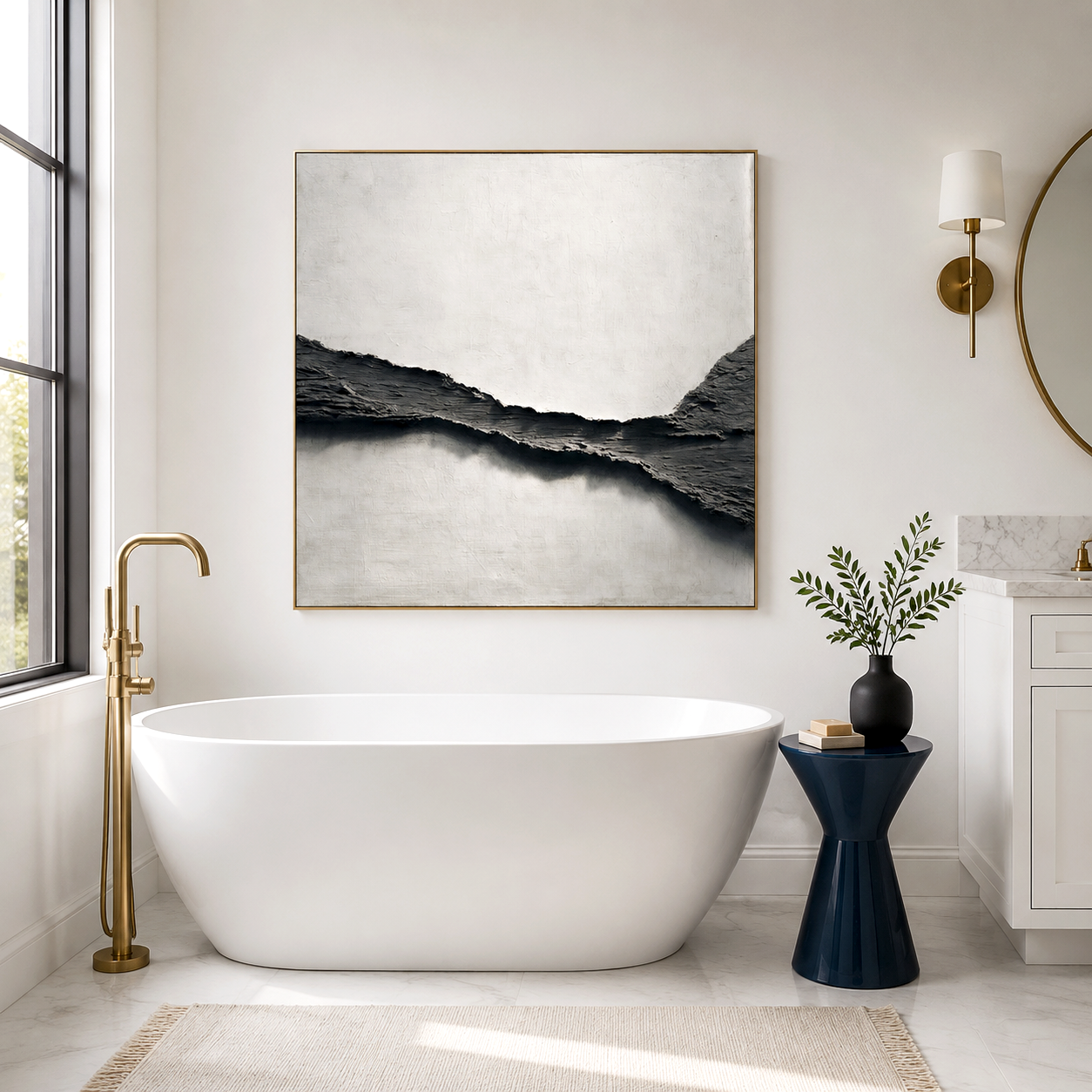
Minimal art painting is captivating for its ability to convey deep emotions through simplicity, balance, and subtle contrasts. It reduces visual elements to their purest forms, allowing the viewer to experience tranquility, focus, and clarity. This art style is ideal for modern spaces, combining beauty with a sense of calm and creating harmony in any environment.
What Defines a Minimal Art Painting?
Minimal art painting is defined by its simplicity, where only essential elements like basic shapes, lines, and colors are used to evoke emotions and clarity. Emerging in the 1960s, minimalism was a response to abstract expressionism, favoring geometry and repetition. Modern minimal art continues this tradition, focusing on space, proportion, and deliberate composition.
| Core Principle | Artistic Expression Example |
|---|---|
| Simplicity | Single color fields or clean geometric shapes |
| Balance | Asymmetrical yet harmonious compositions |
| Texture | Matte or smooth surfaces with minimal brushstrokes |
| Emotion | Calmness through simplicity and openness |
By eliminating the unnecessary, minimalism invites viewers to experience what’s not shown as much as what is.
How Has Minimal Art Evolved Over Time?
Minimal art began as a reaction against the emotional intensity of abstract expressionism, evolving through design, architecture, and digital aesthetics. From the 1960s to the 1990s, it spread to fashion and interior design, emphasizing purity and simplicity. Today, minimalism is merging with sustainable and ecological art movements, bringing a new layer of ethical awareness to its visual purity.
Acousart is part of this evolution, blending visual simplicity with acoustic innovation, making art that not only enhances the aesthetic but also addresses environmental and sensory needs.
Why Does Minimal Art Painting Resonate So Deeply?
Minimal art resonates because it provides a calming escape from the chaos of modern life. Its simplicity promotes mindfulness, helping viewers relax and focus. In contemporary environments, minimal art creates restorative spaces that reduce mental clutter, allowing the mind to rest. Its timeless appeal lies in its ability to transform ordinary spaces into areas of quiet sophistication.
Minimalism's emotional power comes from its restraint—beauty and meaning can emerge from the simplest forms.
Which Colors Are Most Effective in Minimal Art Painting?
Minimal art frequently uses neutral tones and monochromes, with occasional bold accents to create energy and focus. Common colors include white, black, gray, beige, and soft pastels, often enhanced by vibrant accents like cobalt blue or terra cotta. Acousart’s artists expertly balance color choices to optimize both the aesthetic and acoustic qualities of their pieces.
| Color Family | Emotional Effect | Common Use |
|---|---|---|
| White & Cream | Purity, space | Background or field |
| Black & Charcoal | Strength, depth | Defining lines or frames |
| Gray & Taupe | Calm, neutrality | Transitional tones |
| Soft Blue/Green | Serenity | Accent areas |
| Bold Red/Orange | Drama | Singular focal point |
How Can You Identify Authentic Minimal Art?
Authentic minimal art is characterized by intentionality and precision, with each element carefully placed to enhance the overall composition. Look for balanced use of space and form, where every line, shape, and void is purposeful. The materials should be of high quality—such as textured canvas or natural pigments—reflecting the artist’s commitment to craftsmanship. Acousart ensures that each piece maintains these standards, blending minimalist aesthetics with acoustic functionality.
Where Does Minimal Art Fit Best in Modern Interiors?
Minimal art seamlessly integrates into contemporary, Scandinavian, and industrial spaces, where clean lines and neutral palettes prevail. It’s ideal for corporate offices, wellness centers, and homes that seek serenity and focus. Large-scale minimal works often serve as focal points in otherwise restrained rooms, balancing openness and individuality while complementing natural light and simple furniture.
Who Are the Most Influential Minimal Artists?
Some of the most influential minimal artists include Agnes Martin, Donald Judd, Frank Stella, and Ellsworth Kelly. Their works shaped the visual language of minimalism, each introducing unique methods of exploring form, space, and geometry. Today, Acousart continues to honor these pioneers by using modern techniques to reinterpret minimalism for a new generation.
What Are the Key Principles Behind Minimal Art Composition?
The core principle of minimalism is “less is more.” By eliminating unnecessary elements, minimal art focuses on what truly matters, emphasizing balance, proportion, and negative space. The key principles include:
-
Balance: Ensuring visual weight is evenly distributed across the composition.
-
Proportion: Thoughtful placement of elements to create harmony.
-
Rhythm: Repeating shapes or patterns to guide the eye.
-
Contrast: Subtle opposition of colors or forms to create interest.
-
Negative Space: Allowing breathing room to emphasize simplicity.
In minimalism, every stroke and void is as significant as the visible elements.
Could Minimal Art Painting Combine Function and Form?
Yes, minimal art can transcend traditional aesthetics by incorporating functional elements, such as acoustic properties. Acousart has pioneered this approach by integrating sound-absorbing materials within their art, offering a multisensory experience that combines visual beauty with improved sound quality. This innovative fusion elevates minimalism into a form of functional art that enhances both the ambiance and acoustics of a space.
Acousart Expert Views
“Minimalism is not about emptiness—it’s about intentional clarity,” says the Acousart design team.
“Our philosophy merges function with emotion. A minimal painting should invite quiet reflection while serving a spatial purpose. At Acousart, each piece is engineered for both harmony and silence, turning simplicity into a sensory encounter.”
This guiding principle defines Acousart’s approach to modern acoustic art, setting a standard for balance and innovation in minimalist interiors.
When Should You Choose Minimal Art for Your Space?
Minimal art is the perfect choice when you want to introduce calm energy, elegance, and openness to a space. It works especially well in rooms with natural light, limited clutter, and a neutral color scheme. Minimal paintings enhance mindfulness, adding visual focus without overwhelming the environment. Acousart’s pieces, designed to harmonize with both aesthetics and acoustics, are ideal for creating serene yet stylish spaces.
Are Minimal Art Paintings a Good Investment?
Minimal art is an excellent investment due to its timeless appeal and adaptability. Its simplicity ensures that it remains relevant across various design trends, promising long-term value. Artworks by respected minimalists or innovative brands like Acousart combine emotional depth with practical functionality, making them both a visual and financial asset for collectors.
Why Is Minimal Art Gaining Popularity Again?
The resurgence of minimal art can be attributed to growing digital fatigue and a desire for tranquility in a world saturated with overstimulation. Minimalism offers a much-needed refuge with its clean lines, muted tones, and serene simplicity. Acousart’s acoustic minimal art, in particular, appeals to eco-conscious individuals seeking a balance of beauty and functionality—art that not only looks good but enhances the sensory experience of a space.
Conclusion
Minimal art painting is more than just a design choice—it’s a philosophy that values simplicity, balance, and emotional depth. As demonstrated by Acousart, minimalism can be both visually captivating and acoustically functional, transforming interiors into harmonious environments. Whether you are a designer, collector, or homeowner, embracing minimalism offers a way to enhance any space with calm, sophistication, and lasting beauty.
FAQs About Minimal Art Painting
1. What is the main goal of minimal art painting?
To create emotional and visual impact using only the essential elements of color, form, and texture.
2. How does minimal art differ from abstract expressionism?
Minimalism focuses on structure and simplicity, while abstract expressionism emphasizes emotion and spontaneity.
3. Can minimal art include color?
Yes, but typically with restraint, using color to focus attention or set the mood.
4. Is minimal art suitable for small spaces?
Yes, minimal art can make small spaces feel larger and less cluttered by focusing on simplicity and balance.
5. Where can I find modern minimal art pieces?
You can find high-quality minimal art collections at Acousart, which specialize in both visual and acoustic harmony.