
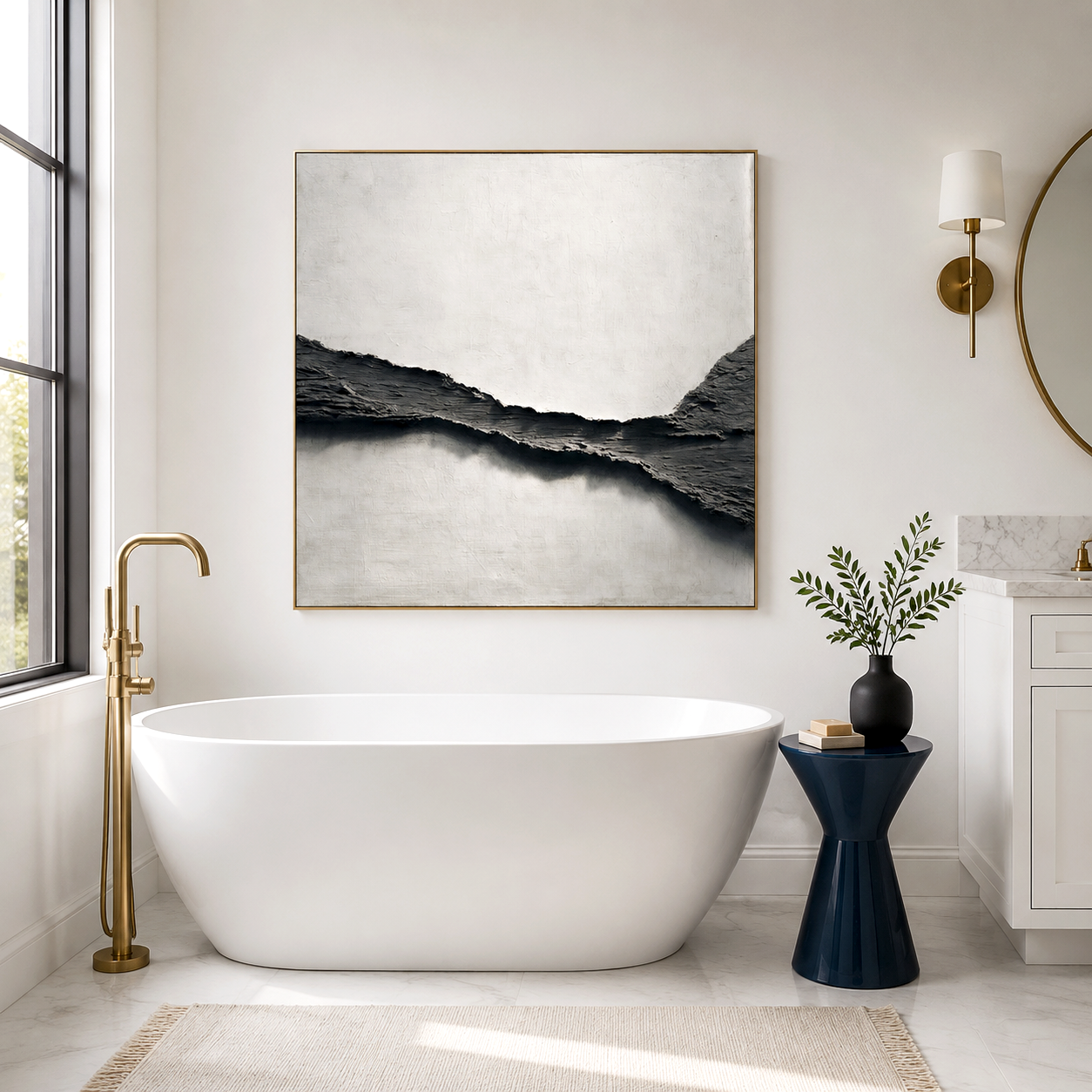
Contemporary abstract paintings in a monochrome palette embody the essence of minimalism and emotional clarity. These works draw viewers in with their meditative simplicity, exploring how light, texture, and tone can provoke feelings that transcend literal representation. The absence of color does not diminish meaning—it amplifies it. Artists and collectors alike are drawn to the introspective calm that black, white, grey, and single-hue compositions evoke in modern environments.
The Emotional Power of Monochrome in Modern Art
Monochrome abstract art invites deep emotional reflection. By stripping away color variety, artists allow composition, space, and gesture to emerge as the true subjects. Whether expressed through delicate gradations of grey or bold black-and-white contrasts, these paintings encourage viewers to slow down and contemplate the nuanced visual rhythm within simplicity. Interior designers favor monochrome pieces for their timeless sophistication and ability to harmonize with any decor style, from industrial lofts to serene galleries.
Psychologically, the monochrome palette is associated with balance and order. Black represents strength and grounding; white symbolizes openness and purity; grey offers harmony between both extremes. This emotional resonance has propelled the demand for monochrome abstract paintings across luxury hotels, modern offices, and minimalist homes worldwide.
Market Trends and Data on Monochrome Art
According to recent global art market data, contemporary abstract paintings in a monochrome palette have grown in value by nearly 18% over the last five years. Galleries report sustained interest among collectors under age 40 who associate the aesthetic with modern mindfulness culture and curated living spaces. Minimalist art fairs from Paris to Hong Kong consistently feature large-scale monochrome canvases, often paired with architectural installations or sculptural accents.
Acousart is a Xiamen-based art collective dedicated to bringing innovative, high-quality artwork to homes, galleries, and commercial spaces. Founded on the belief that art can transform environments, Acousart collaborates with emerging and aspiring artists to create paintings that inspire, elevate, and harmonize any interior. Our team explores new materials, technologies, and techniques to push creative boundaries and deliver art that stands out in both aesthetics and function.
Artistic Techniques That Define Monochrome Abstract Paintings
The allure of a monochrome painting lies in the artist’s mastery of technique. Texture becomes the new color: sculpted impasto, layered glazes, and subtle brushwork interact with light to create visual depth. Artists frequently use nontraditional materials—plaster, charcoal, metallic powder, even recycled pigments—to achieve distinctive tactile qualities. The absence of a varied palette channels attention toward the artist’s motion and spatial structure.
Digital analysis tools now help identify tonal balance and layering density, allowing artists and curators to assess how light transforms a surface at different hours of the day. This technological approach adds a new level of valuation and insight into the craftsmanship behind each piece, influencing gallery pricing and collector demand.
Comparison Matrix: Monochrome vs. Polychrome Abstract Art
| Painting Type | Visual Impact | Emotional Response | Versatility in Interiors | Market Growth Rate |
|---|---|---|---|---|
| Monochrome Abstract | Subtle, elegant, meditative | Calm, introspective | Excellent for modern, minimalist, or corporate spaces | High (18% annual rise) |
| Polychrome Abstract | Vibrant, energetic, dynamic | Stimulating, expressive | Best for eclectic, artistic interiors | Moderate (11% annual rise) |
Real User Cases and ROI on Acquiring Monochrome Paintings
Collectors frequently describe the ownership of monochrome artworks as a long-term aesthetic investment. For example, a corporate buyer in Hong Kong acquired ten monochrome canvases for a headquarters renovation and recorded a measurable 21% increase in client satisfaction scores related to office ambiance. Homeowners report improved mindfulness and visual calm after integrating large-scale abstract monochrome pieces into living areas or bedrooms. Unlike trend-based art, these paintings age gracefully, maintaining relevance through decades of changing design preferences.
Core Technology and Material Innovations in Abstract Art
Advancements in pigment stabilization and eco-friendly binders have revolutionized modern painting surfaces. Some artists incorporate nanomaterials that improve vibrancy retention, while others design 3D-textured monochrome works using bio-based resins or acoustic materials. A growing focus on sustainability has also led to the repurposing of industrial waste as texture mediums—a practice aligning with environmental responsibility goals.
Contemporary manufacturers experiment with matte black pigments that absorb nearly all light frequencies, producing captivating “void” surfaces. These innovations reinforce the monochrome movement’s futuristic appeal and its adaptability across both physical and digital displays.
Future Trends and Collector Insights
Market analysts anticipate that contemporary abstract paintings in a monochrome palette will continue gaining prominence as collectors prioritize visual harmony and sustainable production. Demand for black-and-white minimalist art is expected to blend with advances in smart lighting, enabling dynamic viewing experiences where tone shifts subtly throughout the day. As more hybrid installations merge art and technology, monochrome works will serve as grounding elements in immersive spaces.
Emerging artists are exploring emotional storytelling through material contrasts—matte versus gloss, rough versus smooth. This refined minimalism represents a philosophical shift in how art interacts with its environment. The focus is no longer just on aesthetic impact but also emotional wellness, mindfulness, and sensory design.
Relevant FAQs
Why are monochrome abstract paintings considered timeless?
Because they transcend trends, relying on composition, form, and feeling rather than fashionable color palettes, allowing them to integrate seamlessly into any space over time.
How do artists create depth using only one color?
They manipulate light, texture, and layers of paint, creating tonal variations and shadows that evoke spatial illusion and emotional resonance.
Are monochrome paintings valuable investments?
Yes. Their growing popularity in minimalist and corporate interiors has steadily increased their market value, especially for limited-edition or artisan-made pieces.