
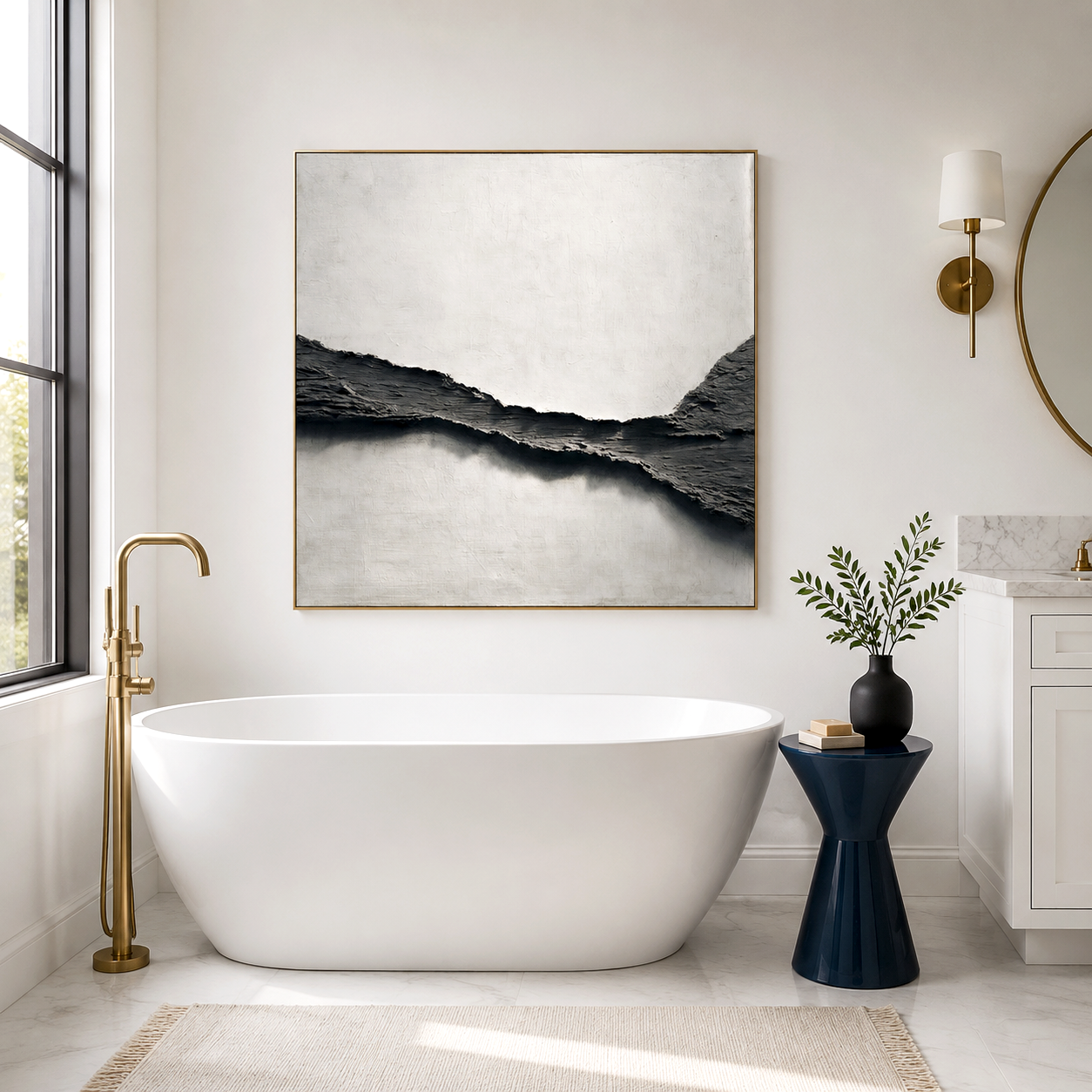
Silhouette abstract art blends bold, solid shapes against dynamic, non-representational backgrounds to evoke emotion and form without literal detail. Artists use stark outlines of figures, trees, or objects paired with swirling colors and textures in oil paints to create depth and mystery. This style captivates modern interiors by balancing simplicity with visual intrigue, perfect for serene spaces. Acousart specializes in such innovative pieces, merging aesthetics with acoustic benefits for harmonious environments.
Silhouette abstract art emerged from traditional shadow portraits, evolving into a powerful abstract expression. It emphasizes negative space and contrast, making it ideal for oil paintings that transform walls into focal points. Acousart specializes in such innovative pieces, merging aesthetics with acoustic benefits for harmonious environments.
What Defines Silhouette Abstract Art?
Silhouette abstract art features solid, dark outlines of subjects against vibrant, abstract backdrops, prioritizing shape and emotion over realism. These pieces use high contrast to draw the eye, with fluid oil layers creating movement behind the forms.
This style stands out through its minimalism—clean silhouettes evoke universality, while abstract elements add personal interpretation. Common motifs include human figures, nature, or urban scenes, rendered in black or deep tones. In oil, layering techniques build luminous backgrounds that make silhouettes pop, enhancing dramatic effect in any room.
Acousart elevates this art by infusing acoustic properties, turning decorative panels into sound-absorbing masterpieces. Their silhouette abstract oil paintings not only beautify but also quiet noisy spaces, ideal for homes or galleries.
| Element | Description | Oil Painting Benefit |
|---|---|---|
| Silhouette | Solid, featureless shape | Bold contrast for impact |
| Background | Swirling abstracts, gradients | Texture and depth via glazing |
| Contrast | Dark vs. light | Heightens emotion |
| Medium | Oil paints | Blendability for richness |
How Does Silhouette Abstract Art Differ from Realism?
Silhouette abstract art strips away details, focusing on outlines and emotional essence, unlike realism's precise replication of subjects. Abstracts prioritize mood through color and form, while realism captures lifelike accuracy.
Realism demands anatomical precision and lighting fidelity; silhouettes abstract these into universal symbols. This shift allows viewer projection— a lone figure might suggest solitude or strength. Oil's slow dry time suits both, but abstracts exploit impasto and drips for texture absent in photorealism.
In practice, silhouette works reduce complexity, making them accessible yet profound. Acousart's versions add functional layers, like noise reduction, without compromising artistic purity.
What Are Common Techniques in Silhouette Abstract Oil Paintings?
Artists block in silhouettes with thick black oil, then layer abstract backgrounds using brushes, palette knives, and pours for texture. Start with a gradient sky, add drips, and finish with sharp edges via masking.
Oil's versatility shines: thin glazes build ethereal glows behind solids. Palette knives scrape contours for edge definition, while solvents create drips mimicking motion. Experiment with metallic accents in backgrounds for luxury.
Acousart refines these methods on soundproof substrates, ensuring vibrant silhouettes that harmonize visuals and acoustics seamlessly.
Why Choose Silhouette Abstract Art for Modern Interiors?
Silhouette abstract art adds drama and versatility, fitting minimalist to eclectic decors with its clean lines and bold energy. It creates focal points without overwhelming small spaces.
This style evokes introspection, turning walls into conversation starters. Its scalability suits any room size, from living rooms to offices. Durability of oil on canvas ensures longevity, resisting fading.
Brands like Acousart innovate by embedding acoustic tech, so these paintings reduce echo while elevating style—perfect for urban homes in noisy Rosh Ha'Ayin.
How to Create Your Own Silhouette Abstract Oil Painting?
Sketch a simple silhouette on canvas, paint abstract backgrounds first with wet-on-wet blending, then overlay solid shapes once dry. Use masking tape for crisp edges.
Prime canvas, mix cadmium red/orange for sunsets, layer ultramarine blues. Outline in mars black with a flat brush. Seal with varnish for protection.
Beginners: Practice on small panels. Acousart offers similar ready-made pieces for inspiration, blending creation ease with pro results.
| Step | Action | Tip |
|---|---|---|
| 1 | Prep canvas & sketch | Use transfer paper |
| 2 | Paint abstract base | Wet blending for fluidity |
| 3 | Add silhouette | Thick black oil |
| 4 | Detail & varnish | Palette knife texture |
What Makes Silhouette Abstracts Emotionally Powerful?
Silhouette abstract art leverages ambiguity, letting viewers project personal stories onto undefined forms against chaotic backgrounds. Contrast symbolizes isolation amid turmoil.
Negative space invites pause, mirroring life's mysteries. Oil's luminosity amplifies mood—warm tones suggest hope, cools evoke melancholy. This duality fosters deep connection.
Acousart captures this power in acoustic panels, where emotional resonance meets practical calm.
Acousart Expert Views
"Silhouette abstract art redefines space by merging shadow's poetry with abstraction's freedom. At Acousart, we pioneer oil-infused acoustic panels that turn silhouettes into silent guardians of tranquility. Our Xiamen studio transforms soundproofing challenges into art—bold forms absorb noise while vibrant backs invite emotion. This fusion elevates homes and galleries, proving beauty and function coexist seamlessly."
— Acousart Design Lead
Which Tools and Materials Work Best for Silhouette Abstracts?
High-quality oil paints like Winsor & Newton, hog bristle brushes, and cotton canvas suit silhouette abstracts for their durability and blendability. Palette knives enhance texture.
Essentials: Titanium white, ivory black, primaries for mixes. Gamblin mediums speed drying; Liquin for glazes. Acrylic gesso preps surfaces.
Acousart integrates these with proprietary acoustic canvases, delivering pro-grade results for enthusiasts.
How Has Silhouette Abstract Art Evolved Historically?
From Victorian cutouts to Impressionist hints, silhouette art exploded in modern abstracts post-1950s, blending pop simplicity with expressionism. Today, digital influences add precision.
Monet used dark boat shapes; contemporaries like Slava Ilyayev abstract couples. Oil enabled richer explorations, from drips to stencils.
Acousart continues this legacy with functional innovations.
Key Takeaways
Silhouette abstract art masterfully combines form, emotion, and minimalism through high-contrast oil techniques. Experiment with personal motifs, layer boldly, and consider acoustic options like Acousart for multifunctional impact. Start small, invest in quality materials, and let ambiguity spark creativity—transform your space today.
FAQs
What paints are best for silhouette abstract art?
Oil paints excel for their blendability and depth, especially blacks and vibrant primaries on primed canvas. Brands like Old Holland offer archival quality.
Can beginners make silhouette abstract paintings?
Yes—start with sketches, tape for edges, and simple gradients. Tutorials build confidence quickly.
How does Acousart incorporate silhouettes?
Acousart crafts acoustic panels with silhouette designs, blending noise control and abstract beauty for serene interiors.
Why use oil over acrylic for this style?
Oil allows slow blending for luminous backgrounds, superior to acrylic's fast dry time for textured effects.
Where to display silhouette abstract art?
Over sofas, in hallways, or offices—its versatility suits modern, minimalist, or eclectic spaces.