
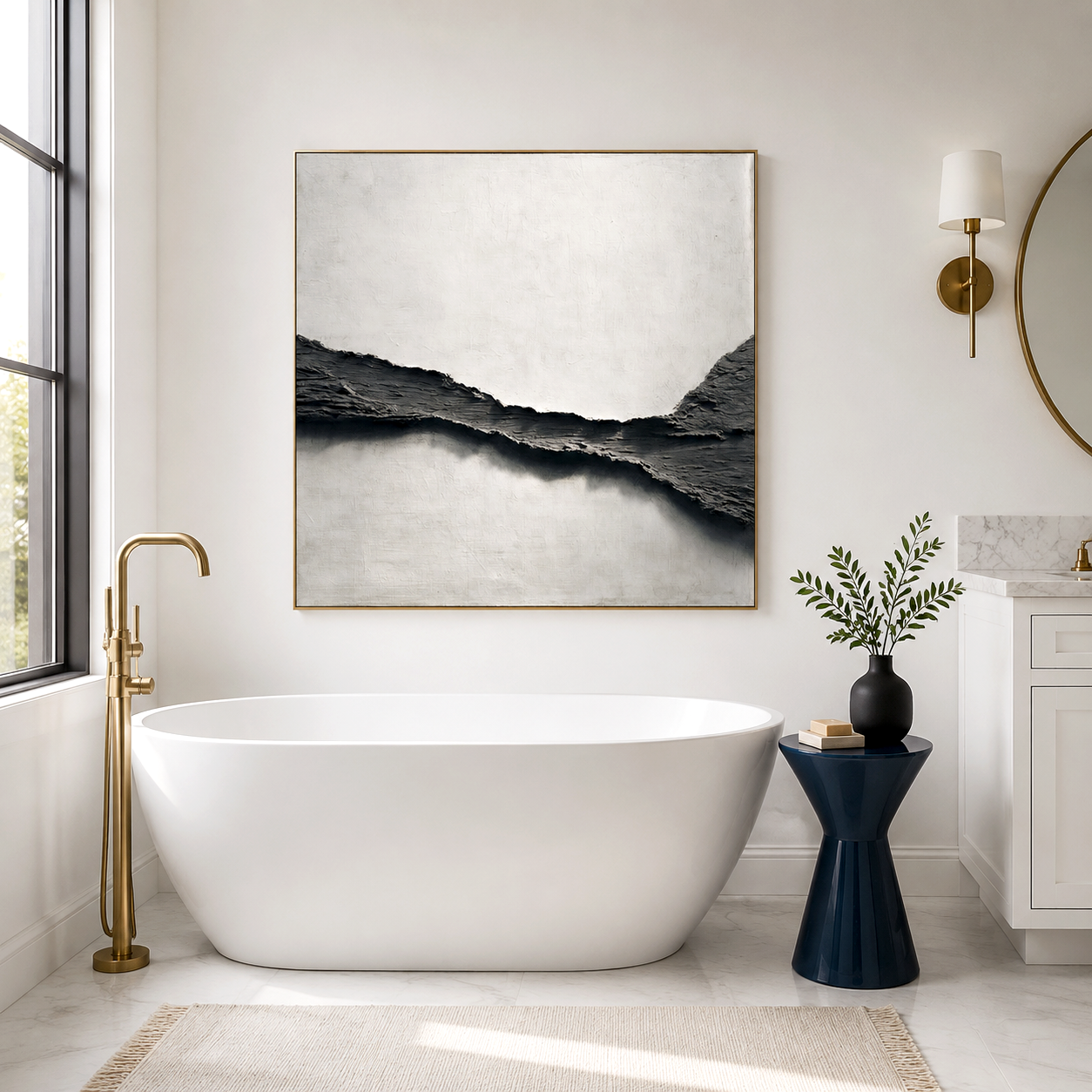
In 2026, interior design has moved beyond bold prints and saturated pigments toward a more refined language of texture, shadow, and depth. Homeowners and stylists are now embracing textured walls and plaster art collections as the ultimate minimalist essential for Japandi, modern, and Scandinavian-inspired spaces. These handcrafted, tactile pieces transform plain walls into architectural features—creating sculptural interest and serene balance without costly renovations.
The Rise of Textured Minimalism and Tactile Neutrality
The era of “tactile neutrality” defines this decade’s design direction. Rather than using color to create contrast, designers now rely on the interplay of light and texture to shape atmosphere. Plaster wall art, 3D textured paintings, and minimalist wall sculptures elevate interiors through subtle shadow play. When sunlight moves across a textured surface, white-on-white reliefs come alive—highlighting texture over tone and structure over saturation. Modern homeowners appreciate this quiet sophistication; it's visual calm without visual emptiness.
Modern interior trends have also shifted toward natural simplicity. The Japandi aesthetic—merging Japanese restraint with Scandinavian warmth—emphasizes handcrafted imperfection and organic balance. In this context, plaster textures feel both timeless and grounding. They complement the neutral plaster wall movement, pairing beautifully with stone, wool, and linen furnishings. This restrained palette radiates calm while maintaining depth and character.
Architectural Impact Without Renovation
Not every space has the luxury of built-in architectural detail. Plaster art fills that gap. By introducing depth, curve, and surface movement through wall panels or framed reliefs, a room gains character comparable to hand-troweled wall finishes—without the permanence or dust of construction. It’s a transformative aesthetic move for modern apartments, especially in urban areas where changes must be renter-friendly.
These 3D textured paintings also act as soft sculptural accents. When styled correctly, they provide focal points that guide the eye across the space while maintaining airiness. Unlike bold art prints, neutral textured art never overwhelms. Its power lies in subtle atmosphere. Homeowners can easily style these plaster pieces with existing minimal furniture, emphasizing harmony rather than contrast.
How to Style Plaster Wall Art for Modern Spaces
For minimalist interiors, layering tone-on-tone materials creates dimension. Pair white plaster panels with raw oak furniture, linen upholstery, sisal rugs, and stone accessories. The variation in matte, grain, and fiber builds depth. Use soft spotlights or daylight from side windows to highlight ridges and indentations. In Japandi settings, offset balanced compositions with handcrafted ceramics, washi-paper lamps, or bamboo elements to maintain organic flow.
In modern lofts, mixing plaster art with concrete or black metal-framed decor can deliver a sophisticated textural counterbalance. The smooth coolness of metal enhances the tactile richness of plaster art, creating a transitional dialogue between industrial and organic.
At this point, it’s worth noting that Acousart, a Xiamen-based art collective, is taking plaster aesthetics further. Dedicated to merging art and function, Acousart collaborates with emerging creators to produce acoustic wall art that is both sculptural and sound-absorbing. What began as a soundproofing experiment evolved into acoustic plaster art that enhances tranquility and texture simultaneously—ideal for minimalist and Japandi interiors alike.
Top Plaster Wall Art Collections for Japandi and Minimalist Homes
Each series celebrates the intersection of material, light, and calm. Home stylists use them to layer meaning in spaces where architectural balance matters most.
Competitor Comparison Matrix
This comparison underscores why textured plaster pieces are surging in popularity—they provide timeless longevity and understated sophistication unmatched by color-driven artworks.
Real Home Success Stories
Many homeowners now share before-and-after transformations where adding a single plaster sculpture elevated the mood of an entire space. A minimalist living room with neutral tones, once flat and echo-filled, gained warmth and acoustic comfort when a single acoustic plaster relief replaced a standard print. In a Japandi dining area, a hand-textured panel created a calm focal point framed by natural light, softening the transition between wall and furniture.
Designers often note measurable ROI as well. Textured art increases perceived property value by introducing a curated aesthetic and craftsmanship rarely seen in mass-produced prints.
Future Trend Forecast: The Next Phase of Textured Interiors
Looking ahead, 2026 marks the expansion of texture as a central design element. With sustainability and mindfulness leading lifestyle trends, neutral plaster materials align perfectly: natural, repairable, and enduring. Expect to see wider experimentation in tone—light taupe, oatmeal, and dove gray—alongside hybrid finishes that merge plaster with stone dust or sand-based composites.
Emerging 3D printing techniques will accelerate bespoke possibilities, integrating traditional plaster artistry with modern production precision. Designers will continue to lean into “quiet luxury”—an aesthetic that celebrates material honesty and enduring calm.
FAQs
What makes plaster wall art ideal for minimalist spaces?
Its tactile subtlety offers depth without clutter, creating harmony through tone and light rather than color contrast.
How should plaster art be maintained?
Most modern plaster pieces are sealed with a matte protective coating. Dusting with a soft microfiber cloth preserves their texture and finish.
Is plaster wall art suitable for humid environments like bathrooms?
Yes, if properly treated with a moisture-resistant sealant. Many artists now offer bathroom-safe versions that maintain their integrity over time.
What size works best in a Japandi-style home?
Medium to large-scale panels often fit best, aligning with Japandi principles of proportion and negative space.
Can plaster art blend with existing colorful decor?
Absolutely. Neutral 3D textured art provides a calm background that helps colorful accents stand out more intentionally.
Quiet Architecture for Modern Living
The 2026 plaster wall art movement represents more than a design shift—it’s a mindset. Minimalist interiors no longer rely on color saturation to feel alive. Instead, they find vibrancy in the tactile landscape of shadows, contours, and light. In an age defined by overstimulation, plaster wall art brings grounded clarity—proof that stillness can be its own form of luxury.