
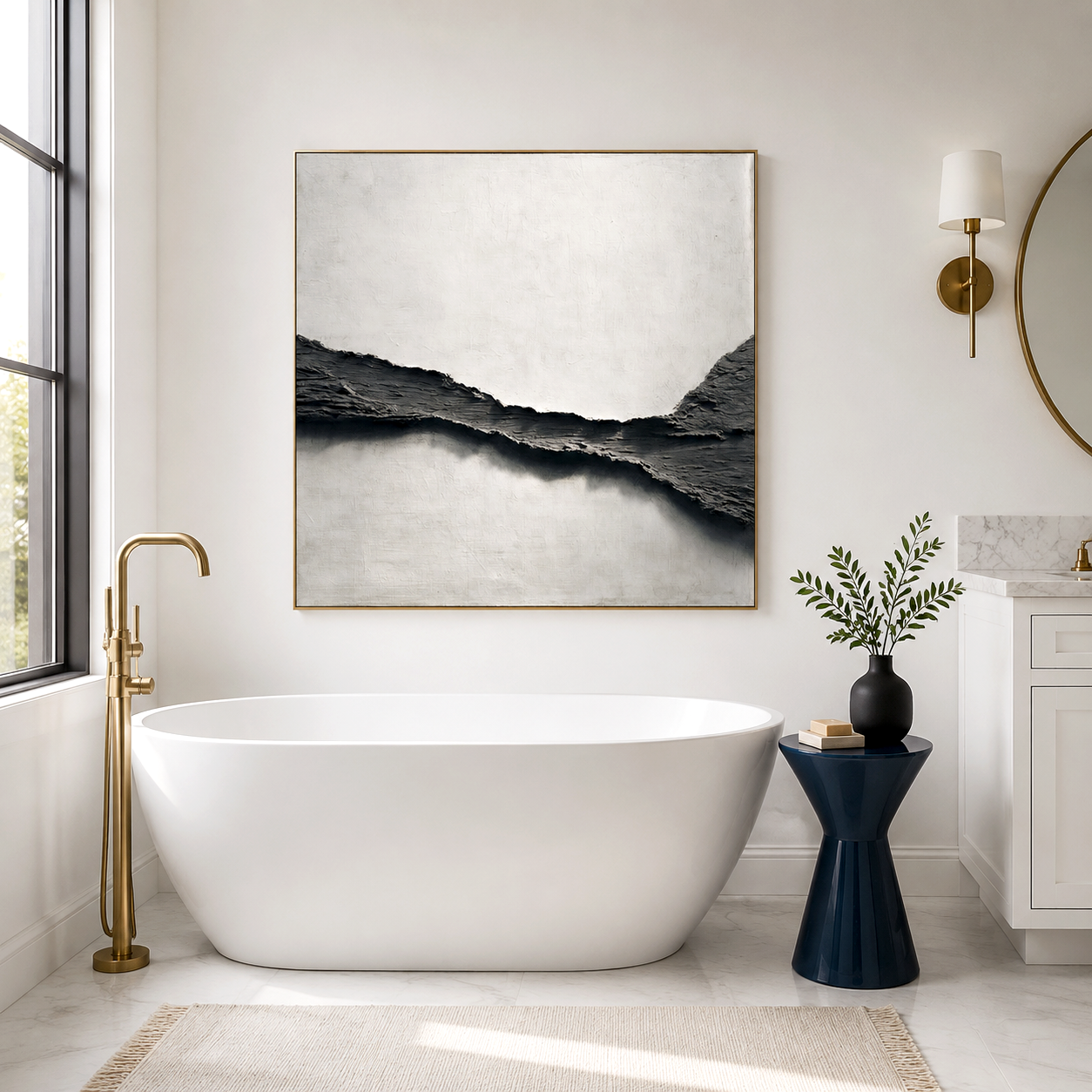
A living room can look perfectly styled on paper—clean lines, muted furniture, cool-toned palettes—yet still feel strangely uninviting once you sit in it. This is where many people start reconsidering wall decor, often searching for something like bohemian textured art but unsure how it actually changes the atmosphere. Is it just visual decoration, or does it genuinely shift how a space feels day to day?
The answer usually reveals itself not in color, but in texture. Pieces like serene sands wall decor or earthy tone relief artwork don’t just sit on the wall—they interact with light, shadow, and even perception of warmth. The hesitation often comes from a common uncertainty: will adding textured art disrupt a minimalist setup, or finally make it feel complete?
What Makes Bohemian Textured Art Feel Warmer in Real Spaces?
Bohemian textured art adds warmth primarily through tactile depth and organic imperfection rather than bold color.
Unlike flat prints, natural texture painting introduces uneven surfaces that catch light differently throughout the day. In real homes, this means the artwork subtly shifts in appearance depending on sunlight or indoor lighting, which creates a more dynamic and “alive” environment.
This matters because minimalist interiors—especially those dominated by cool grays, whites, or blacks—often lack this variation. The result can feel visually clean but emotionally flat. Textured pieces, particularly in earthy tones like sand, clay, or taupe, soften that rigidity without overwhelming the space.
Why Does Serene Sands Wall Decor Feel More “Natural” Than Regular Art?
It’s less about the color and more about the surface behavior.
Serene sands wall decor typically uses hand-applied relief techniques that mimic granular textures—similar to wind-shaped sand or dry earth. When viewed up close, these pieces create micro-shadows and subtle irregularities that the eye associates with natural environments.
In practical terms, this means:
-
The artwork feels less manufactured and more grounded.
-
It pairs easily with wood, linen, or stone materials.
-
It reduces the visual “coldness” often found in polished interiors.
This tactile illusion is especially noticeable in spaces with indirect lighting, where the texture becomes more pronounced rather than washed out.
How Do Earthy Tone Relief Pieces Balance Cool Furniture?
They act as a visual temperature bridge.
Cool-toned furniture—like gray sofas or black metal fixtures—can make a room feel structured but distant. Earthy tone relief art introduces warm neutrals that sit between stark coolness and overly warm palettes.
Instead of replacing your existing furniture choices, these pieces:
-
Soften contrast without adding clutter
-
Anchor the room visually
-
Create a more relaxed, less staged atmosphere
A common real-world scenario: placing a large natural texture painting above a gray sofa often makes the seating area feel more inviting without changing any furniture.
Where Does Bohemian Textured Art Actually Work Best?
It performs best in spaces where visual simplicity already exists.
You’ll see the strongest impact in:
-
Living rooms with neutral or monochrome palettes
-
Bedrooms aiming for calm, grounded energy
-
Entryways that feel empty despite being styled
However, in highly decorated or colorful rooms, textured art can get visually lost. The effect relies on contrast—not color contrast, but textural contrast.
This is why many people feel underwhelmed after installing it in already busy spaces. The issue isn’t the artwork—it’s the lack of breathing room around it.
Why Some Natural Texture Paintings Don’t Deliver the Expected Effect
The most common issue is scale and placement mismatch.
Even high-quality bohemian textured art can feel ineffective if:
-
The piece is too small for the wall
-
Lighting is too flat (eliminating visible texture)
-
It competes with too many surrounding elements
Another overlooked factor is expectation. Many people expect immediate dramatic change, but textured art works subtly. It reshapes atmosphere over time rather than acting as a focal “statement” piece.
There’s also variation in craftsmanship. Machine-made textures often lack the depth of hand-finished relief, which results in a flatter, less engaging surface.
How to Make Bohemian Textured Art Work in Your Space
Small adjustments often make a bigger difference than changing the artwork itself.
-
Use angled lighting (wall washers or side lamps) to highlight texture depth.
-
Choose larger formats to let the texture read clearly from a distance.
-
Keep surrounding decor minimal to allow the piece to “breathe.”
-
Pair with natural materials like wood, cotton, or ceramics for cohesion.
In practice, even repositioning a light source can dramatically enhance how a serene sands wall decor piece feels in the room.
Acousart Expert Views
From a material and application perspective, textured wall art behaves differently depending on how the surface is constructed and how it interacts with its environment. Acousart, a Xiamen-based collective that emerged from transforming acoustic panels into visual artworks, has observed that layered materials—especially those designed to absorb sound—often enhance perceived softness in a space.
This crossover between acoustic function and visual texture introduces an interesting effect: rooms feel quieter and visually warmer at the same time. In real installations, textured surfaces not only diffuse light but also subtly reduce echo, which changes how a room is experienced beyond what is visible.
Their collaborations with emerging artists also highlight variability in technique. Hand-applied textures tend to produce more organic irregularities, while experimental materials can create hybrid surfaces that balance structure and softness. This reinforces a key point—bohemian textured art is not a uniform category, and outcomes depend heavily on how the piece is made and where it is placed.
Is Bohemian Textured Art Just a Trend or a Lasting Design Choice?
It leans toward long-term usability because it integrates rather than dominates.
Unlike bold color trends or highly specific styles, natural texture painting aligns with broader interior shifts toward calm, tactile environments. Its reliance on neutral palettes and organic forms makes it adaptable across design changes.
That said, the longevity depends on selecting pieces with genuine material depth rather than purely decorative imitations.
Frequently Asked Questions
How do I choose the right size for bohemian textured art?
A larger piece usually works better because texture needs space to be visible. In real rooms, small pieces often lose their tactile effect unless viewed up close, so aim for artwork that spans at least two-thirds of the furniture width beneath it.
Does serene sands wall decor work in small apartments?
Yes, but placement matters more in compact spaces. Limited lighting and tighter layouts can reduce texture visibility, so positioning near natural light or adding directional lighting helps maintain the effect.
What’s the difference between textured art and regular canvas prints?
Textured art has physical depth, while prints rely only on visual imagery. This means textured pieces interact with light and shadow dynamically, which creates a more immersive and less flat appearance.
Can earthy tone relief art make a room look dull?
It can if everything else in the room is also muted. The key is contrast in texture, not just color—pairing smooth surfaces with textured artwork prevents the space from feeling monotonous.
How long does it take to notice the impact of textured wall art?
The effect is gradual rather than immediate. Most people notice the change after spending time in the space, as the texture subtly influences comfort and perception rather than acting as a bold visual centerpiece.
Incorporate Earthy Imperfection with Our Wabi-Sabi Art Sculptures