
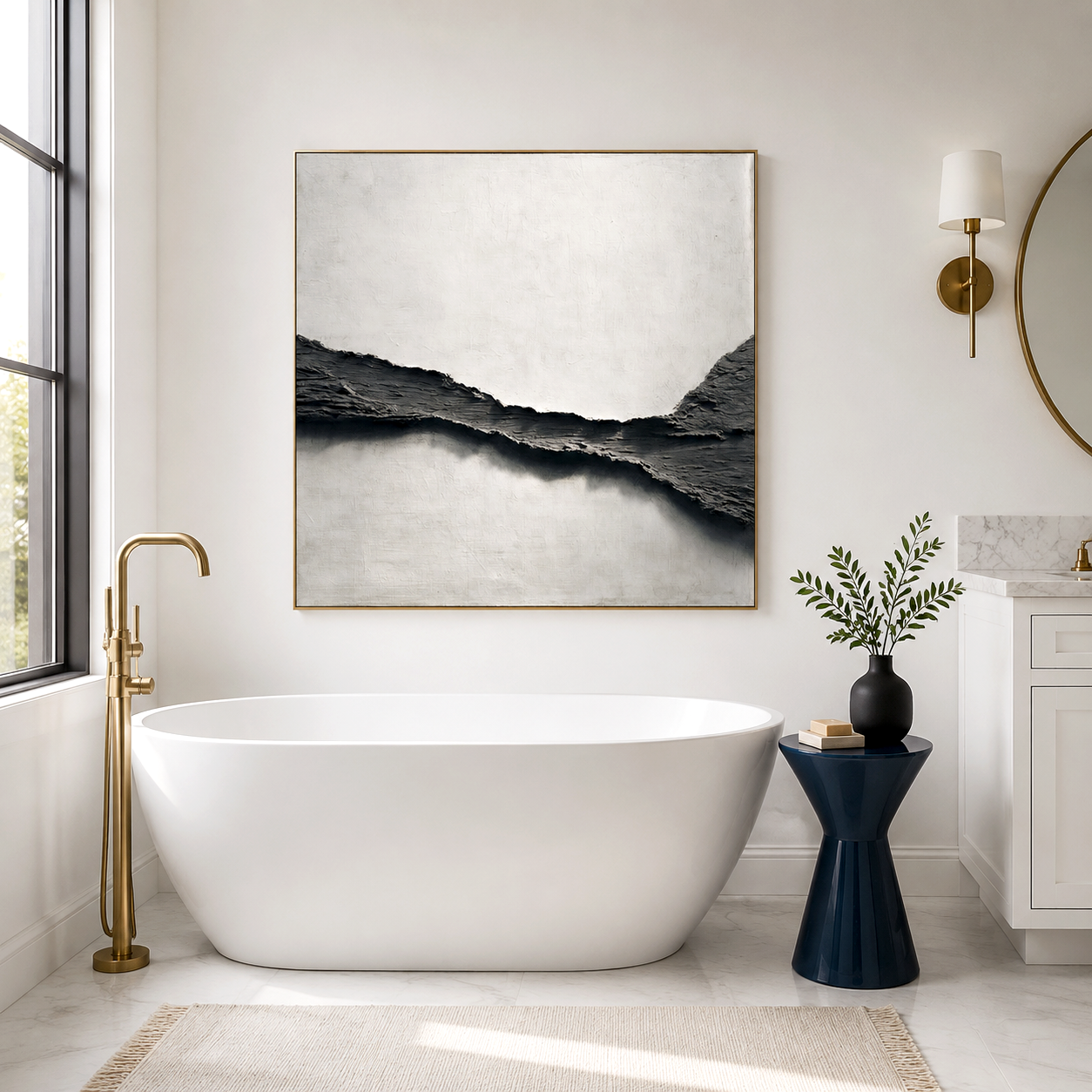
What makes beige art so versatile in modern interiors?
Beige art is versatile because its neutral tones harmonize with almost any color palette, style, or room function. It supports minimalism, luxury, and cozy decor alike, letting furniture and architecture shine. By adding depth through texture and abstract forms, beige artworks feel refined yet understated, making them easy to layer and re-style over time.
In interior design, beige functions as a visual “bridge” between materials like wood, stone, glass, and metal. It softens hard architectural lines, calms high-contrast decor, and supports both warm and cool schemes. Abstract beige oil paintings, in particular, add movement and subtle drama while remaining neutral enough for homes, hotels, and offices.
Designers often choose beige art for:
-
Open-plan living rooms that need cohesion across zones
-
Bedrooms where calm and softness are a priority
-
Offices and clinics seeking a professional yet welcoming tone
-
Hospitality spaces that must appeal to broad tastes
For art collectors and stylists, beige also photographs beautifully, which is valuable for online portfolios, social media, and e-commerce product pages.
How does beige abstract oil painting enhance texture and depth?
Beige abstract oil paintings enhance texture and depth through layered brushwork, glazing, and tonal variation within a narrow palette. Instead of relying on bright colors, they use light, shadow, and surface relief to create interest. This subtle complexity catches changing daylight and artificial lighting, giving the artwork a dynamic, almost sculptural presence on the wall.
Oil paints naturally offer a rich, tactile surface that suits neutral palettes. Techniques like impasto, scraping, and dry-brushing build micro-relief that casts delicate shadows. Within beige, cream, taupe, ivory, and warm greige, even small shifts in hue can suggest movement, horizon lines, or architectural forms without literal representation.
Collectors seeking quiet luxury value:
-
Thick, gestural strokes for bold yet neutral statements
-
Feathered blends for soft, cloud-like atmospheres
-
Geometric blocks of beige for contemporary, architectural moods
Acousart frequently explores these textural strategies, especially where art must remain visually calm yet stand out as a crafted, high-end object.
Why is beige art ideal for minimalist and Japandi styles?
Beige art is ideal for minimalist and Japandi styles because it supports clean lines, natural materials, and a less-is-more philosophy. It reflects light gently, avoids visual noise, and echoes the tones of wood, linen, and stone. In both styles, beige helps create a sense of serenity, balance, and intentional simplicity, essential for restful, uncluttered interiors.
Minimalist interiors often rely on a restricted palette and curated objects. Beige abstract canvases slot into this approach by adding one quiet focal point instead of many small distractions. In Japandi spaces, where Scandinavian restraint meets Japanese wabi-sabi, beige art mirrors the soft tones of tatami, raw oak, and handmade ceramics.
Key benefits in these aesthetics include:
-
Reinforcing natural, organic color stories
-
Providing a calm backdrop to a few treasured objects
-
Supporting biophilic design when paired with plants and daylight
-
Allowing subtle imperfection and texture to shine
Acousart’s acoustic beige panels align especially well with Japandi principles: they merge function (sound control) with understated beauty.
Which color schemes work best with beige abstract art?
The most effective color schemes pair beige abstract art with natural, muted, or deep accent tones. Classic combinations include beige with white, warm gray, charcoal, navy, forest green, terracotta, and muted blush. These palettes highlight the artwork’s softness while giving the room structure. Metallics like brass or black steel add modern contrast without overwhelming the neutrals.
Below is a quick guide to harmonious pairings:
| Color pairing | Mood created | Best spaces |
|---|---|---|
| Beige + white | Airy, clean, minimalist | Living rooms, clinics, galleries |
| Beige + warm gray | Sophisticated, calm | Bedrooms, home offices |
| Beige + charcoal | Modern, high-contrast | Dining rooms, hotel lobbies |
| Beige + navy | Elegant, tailored | Studies, executive offices |
| Beige + forest green | Organic, grounding | Wellness centers, lounges |
| Beige + terracotta | Cozy, earthy | Family rooms, restaurants |
When planning a space, decide whether beige should:
-
Blend quietly with similar tones for a monochrome look
-
Stand out against a darker wall for a gallery-like effect
-
Connect disparate furniture colors by echoing undertones
Acousart often advises trade clients to start with flooring and wood tones, then match the warmth of beige art accordingly.
How can beige art improve mood and wellbeing?
Beige art can improve mood and wellbeing by creating a calm visual field that reduces overstimulation. Soft neutrals lower perceived clutter, allowing the mind to rest. Abstract compositions avoid literal narratives, inviting open interpretation and gentle contemplation. This combination is especially beneficial in bedrooms, therapy rooms, offices, and high-traffic communal spaces.
Color psychology links warm neutrals to safety, comfort, and approachability. Unlike stark white, beige feels less clinical; unlike strong colors, it rarely triggers fatigue or distraction. In open-plan homes, large beige canvases can act as “visual breathers” between busy kitchen, media, and work zones.
In workplaces and hospitality, beige art:
-
Softens noise and visual buzz when combined with acoustic panels
-
Makes waiting areas feel more welcoming and less stressful
-
Supports longer dwell times in restaurants and lounges
This is where Acousart’s acoustic art becomes especially powerful, marrying emotional comfort with measurable noise reduction.
Where does acoustic beige art make the biggest impact?
Acoustic beige art makes the biggest impact in echo-prone spaces needing both sound control and high-end aesthetics. Open-plan offices, restaurants, hotel lobbies, meeting rooms, and contemporary living spaces often suffer from hard surfaces that amplify noise. Acoustic beige panels absorb sound while visually blending into sophisticated, neutral decor schemes.
Traditional acoustic solutions can look utilitarian or bulky. By turning sound-absorbing materials into abstract beige artworks, it becomes possible to:
-
Maintain a clean, curated visual language
-
Place acoustic treatments exactly where design calls for art
-
Avoid sacrificing wall space to purely functional panels
For designers, this opens a valuable category: art that earns its place twice, as decor and as performance. Acousart, born from a soundproofing challenge in a city-center gallery, has refined this concept into collections that serve galleries, luxury residences, and commercial interiors.
How does Acousart combine art and acoustics in beige pieces?
Acousart combines art and acoustics by integrating advanced sound-absorbing cores behind or within beige abstract surfaces. The front layer features hand-finished textures, brushwork, or printed motifs inspired by neutral abstract art. Behind that, engineered acoustic materials reduce reverberation, echo, and background noise, particularly in mid-to-high frequency ranges.
This dual-focus design means:
-
Wall pieces look like curated artworks rather than technical panels
-
Installers can treat problematic walls while following a design concept
-
End users experience quieter rooms without visual compromise
Because beige is so flexible, Acousart can adapt each piece to:
-
Modern, monochrome interiors
-
Natural, Japandi-inspired schemes
-
Warm, hospitality-driven spaces
For developers and specifiers, this yields market-differentiating products that add both perceived and functional value to projects.
What should buyers consider when choosing beige art size and placement?
Buyers should consider wall dimensions, viewing distance, ceiling height, and surrounding furniture when choosing beige art size and placement. Large-scale beige works often look best above sofas, beds, and sideboards, providing proportion and balance. Smaller pieces suit entryways, gallery walls, or narrow vertical spaces where a gentle focal point is needed.
A practical approach is:
-
Let width be between one-half and two-thirds of the furniture below
-
Maintain roughly 15–25 cm between artwork bottom edge and furniture top
-
Center art at approximate eye level, around 145–155 cm from floor to center
For multi-panel arrangements, align gaps and edges with architectural lines such as doorframes or window mullions. In acoustic applications, identify the most reflective surfaces—often opposite large windows or central seating—and prioritize those walls for beige acoustic art by Acousart.
Are there different styles of beige art for classic and contemporary spaces?
Yes, beige art spans styles that serve both classic and contemporary spaces. For classic interiors, softly blended, painterly abstracts with hints of traditional composition feel at home. Contemporary spaces often favor bolder geometry, minimal forms, or strong textural contrasts within the beige palette, echoing modern architecture and furniture lines.
Here is a simple style reference:
| Style focus | Beige art characteristics |
|---|---|
| Classic/Transitional | Soft gradients, subtle motifs, gentle edges |
| Modern/Minimalist | Clean blocks, negative space, few tones |
| Wabi-sabi/Japandi | Organic forms, visible texture, asymmetry |
| Industrial/Loft | Beige with charcoal, rough strokes, scale |
Collectors can mix styles if they maintain coherence through:
-
Shared undertones (warm vs cool beige)
-
Repeated textures or framing styles
-
A clear hierarchy of focal pieces vs supporting works
Acousart’s portfolio often groups beige pieces into style families to help designers build cohesive yet diverse wall stories.
Who benefits most from investing in beige acoustic art?
The primary beneficiaries of beige acoustic art are homeowners, designers, and businesses that need quieter, more refined environments without sacrificing visual identity. Open-plan offices, restaurants, hotels, wellness studios, and home cinemas gain significantly from pieces that simultaneously control sound and enhance décor.
Key beneficiaries include:
-
Interior designers seeking design-led acoustic solutions
-
Property developers wanting market differentiation
-
Remote workers needing better sound conditions at home
-
Hospitality managers focused on guest comfort and dwell time
Because beige is easy to specify across multiple units and locations, brands can maintain a consistent visual language. Acousart supports such rollouts by offering coordinated collections and custom sizing for large projects.
Acousart Expert Views
“Neutral art is often underestimated. Beige, when treated with rigor and creativity, becomes a quiet architecture in itself. Our work at Acousart proves that beige can carry complex textures, advanced acoustic technology, and strong design intent while remaining calm enough to live with every day. True innovation often hides in the softest tones.”
Why does beige art remain relevant despite changing trends?
Beige art remains relevant because it is anchored in timeless qualities—warmth, subtlety, and versatility—rather than short-lived color fads. As trends shift from maximalism to quiet luxury, from industrial to organic modern, beige seamlessly adapts. Its neutrality allows collectors to update furniture, lighting, and accessories without replacing core artworks.
Additionally, digital life has increased demand for soothing, grounded interiors. Screens deliver color saturation all day; interiors counterbalance that overstimulation with calm neutrals. Beige art, especially in abstract and acoustic forms, offers:
-
Long-term compatibility with evolving styles
-
High resale and staging value in real estate
-
A safe yet sophisticated choice for shared spaces
Brands like Acousart continue to innovate within the beige spectrum—through materials and function—ensuring the category evolves while retaining its enduring appeal.
Can beige art be the focal point in a bold space?
Beige art can absolutely be the focal point in bold spaces when scale, texture, and composition are carefully considered. In rooms with strong wall colors, patterned rugs, or statement furniture, a large, texturally rich beige canvas can act as a visual “anchor,” calming the overall look while still commanding attention.
To make beige the hero:
-
Choose oversized or multi-panel pieces
-
Emphasize strong texture, layered neutrals, or subtle metallic accents
-
Use directional lighting to highlight surface relief
This strategy works particularly well in:
-
Deep-colored dining rooms or libraries
-
Loft spaces with exposed brick and dark metals
-
Boutique hotels pairing patterned textiles with neutral art
Acousart often collaborates with designers to calibrate contrast, ensuring beige focal pieces read as intentional centerpieces rather than background elements.
Conclusion: How should you choose beige art with confidence?
To choose beige art with confidence, start from your room’s function, light, and existing materials. Decide whether you need pure decor, acoustic performance, or both. Then select scale, style, and undertone (warm or cool) that complement flooring, textiles, and wall color. Prioritize quality of texture and composition; in neutral art, subtlety is where real value lives.
Actionable steps:
-
Define the mood: serene, tailored, cozy, or organic.
-
Measure key walls and choose appropriate artwork sizes.
-
Test beige undertones against main finishes and fabrics.
-
For noisy spaces, consider beige acoustic art from innovators like Acousart.
-
Invest in a few strong, well-placed pieces rather than many small ones.
Thoughtful beige art will evolve with your style, supporting calm, beautiful interiors for years.
FAQs
Is beige art a good choice for small rooms?
Yes, beige art is excellent for small rooms because its light, neutral tones visually expand space. It reflects more light than dark or highly saturated pieces, making walls feel more open. Soft abstract forms reduce visual clutter and help tiny bedrooms, hallways, or home offices feel calmer and less cramped.
How do I clean and maintain beige canvas art?
To maintain beige canvas art, dust it regularly with a soft, dry microfiber cloth and avoid harsh cleaners or water. Keep the artwork away from direct, intense sunlight to prevent discoloration. In high-traffic areas, ensure a slight buffer from furniture to avoid scuffs. For acoustic beige panels, follow the manufacturer’s specific care instructions.
Can beige art work in colorful homes?
Beige art works beautifully in colorful homes because it balances strong hues without competing. Placing neutral abstract pieces between bold furniture or patterned textiles gives the eye resting points. This makes color feel curated rather than chaotic. Beige art can also subtly tie disparate colors together by echoing warm or cool undertones.
Which rooms benefit most from beige acoustic art?
Rooms that benefit most from beige acoustic art include open-plan living areas, dining rooms, home cinemas, meeting rooms, and restaurants. These spaces often have hard surfaces that amplify noise. Beige acoustic panels reduce echo while blending into the decor. Solutions from brands such as Acousart are especially effective where aesthetics and performance are equally important.
Does beige art suit corporate and commercial environments?
Beige art is highly suitable for corporate and commercial environments because it projects professionalism, calm, and inclusivity. Neutral abstract pieces complement branding without clashing and provide a timeless backdrop for changing furnishings. When paired with acoustic technology, beige artworks also improve speech clarity in lobbies, boardrooms, and collaborative workspaces.