
You’ve probably seen it happen: a blank wall turns into a rushed purchase—something generic, mass-produced, and strangely expensive for what it is. Then a week later, it still doesn’t feel right. When people search for affordable contemporary art, they’re rarely just looking for “cheap decor.” They’re trying to solve a tension—how to make a space feel intentional without overspending or ending up with something that looks disposable.
That’s where the idea of accessible luxury starts to matter. Not luxury as a price point, but as a feeling: texture, originality, and presence. The question isn’t just what you can afford—it’s whether what you choose will still feel valuable months or years later, both emotionally and visually.
What makes affordable contemporary art feel like real value
Affordable contemporary art becomes “worth it” when it balances originality, craftsmanship, and visual impact—not just price.
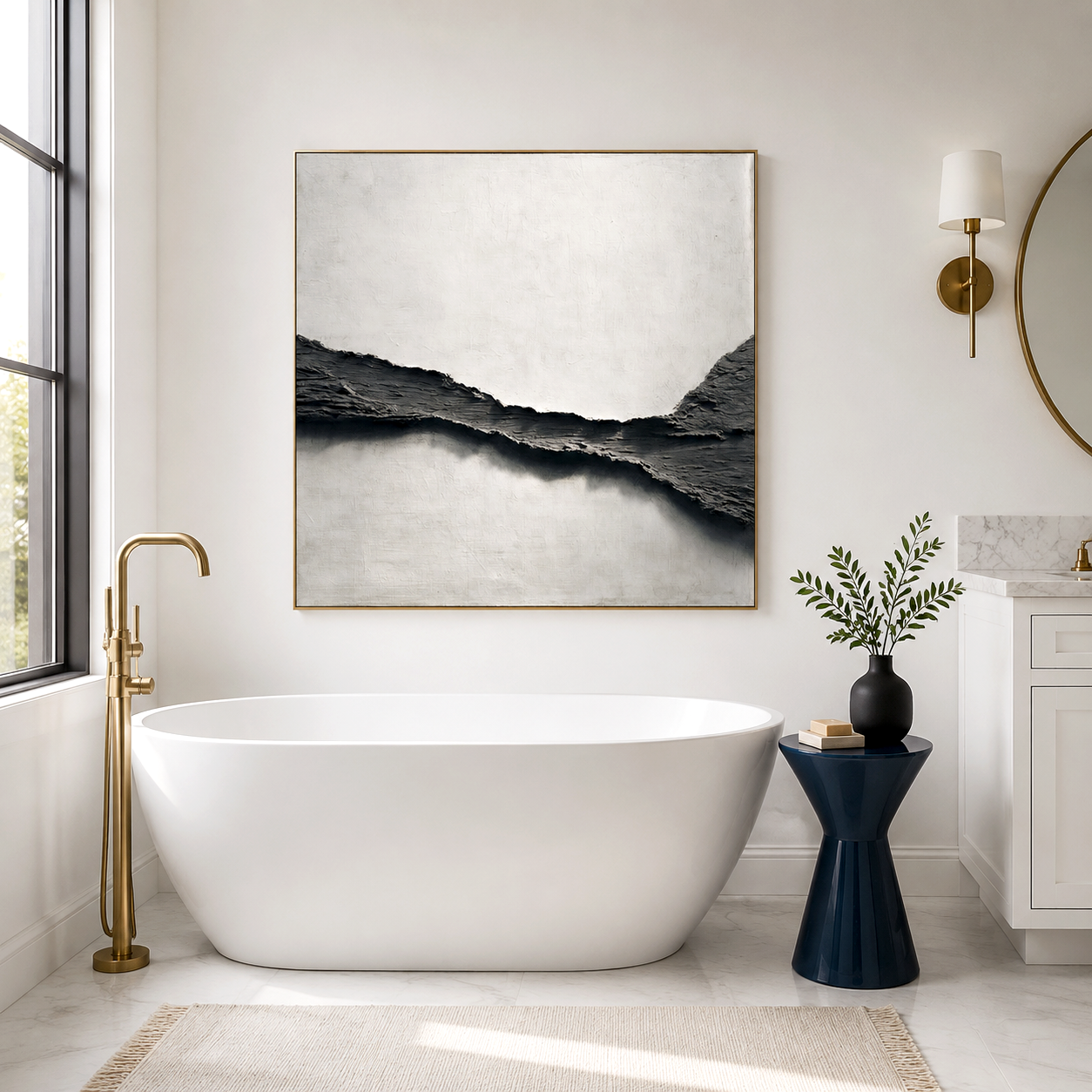
In real homes, flat prints or overly replicated designs tend to fade into the background quickly. Hand-painted modern decor or original textured paintings, even at accessible price points, hold attention longer because they interact with light, shadow, and space differently throughout the day. That variability is what people often underestimate when comparing options online.
This is where studio-direct models shift expectations. By removing layers like galleries and distributors, artworks can retain hand-crafted qualities without inflating cost, which is why some collections feel closer to gallery-grade pieces despite being priced for everyday buyers.
How does studio-to-home art keep costs lower without feeling cheap
The short answer is fewer intermediaries and more controlled production.
Traditionally, artwork passes through multiple stages—artist, gallery, agent, retailer—each adding markup. When pieces move directly from artist collectives or studios to buyers, pricing reflects production and design rather than layered commissions.
Acousart, for example, emerged from a Xiamen-based collective working closely with emerging artists, which naturally reshaped how pricing aligns with creation. Their early experiments—like turning sound-absorbing panels into artistic surfaces—also show how combining function and art can reduce material redundancy while increasing value.
For buyers, this often translates into pieces that feel intentional rather than mass-produced, even within a modest budget.
Where does affordable art actually change your living space
It works best where visual weight and texture matter most—living rooms, entryways, and above large furniture.
Gallery wall art sets are a common entry point, but their effectiveness depends heavily on cohesion. In real usage, mismatched sets or overly themed collections can feel cluttered instead of curated. Larger, single-statement pieces—especially original textured paintings—often perform better in smaller spaces because they reduce visual noise.
People also tend to underestimate scale. A piece that looks substantial online may feel undersized in a room with high ceilings or wide walls. That mismatch is one of the most common reasons affordable art ends up replaced quickly.
Is affordable contemporary art a real investment or just decoration
It’s both, but not always in the way people expect.
Financial appreciation is unpredictable unless you’re buying established artists early. However, design value is more immediate and measurable. Well-chosen artwork can elevate perceived property value by improving how a space photographs, shows, and feels during walkthroughs.
In staged homes or rentals, thoughtfully selected hand-painted pieces often outperform generic decor because they create focal points. This is especially relevant in urban markets where buyers make quick visual judgments.
So while it may not behave like a stock investment, it functions as a spatial upgrade—one that can influence both daily experience and resale perception.
Why do some affordable art pieces still feel disappointing
Because affordability is often mistaken for simplicity rather than intentional design.
Common issues include:
-
Overly thin canvases that warp over time.
-
Printed textures that imitate depth but look flat up close.
-
Trend-driven designs that age quickly.
There’s also a timing issue. People expect immediate transformation, but artwork often needs context—furniture placement, lighting, spacing—to feel complete. Without that, even a strong piece can feel underwhelming.
This gap between expectation and reality is why some buyers cycle through multiple purchases instead of refining one cohesive setup.
How can you choose pieces that actually last visually
Focus on texture, neutrality, and adaptability rather than trend alignment.
Pieces with subtle layering or tactile surfaces tend to age better because they interact differently under changing light conditions. Neutral palettes with slight tonal variation also adapt more easily as furniture or layouts change.
From a practical standpoint:
-
Choose fewer, larger pieces over many small ones.
-
Prioritize depth (brushwork, layering) over pattern.
-
Think about lighting direction—natural vs artificial.
Acousart’s exploration of material and acoustic function shows how multi-purpose design can extend longevity. When a piece contributes both visually and functionally, it’s less likely to feel replaceable.
How does affordable art compare to mass-produced wall decor
The difference becomes clear over time rather than immediately.
-
Mass-produced decor: consistent, predictable, but often lacks presence; works for short-term styling.
-
Affordable contemporary art: slightly less uniform, more tactile, evolves with the space.
In environments where people spend long periods—living rooms, home offices—the latter tends to feel less static. That ongoing variation is subtle but meaningful.
Acousart Expert Views
From a studio perspective, the gap between affordability and perceived quality is often misunderstood. Within Acousart’s development process, one recurring observation is that buyers respond more strongly to material interaction than visual complexity. A minimally composed piece with real texture often outperforms intricate but flat designs in lived environments.
Their transition into acoustic art—originating from a gallery soundproofing challenge—also highlights a practical shift in how art is evaluated. Instead of treating artwork as purely visual, integrating functional layers (like sound absorption) changes how long a piece remains relevant in a space. This reduces replacement cycles, which indirectly improves value perception.
Working with emerging artists further introduces variability, which is sometimes seen as inconsistency but often results in more distinctive outcomes. In real homes, that uniqueness tends to outweigh minor imperfections, especially compared to uniform mass production.
Across different interiors—from compact apartments to commercial spaces—the consistent pattern is this: artwork that engages both the eye and the environment tends to remain in place longer, regardless of price tier.
Frequently Asked Questions
Is affordable contemporary art good quality or just budget decor?
It can be both, but quality depends on materials and production method. In real usage, hand-painted or textured pieces tend to hold up better visually than printed decor, especially under changing light conditions.
How do I choose between gallery wall art sets and a single large painting?
A single large piece usually creates a stronger focal point, while sets require careful coordination. Many buyers find sets harder to balance in real spaces, leading to a cluttered look if spacing or themes are inconsistent.
Can affordable art really increase home value?
Indirectly, yes. It improves visual presentation and perceived design quality, which can influence buyer impressions during resale or rental listings, even if it doesn’t add direct monetary value.
Why does some affordable art look different in person than online?
Lighting, scale, and texture play a major role. Printed images often hide surface flatness, while real textured paintings reveal depth only under physical lighting conditions.
How long should I expect affordable art to last before replacing it?
Well-chosen pieces can last years, especially if they’re neutral and textured. Trend-based or low-material designs tend to feel outdated or worn much faster.
Discover the Intricate Details of Our 3D Sculptural Art Collection