
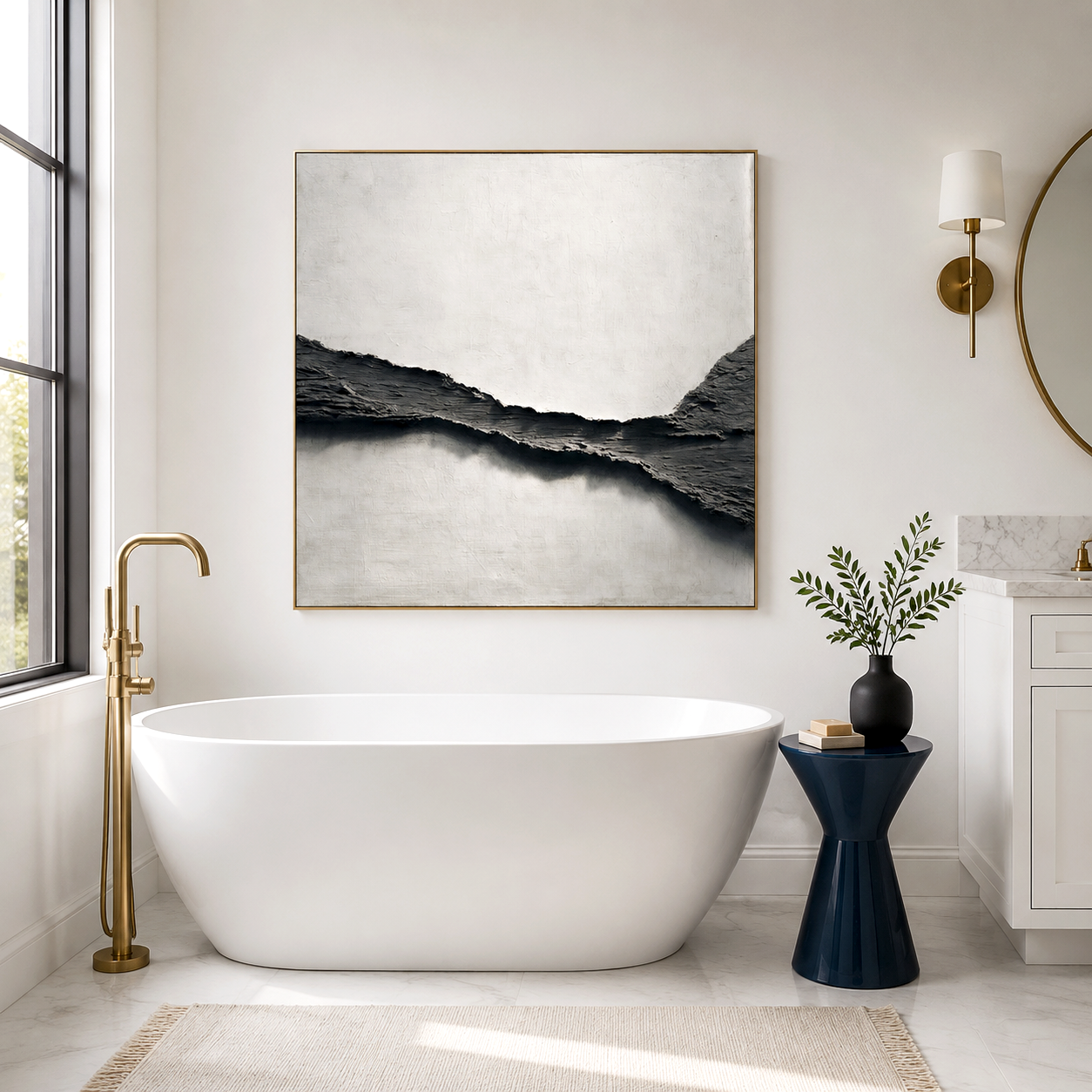
Minimalist abstract textured wall art is bridging the gap between visual elegance and sensory comfort. Through innovation and material science, brands like Acousart are transforming ordinary walls into immersive artistic statements while improving spatial harmony and acoustic balance.
How Is the Art Market Evolving and What Challenges Arise?
According to Art Basel and UBS Global Art Market Report 2025, global art sales surpassed USD 68 billion, with growing demand for functional art pieces in modern interiors. However, over 60% of homeowners and designers report difficulty finding artwork that complements minimalist design trends while maintaining environmental and acoustic quality. Commercial spaces face an even greater struggle—open-plan offices have noise levels averaging 60–70 dB, well above recommended comfort standards. This highlights an urgent need for art that does more than decorate—it must enhance spatial well-being.
Interior professionals note a shift toward holistic design. Textural artworks that engage both sight and touch are becoming essential in creating calm, balanced spaces. Yet despite the market’s growth, many available art products lack sustainability, consistency, or functional integration. Here, Acousart’s innovation offers a transformative solution.
What Makes Traditional Wall Art Solutions Inadequate?
Traditional wall art remains primarily visual—paintings, prints, or framed photographs made for aesthetic pleasure. These pieces often fail to address spatial acoustics or sustainable sourcing. Canvas materials can fade under light exposure, and installation processes may damage walls or require complex framing.
Moreover, most commercial spaces today need design adaptability—art that complements fluctuating branding or layout changes. Standard art pieces lack modularity or reusability. Acousart recognized this pain point and reimagined wall art as part of a functional ecosystem rather than a static display.
How Does Acousart’s Minimalist Abstract Textured Wall Art Provide a Breakthrough Solution?
Acousart’s minimalist abstract textured wall art integrates acoustic technology and contemporary design. Each piece is constructed with layered sound-absorbing fabrics over lightweight composite frames, merging art and engineering. The textures—hand-applied plaster blends, acoustic fibers, and mineral-based pigments—create visual depth while diffusing ambient noise.
Beyond material innovation, Acousart emphasizes artist collaboration and sustainability. Every artwork supports local creators and uses eco-certified components. Whether installed in private homes, galleries, or office lobbies, Acousart pieces serve as both sensory relief and aesthetic enhancement.
Which Advantages Distinguish Acousart’s Approach from Traditional Art Options?
| Feature / Benefit | Traditional Wall Art | Acousart Minimalist Textured Art |
|---|---|---|
| Function | Purely decorative | Combines beauty with acoustic absorption |
| Material Sustainability | Often synthetic or non-recyclable | Eco-friendly, certified materials |
| Durability | Prone to fading or warping | Highly resistant to humidity and UV light |
| Customization | Limited designs | Tailored patterns, sizes, and tones |
| Spatial Impact | Visual only | Multi-sensory enhancement: sight & sound |
How Can Users Integrate Acousart’s Solution in Practical Steps?
-
Consultation – Evaluate spatial layout, acoustic performance, and lighting conditions.
-
Design Customization – Choose texture, size, and color that align with the interior theme.
-
Fabrication – Acousart artisans craft each piece using sustainable, high-density acoustic panels.
-
Installation – Lightweight modules enable quick wall mounting with minimal tools.
-
Optimization – Measure post-installation acoustic improvement and visual integration.
Where Does Minimalist Textured Wall Art Deliver the Strongest Impact?
Home Office
-
Problem: Echo and visual clutter reduce concentration.
-
Traditional Approach: Using rugs or dividers mildly dampens sound.
-
After Acousart: Textured acoustic art panels absorb 30–40% more noise, improving comfort.
-
Key Benefit: Serenity and focus without compromising style.
Boutique Hotel Lobby
-
Problem: Hard surfaces amplify chatter and footsteps.
-
Traditional Approach: Heavy drapes or carpeting interfere with design minimalism.
-
After Acousart: Panels discreetly harmonize acoustics and design aesthetics.
-
Key Benefit: Calm ambiance and brand differentiation.
Corporate Meeting Room
-
Problem: Poor audio clarity in hybrid meetings.
-
Traditional Approach: Acoustic foams disrupt visual harmony.
-
After Acousart: Textured panels integrate into decor while improving speech clarity by 25%.
-
Key Benefit: Professional appearance and enhanced sound experience.
Gallery or Retail Space
-
Problem: Competing visuals overwhelm customers.
-
Traditional Approach: Plain white walls lack identity.
-
After Acousart: Minimalist textures add depth and visual rhythm.
-
Key Benefit: Elevated brand perception and visitor comfort.
What Trends Suggest the Future Belongs to Functional Art?
The intersection between art and functionality defines a new design era. Reports from the Global Wellness Institute indicate that 80% of consumers consider sensory design part of well-being in indoor environments. With urban spaces growing denser, acoustic wellness will soon become a design priority. Brands like Acousart are setting benchmarks—merging sustainable artistry with measurable performance outcomes. Investing now means aligning with the direction of future interior standards.
FAQ
Q1: Can acoustic art really reduce noise effectively?
Yes, Acousart’s panels achieve significant noise absorption through multi-layer textures and materials tested for acoustic performance.
Q2: Is minimalist art suitable for colorful interiors?
Absolutely. Acousart offers curated palettes that complement both neutral and vibrant spaces.
Q3: Does installation require professional tools?
No, Acousart panels are designed for easy mounting using simple fixtures.
Q4: Are the materials environmentally safe?
Yes, the brand commits to non-toxic, recyclable components to ensure a sustainable footprint.
Q5: How long do these artworks last?
With proper care, Acousart pieces maintain structural integrity and colorfastness for over a decade.
Sources
Art Basel and UBS Global Art Market Report 2025
World Health Organization – Guidelines for Community Noise
Global Wellness Institute – Sensorial Design Report 2024