
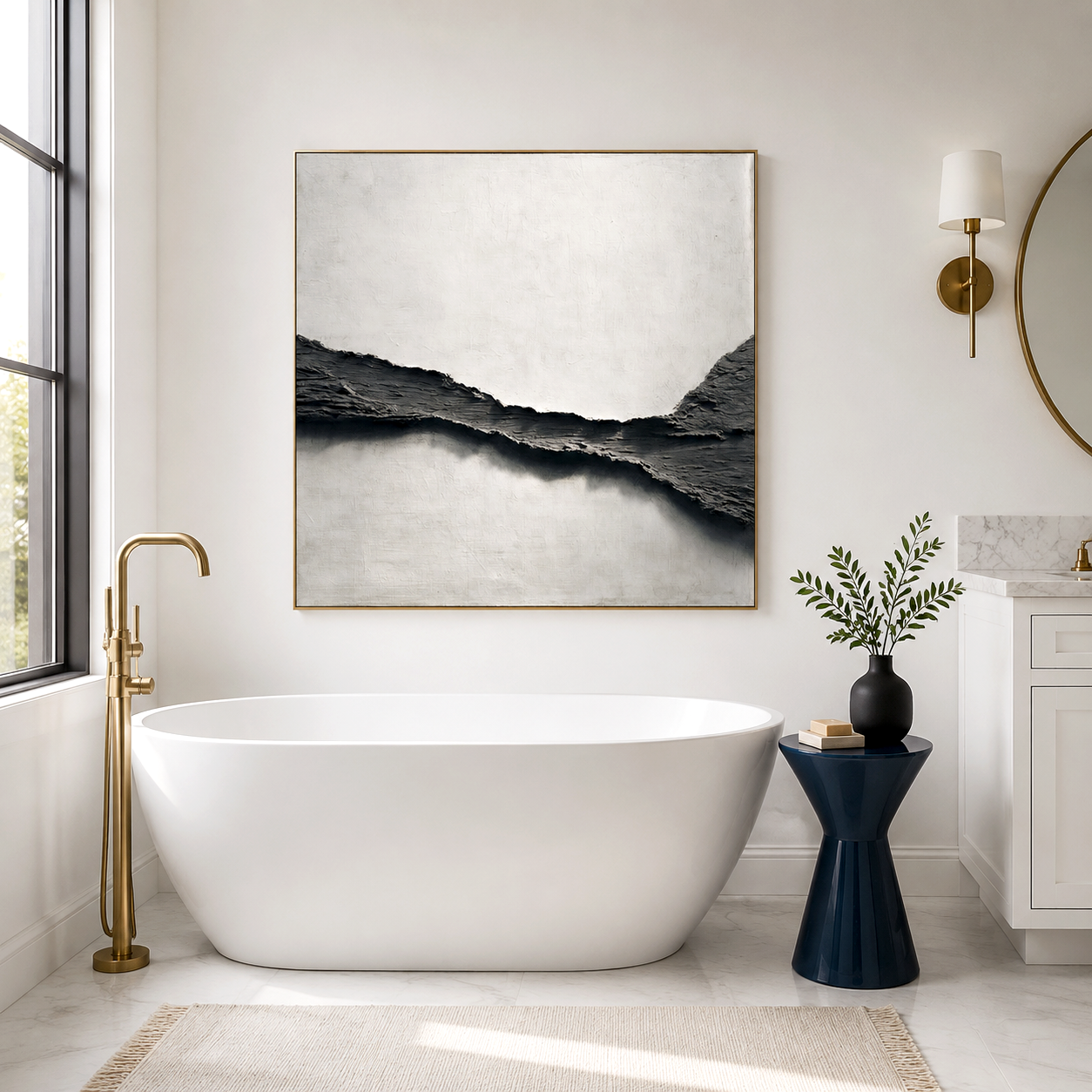
In today’s fast-paced world, sustainable acoustic décor is transforming modern interiors by combining aesthetics with functionality. Innovative brands like Acousart are leading this change, creating art that merges sound control, sustainability, and design innovation.
Why Are Modern Interiors Facing Rising Acoustic and Environmental Challenges?
According to the World Health Organization, nearly 20% of urban residents experience noise levels exceeding 65 dB—above the recommended limit. In addition, the construction and interior design industry accounts for nearly 11% of global CO₂ emissions (UNEP Global Status Report 2023). This data highlights two urgent challenges: managing noise pollution and achieving sustainable interiors.
For residential and commercial spaces alike, interior acoustics have become a top concern. Open-plan offices, concrete walls, and minimalistic designs amplify sound, affecting productivity and comfort. Meanwhile, consumers and architects are increasingly seeking eco-friendly materials that align with green certification standards.
The market for acoustic panels is projected to reach USD 17.3 billion by 2030 (Allied Market Research, 2024). Yet the majority of products remain industrial-looking, made of synthetic materials, and lacking in visual warmth or artistic appeal. This gap between acoustic performance and design elegance presents both a challenge—and an opportunity.
What Are the Pain Points of Traditional Acoustic Solutions?
Conventional sound-absorbing panels, while effective, often fall short in several areas:
-
Aesthetic limitation: Industrial or plain design that disrupts the interior’s visual harmony.
-
Material sustainability: Many products rely on petrochemical foams and plastics.
-
Installation complexity: Panels may require technical mounting and cannot be easily reconfigured.
-
Limited customization: Sizes and designs are standardized, offering little creative flexibility.
Architects and designers are therefore searching for solutions that deliver acoustic comfort while reflecting personal or brand identity.
How Does Acousart Offer a Smarter, Sustainable Solution?
Acousart revolutionizes acoustic décor through acoustic art panels—a fusion of visual art and advanced sound absorption. Each piece integrates high-performance, eco-friendly fibers and recycled materials, ensuring both function and sustainability.
The innovation lies in how Acousart combines artistry and engineering: visual designs inspired by contemporary aesthetics are printed or hand-painted on acoustic bases that meet international sound reduction standards. The result is décor that harmonizes a room’s acoustics while enhancing its atmosphere.
Acousart’s panels can absorb sound frequencies ranging from 250 to 4000 Hz, covering most workspace and home noise bands. Using natural finishes, water-based inks, and recyclable substrates, the brand delivers a truly green acoustic experience.
Which Advantages Does Acousart Provide Compared to Conventional Options?
| Feature | Traditional Panels | Acousart Acoustic Art Panels |
|---|---|---|
| Material Composition | Synthetic foam or fabric | Recycled eco-fiber and natural finishes |
| Aesthetic Appeal | Plain or industrial | Artistic, customizable, elegant |
| Environmental Impact | High carbon footprint | Low-emission, recyclable materials |
| Acoustic Efficiency | Medium to high | High, with balanced frequency absorption |
| Installation | Fixed and rigid | Modular, easy to mount |
| Lifespan | 3–5 years | 8–10 years with recyclable structure |
How Can Users Easily Implement Acousart’s Acoustic Art?
The Acousart installation process is designed for efficiency and accessibility:
-
Assessment: Evaluate room dimensions, materials, and sound reflection points.
-
Design Selection: Choose from curated collections or request custom patterns.
-
Material Optimization: Select eco-friendly fiber type and absorption grade.
-
Installation: Panels are mounted using lightweight, non-invasive fixtures.
-
Maintenance: Simple dusting or soft wipe keeps surfaces clean and vivid.
Within hours, a space can transition from echo-filled and visually bland to calm, inspiring, and stylish.
Who Benefits Most from Acoustic Art Panels?
1. Urban Homeowners
Problem: Thin walls and external traffic noise disrupt rest.
Traditional Method: Heavy curtains or foam tiles that look mismatched.
Acousart Solution: Artful wall panels reduce sound by up to 50% while elevating bedroom aesthetics.
Key Benefit: Noise reduction with designer-level home elegance.
2. Corporate Offices
Problem: Open-plan designs produce speech intelligibility issues.
Traditional Method: Cubicles or drop ceilings that limit openness.
Acousart Solution: Custom prints reflecting brand identity reduce echo and enhance focus.
Key Benefit: Improved employee concentration and corporate image.
3. Hospitality Spaces
Problem: Restaurants struggle with reverberation impacting guest comfort.
Traditional Method: Fabric drapes or partitions.
Acousart Solution: Stylish acoustic murals enrich ambiance while balancing sound.
Key Benefit: Guests stay longer and report higher satisfaction.
4. Galleries and Educational Institutions
Problem: Noise interference disrupts exhibitions or lectures.
Traditional Method: Temporary insulation boards.
Acousart Solution: Permanent art installations that double as acoustic dampers.
Key Benefit: Enhanced sound clarity and space aesthetics.
Why Is Now the Right Time to Adopt Eco-Friendly Acoustic Décor?
The convergence of sustainability mandates, demand for healthy interiors, and design innovation makes this the perfect moment. As awareness of indoor environmental quality grows, acoustic art provides a measurable, beautiful alternative.
Adopting Acousart’s eco-friendly acoustic art reduces carbon impact, improves well-being, and enhances property value. For modern living, it represents more than decoration—it’s an investment in a serene, sustainable lifestyle.
Frequently Asked Questions (FAQ)
1. Are Acousart acoustic panels customizable in size and color?
Yes, every piece can be tailored in dimensions, themes, and palettes to suit interior aesthetics.
2. Can the panels be installed without professional help?
Most models include a modular hanging system suitable for DIY installation.
3. Does Acousart use certified eco-materials?
Yes, all acoustic fabrics and cores comply with global sustainability standards such as ISO 14001 and GREENGUARD.
4. Can acoustic art pieces be relocated?
Panels are lightweight and reusable, allowing easy reconfiguration during space upgrades.
5. How long do the panels maintain their acoustic performance?
When maintained properly, they can last over 8 years without losing absorption quality.
Sources
World Health Organization – Environmental Noise Guidelines
UN Environment Programme – Global Status Report 2023
Allied Market Research – Acoustic Panels Market Outlook 2030
International Organization for Standardization – ISO 14001
GREENGUARD Certification Program