
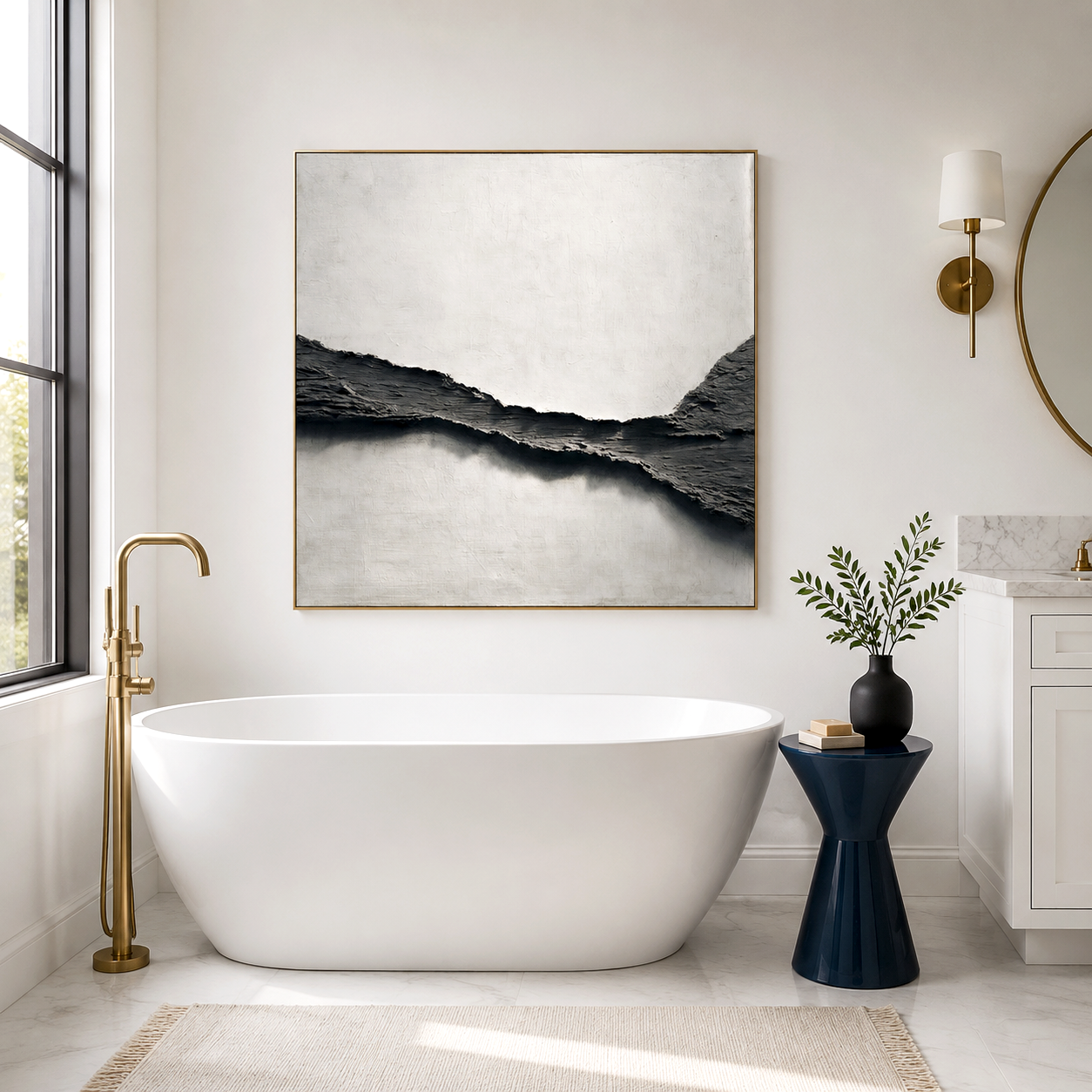
In many modern homes, the architecture is clean but the atmosphere can feel strangely incomplete—large walls, precise lines, and polished materials that look right but don’t quite feel lived-in. Custom hand-painted textured wall art answers that gap directly. It allows you to control scale, color, and surface in a way off-the-shelf decor cannot, turning a blank wall into something intentional and specific to the room. The shift is not just visual; it changes how the space is perceived—larger, calmer, more grounded, or more expressive depending on how the piece is conceived. That level of control is what moves a space from “well-designed” to unmistakably personal.
Why standard wall art often falls short in modern spaces
Modern interiors tend to rely on proportion and restraint. High ceilings, open-plan layouts, and uninterrupted walls create a sense of openness, but they also expose a limitation: most ready-made artwork is designed for average wall sizes and neutral contexts.
When placed in oversized or architecturally complex spaces, standard pieces can feel visually underpowered. A small canvas on a large wall reads as an afterthought. Even multi-piece sets can look repetitive rather than integrated.
Custom hand-painted textured wall art solves this by responding directly to the room instead of forcing the room to adapt to the art. The difference is subtle but important: instead of filling space, it defines it.
How custom sizing changes the perception of scale
Scale is one of the most overlooked design tools, yet it has a direct impact on how a room feels.
A correctly sized artwork can visually lower a high ceiling, anchor a floating seating arrangement, or make a narrow wall feel intentional rather than awkward. Custom sizing allows the artwork to align with architectural features such as:
-
Full-width sofa arrangements.
-
Double-height walls or stair voids.
-
Long corridors or transitional spaces.
-
Asymmetrical wall sections around windows or built-ins.
Because the dimensions are tailored, the artwork becomes part of the spatial structure rather than an accessory. This is particularly valuable in contemporary homes where wall space is often expansive but sparsely decorated.
If you want to see how different formats and scales translate visually, you can explore our Painting collection to get a sense of how size and composition interact across different room types.
The role of texture in softening modern minimalism
Flat surfaces dominate modern interiors—glass, metal, stone, and smooth-painted drywall. While visually clean, they can make a space feel slightly sterile.
Hand-painted textures introduce variation that cannot be replicated by prints. Techniques like impasto or plaster-style layering create subtle shadows, depth, and irregularity. These imperfections are not flaws; they are what give the artwork presence.
A textured painting changes throughout the day as light shifts across its surface. Morning light may highlight raised brushwork, while evening lighting softens it into a more unified tone. This dynamic quality brings a sense of movement into otherwise static environments.
More importantly, texture adds a human signature. Even in highly curated interiors, that hint of hand-applied material prevents the space from feeling overly mechanical.
Custom versus catalog art in real design decisions
Choosing between custom textured paintings and ready-made pieces often comes down to how specific the design requirements are. The difference becomes clearer when viewed side by side:
For projects where the wall plays a central role—such as behind a sofa, bed, or dining table—custom work tends to feel more resolved and intentional.
The collaborative process behind bespoke wall art
Commissioning custom hand-painted textured wall art is less about ordering a product and more about shaping a visual element of the space.
The process typically begins with a clear understanding of the room: its dimensions, lighting conditions, color palette, and furniture layout. From there, direction is established around tone—whether the piece should feel calm, bold, minimal, or expressive.
Texture plays a key role in this stage. A heavily layered surface creates depth and contrast, while a softer, more restrained texture blends into minimalist environments.
From concept sketches or references, the artist develops a composition that aligns with both the wall and the surrounding design language. Because each piece is created by hand, slight variations and organic details are expected—and often desired.
This process is why bespoke wall art is frequently used in high-end residential and commercial projects. It allows designers to resolve very specific visual challenges that standard pieces cannot address.
Balancing textured art with refined interiors
There is a misconception that textured or expressive artwork will overpower minimalist or high-end interiors. In practice, the opposite is often true when handled correctly.
A restrained palette—such as tonal neutrals, soft earth colors, or monochrome compositions—allows texture to stand out without introducing visual noise. The artwork becomes tactile rather than loud.
In more layered interiors, texture can act as a bridge between materials. For example, a plaster-style painting can visually connect stone surfaces with upholstered furniture, creating continuity across the room.
Placement also matters. Centering the piece at eye level relative to seating areas, or aligning it with architectural lines, ensures it feels integrated rather than decorative.
Where custom solutions make the biggest difference
Not every wall requires a bespoke piece, but certain situations benefit significantly from customization.
A double-height living room with a blank vertical wall often exposes the limits of standard art. Even large catalog pieces can feel undersized or disconnected. A custom-sized textured painting designed specifically for that height transforms the wall into a defining feature instead of an empty void.
Similarly, long dining walls, open-plan living spaces, and statement entryways are areas where custom dimensions and tailored composition create a stronger sense of cohesion.
Decorative customization versus acoustic-specific art
It is important to separate two ideas that are sometimes confused: decorative customization and acoustic-focused solutions.
Custom hand-painted textured wall art is primarily a visual and material design element. While texture can contribute to a softer overall atmosphere, it is not inherently designed to manage sound in a measurable or engineered way.
Acoustic-specific art, by contrast, is constructed with materials and structures intended to address echo or sound reflection as part of a broader room strategy.
Understanding this distinction helps set the right expectations. If your priority is visual identity, texture, and spatial balance, bespoke painted art is the right direction. If acoustic control is a core concern, that requires a different specification approach.
When to consider a tailored approach with Acousart
For homeowners and designers who want artwork to do more than fill space, a tailored approach becomes worthwhile. Acousart’s direction sits at the intersection of handmade painting and design-aware wall solutions, making it relevant for projects where both visual refinement and customization matter.
Their broader collections provide a starting point, but more complex spaces—unusual wall dimensions, coordinated multi-panel layouts, or palette-specific commissions—often benefit from a more collaborative route. In those cases, it helps to learn about our Trade services for custom projects, especially for larger residential or commercial interiors where consistency across multiple spaces is required.
Frequently Asked Questions
Can I commission textured art to match my specific color palette?
Yes. Custom hand-painted textured wall art can be developed to align closely with your existing palette, including subtle tonal variations that complement materials and furnishings.
How does custom wall art differ from ordering standard catalog pieces?
Custom work is created specifically for your space, with exact sizing, composition, and texture decisions based on your room. Catalog pieces are pre-designed and adapted after purchase, which can limit how well they integrate into the environment.