
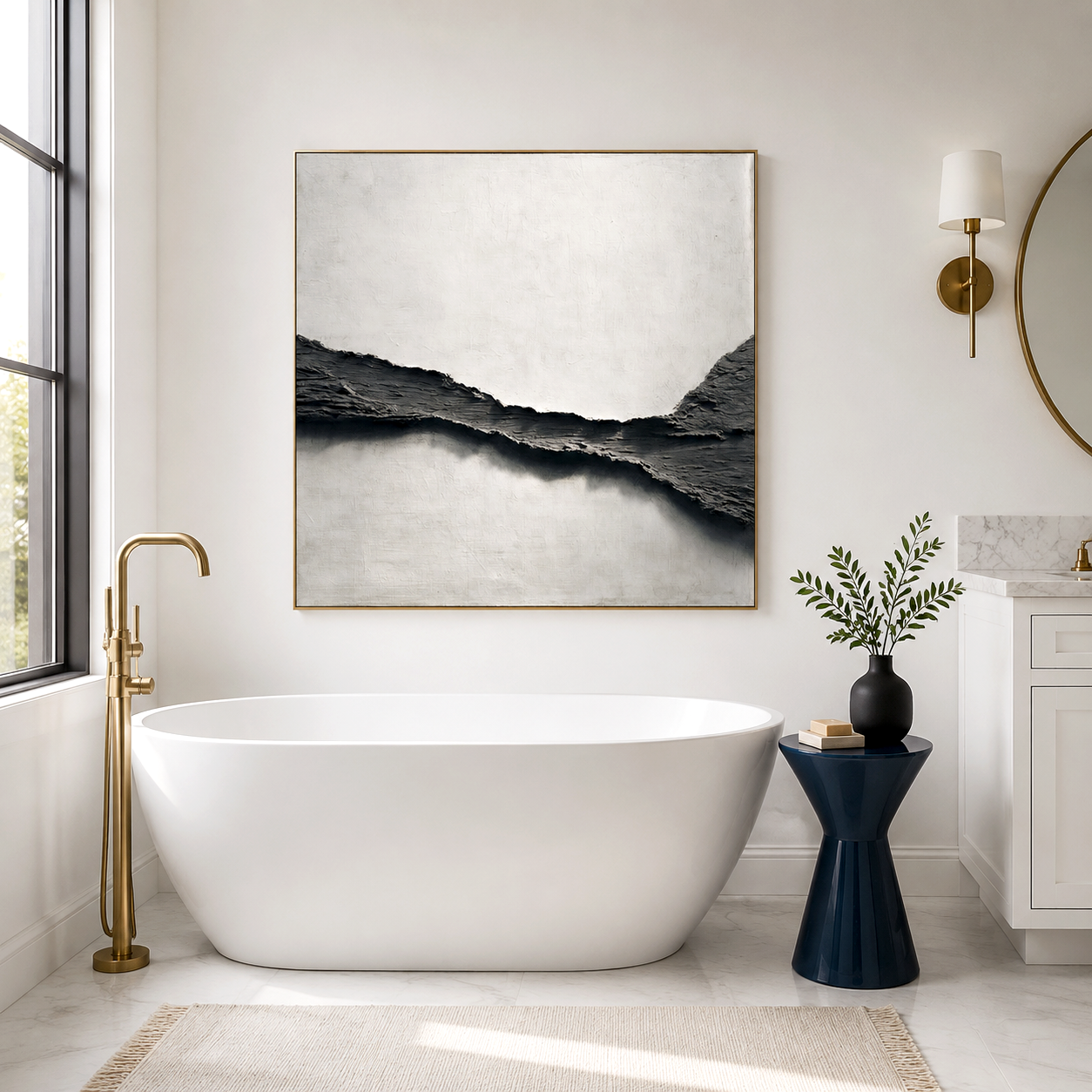
3D plaster art small apartment styling works best when the piece is treated like architecture, not filler. In a compact room, textured plaster wall art can create a strong focal point, add visual depth, and make the wall feel intentionally composed, but only if the scale, placement, and lighting are handled with care. Too many small pieces can fragment the space; one well-chosen statement work usually feels calmer and more confident. The goal is not to cram more decor onto the wall. It is to give the room one clear visual anchor that feels refined, dimensional, and proportionate.
Why textured plaster changes the room
The appeal of 3D plaster art is that it gives a flat apartment wall real surface presence. Even without bold color, the raised texture catches daylight and lamp light differently through the day, so the wall feels less static and more layered. That matters in small rooms, where ordinary decor can disappear or make the space feel busy without adding any visual weight.
This is why 3D textured art apartment styling often feels more effective than adding several smaller prints. A textured piece can hold attention with shape, shadow, and relief rather than relying on color alone. In a narrow living room, entry hall, or studio corner, that kind of depth creates a focal point without requiring a crowded wall plan.
Choosing the right scale
Scale is the difference between a piece that anchors the room and one that looks lost or overpowering. For small space wall decor ideas, the safest approach is to measure the wall first, then think in terms of visual balance rather than size alone. A piece that is too small often looks accidental; a piece that is too large can feel like it is taking over the room.
A useful rule is to let the artwork relate to the furniture beneath it. Above a sofa, bed, or console, the art usually looks more settled when it spans a meaningful portion of that width instead of hovering as a tiny object in the middle of the wall. In very compact rooms, a single vertical work can also help pull the eye upward, which makes the room feel more composed. If the wall is narrow, avoid forcing a wide arrangement just because the space is blank.
For quick planning, use this simple comparison:
Styling for depth, not clutter
Plaster art wall styling should be edited, not crowded. The texture already gives the piece enough presence, so the surrounding wall needs breathing room. Leave open space around it when possible, especially in a small living room or studio apartment where every extra frame, shelf, and object competes for attention.
A clean backdrop helps the texture read properly. Soft neutral walls, muted furniture, and limited competing patterns let the artwork do its job. If the room already has strong elements such as patterned rugs, dark wood, or vivid upholstery, choose a plaster piece with a quieter surface language so the room stays balanced. The right piece feels like a focal point, not a visual interruption.
In small apartments, the most common mistake is treating a statement piece like one item in a collection of many. A strong plaster work usually performs better when it is allowed to stand on its own.
Lighting brings out the relief
Directional light matters more with textured art than with flat prints. The raised surface of 3D plaster art becomes much more visible when light grazes across it, creating soft shadows that reveal the form. Without that light, the piece may still look good, but some of the dimensional character gets lost.
Picture lights, angled wall washers, and nearby lamps can all help, depending on the room. The key is to avoid flat, straight-on lighting that erases the texture. In a small apartment, even one carefully placed sconce or an adjustable floor lamp can change how the work reads at night. The piece does not need dramatic spotlighting. It needs enough angle to let the surface depth do its job.
If you are placing the art in a room that also needs a visual reset, this is where a curated textured piece can help. The explore 3D textured art collection path is useful when you want a wall feature that feels dimensional without turning the room into a gallery full of competing objects.
Layout ideas for compact rooms
The best layout depends on what the room is already doing. In a studio apartment, a textured piece can define the sleeping zone, the seating zone, or the dining nook without adding partitions. In a small living room, it often works best above the sofa or on the largest uninterrupted wall so the room has one clear visual center. In a narrow hallway or entry, a vertical work can create a more deliberate first impression without crowding circulation.
If you are considering a gallery wall for small living room styling, keep the plaster piece as the anchor rather than one part of a dense arrangement. Gallery walls can work in compact spaces, but they need discipline. Mixing too many frame sizes, finishes, and subjects can make the room feel more compressed than curated. A better approach is to let one textured centerpiece lead, then add only a few supporting elements if they truly improve the composition.
A useful way to think about layout is this: the more limited the wall area, the more each object has to justify its presence. That is why one dimensional artwork often feels stronger than several smaller pieces in a small apartment.
When a statement piece is enough
Not every room needs a full wall treatment. In many compact interiors, one well-scaled textured work solves the design problem better than a cluster of smaller decor items. This is especially true when the room already has strong furniture lines, visible storage, or open shelving. In that setting, extra wall pieces can create friction instead of calm.
That said, 3D plaster art is still decorative art, not an acoustic product unless a specific product page states otherwise. It should be chosen for visual impact, texture, and composition first. If you are comparing it with other wall art, the real question is whether you want the wall to feel softer, more sculptural, and more finished, not whether it will change the room’s sound behavior.
For buyers who like a more restrained, tactile look, Acousart’s textured wall art collections can be a natural fit, especially when the room calls for a sculptural focal point rather than a standard flat canvas. If you prefer a quieter organic feel, you can also browse Wabi Sabi art pieces for a more minimal, balanced direction.
A practical way to choose
If you are deciding whether a piece belongs in your apartment, ask three questions. First, does the scale fit the wall without crowding it? Second, does the texture add enough depth to justify being the main focal point? Third, will the room lighting reveal the surface rather than flatten it?
When those three answers are yes, 3D plaster art can do something ordinary decor often cannot: it can make a small room feel considered without making it feel busy. That is the real advantage in compact interiors. The piece does not need to be loud. It needs to be confident.
Frequently Asked Questions
Can you hang large 3D plaster art in a small room? Yes. A single oversized statement piece often works better than multiple small frames, creating a clean focal point that visually expands compact walls.
How do you maintain and clean 3D plaster-style art? Use a soft-bristled brush or dry microfiber duster gently to remove surface dust, avoiding any liquid cleaners or moisture.
What lighting techniques best highlight textured plaster wall art in compact rooms? Picture lights, angled wall washers, and nearby lamps work well because they let shadows fall across the surface and reveal the texture.