
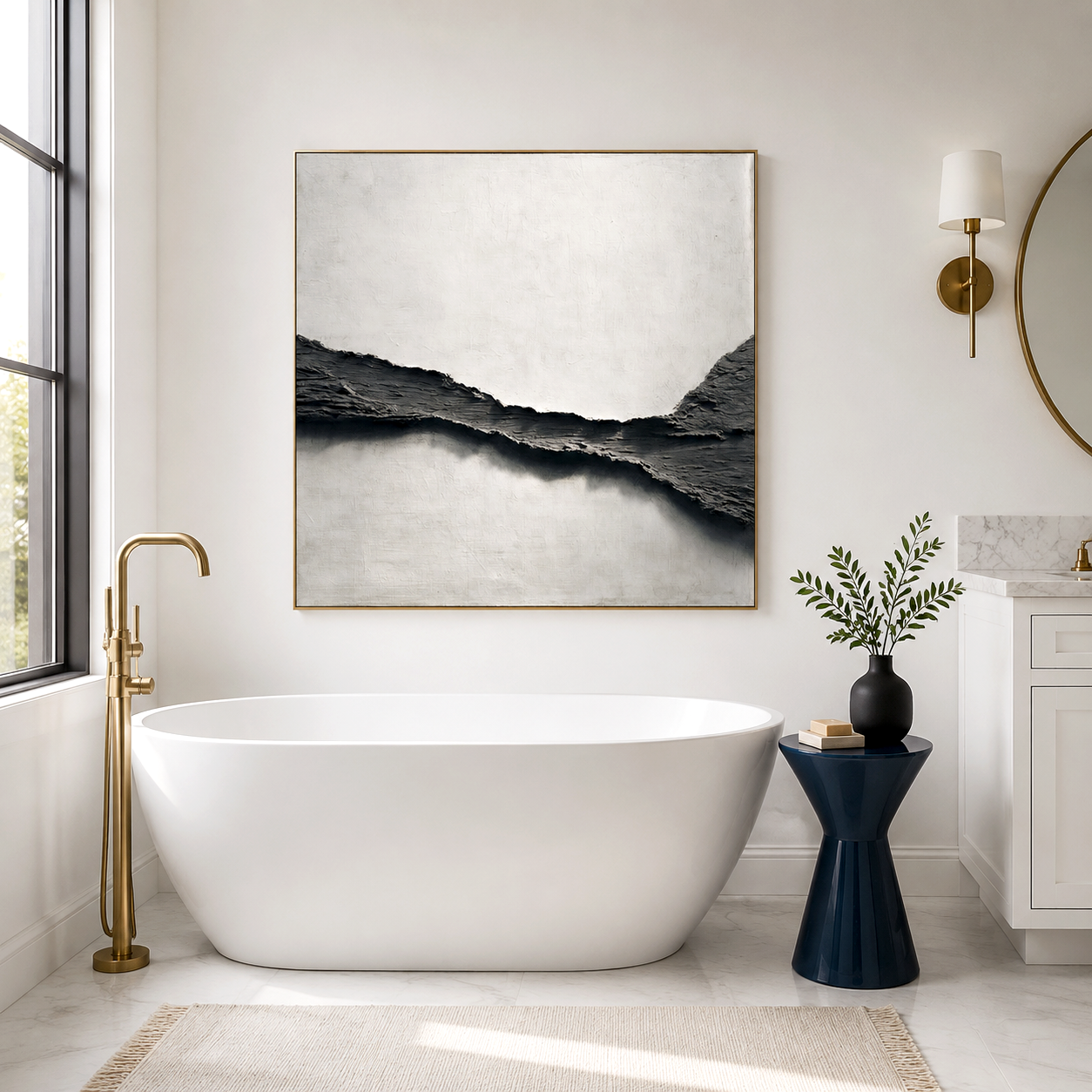
Step into almost any modern home and you’ll see the same tension: beautiful clean lines, pale walls, generous windows—and a flat, slightly empty feeling. Cloud textured wall art sits right in that gap. With soft white and cream tones, muted sky pastels, and sculpted, cloud-like relief, these pieces bring a calm, airy presence to a room without shouting for attention. Used thoughtfully, cloud textured wall art can make compact or minimalist spaces feel more open, more luminous, and more restful. This guide walks through how to choose and place ethereal cloud canvases, pair them with natural materials, and light their texture so your walls feel like an extension of the sky, not just a blank surface.
How cloud-textured art changes the mood of a room
Cloud-inspired paintings work on mood through two main levers: softness of form and softness of tone. Instead of sharp geometry or high-contrast graphics, you’re looking at hazy edges, drifting shapes, and white-on-white or whisper-soft gradients. That kind of visual language naturally quiets the eye, which is why ethereal cloud canvas art feels so appropriate in bedrooms, nurseries, and reading corners.
The texture adds a second layer. Raised brushwork, gentle impasto, or sculptural plaster catches the light in small, irregular ways. In daytime, this can make walls feel slightly luminous instead of flat. In the evening, with dimmer lamps, the same texture throws subtle shadows that recall distant clouds at dusk. None of this changes the physics of your room, but it does change how you experience the space—less hard, less stark, more like being wrapped in soft daylight.
Making compact and minimalist rooms feel more open
Minimalist rooms and small spaces often suffer from the same problem: there’s plenty of white, but not much depth. Cloud textured wall art is effective here because it adds movement and dimension without cluttering the composition.
In a compact living room, a wide horizontal cloud canvas above the sofa can visually stretch the wall. The loose, drifting forms suggest distance, which your brain reads as “more space.” When the palette stays in the realm of soft whites, creams, and pale sky tones, you gain interest without sacrificing the calm that minimalism promises. In a small hallway or entry, a tall, narrow piece with vertical cloud trails can gently draw the eye upward, balancing a low ceiling or tight footprint.
For true minimalists, the key is restraint. One or two airy minimalist paintings are usually enough. Let the negative space around the artwork stay generous so the clouds feel like they’re floating, not fighting for attention. This is also where textured white wall decor shines: even a mostly white piece will feel rich and intentional when its surface is subtly sculpted rather than perfectly smooth.
Pairing cloud art with wood, linen, and other natural textures
Cloud-inspired art comes alive when you surround it with materials that share its softness and honesty. Natural wood, linen, wool, and clay all help the artwork feel rooted rather than ethereal in a way that’s disconnected from real life.
Think of a serene abstract art piece in soft whites and creams above a light oak sideboard. The warm grain of the wood grounds the coolness of the cloud forms. Add a linen table runner or cushions in stone, sand, or mushroom tones, and you create a palette that feels like sky meeting earth. The painting doesn’t just hang on the wall; it becomes part of a larger, quiet landscape in the room.
Textiles are particularly important here. Heavy, dark fabrics can weigh down the lightness of cloud art, while loosely woven linen curtains, wool throws, and cotton bedding echo the softness you see on the canvas. If you enjoy more tactile walls, exploring a 3D textured art collection can be a natural extension—still calm and cloud-like, but with deeper relief that dialogues beautifully with woven and timber surfaces.
Lighting techniques that make soft texture glow
Texture relies on light. If your cloud canvas is lit only by a single overhead fixture, much of the delicate relief and movement will simply disappear. The goal is to use light to skim the surface, making the ridges and swirls visible without harsh glare.
Ambient lighting sets the mood first. Warm white bulbs in the 2700–3000K range tend to flatter soft whites, creams, and pale pastels, preventing them from feeling clinical. Then, introduce gentle directional light. A floor lamp angled so its beam grazes the canvas from the side, a wall-mounted picture light, or an adjustable ceiling spotlight placed relatively close to the wall can all create the subtle shadow play that makes cloud textures look dimensional and almost weightless.meodedpaint+1
In bedrooms and nurseries, skip intense spotlights aimed directly at eye level. Instead, bounce light off the wall above or below the artwork so the texture is illuminated but never blinding. In living rooms, layering a low table lamp with one focused accent light often provides enough depth; the clouds seem to shift as you move through the space, which keeps the room feeling quietly alive.
Best places to hang serene cloud-themed pieces
Where you hang cloud art matters as much as which piece you choose. These works tend to function best as calm focal points—places where your eye can rest, not high-traffic visual intersections competing with screens and shelves.
Above a bed headboard is a classic placement. A wide, softly textured canvas spanning most of the bed width creates a horizon-like effect, which feels naturally soothing as the last thing you see before sleep. In nurseries, hanging cloud textured wall art above a changing unit or across from the crib (rather than directly over it) offers a gentle visual anchor without looming overhead.
In living rooms, consider the largest clear wall rather than cramming the painting between windows or cabinets. A single, substantial cloud piece over a low sofa, or a pair of airy minimalist paintings arranged side by side, can quiet the whole seating area. For home offices or studies, positioning a smaller cloud canvas within your peripheral vision—on the wall beside your desk—gives you a soft horizon line to glance at during breaks, subtly easing visual fatigue.
Keeping expectations honest: decor, not therapy or tech
It’s tempting to assign big promises to serene artwork: better sleep, instant calm, transformative wellbeing. In reality, cloud-textured wall art plays a supporting role. It can contribute to a comforting, visually quiet environment, but it does not replace good lighting, a thoughtful layout, or healthy routines.
Equally important, standard decorative cloud art is not an acoustic product. A textured canvas may slightly soften how a wall feels visually, yet it is not engineered or tested to act as a sound absorber or a soundproofing solution. If your main concern is echo or noise transmission, you will likely need a broader strategy that includes rugs, upholstery, curtains, and, where relevant, purpose-designed acoustic elements.
Being clear about this boundary actually helps you choose better. You can select cloud art primarily for its visual serenity and how it interacts with your walls, light, and furniture, without expecting it to solve unrelated technical problems. That clarity keeps your budget and your design decisions aligned with what the artwork is truly meant to do.
Where cloud-inspired art fits within Acousart’s world
Within Acousart’s universe, cloud-textured pieces belong firmly in the decorative painting and textured wall art families. They focus on soft color, sculptural surface, and an overall sense of quiet rather than measured acoustic performance. That makes them well suited to bedrooms, tranquil living rooms, nurseries, and reading corners where your first priority is atmosphere.
If you’re drawn to serene, cloud-like textures but want flexibility in scale or composition, multi-panel or custom approaches can be particularly effective. Spreading two or three coordinated canvases across a wall can echo the way real clouds drift in the sky, while also helping you match the proportions of a long sofa or a wide headboard. When you’re ready to see how this language of softness translates into different formats and palettes, you can browse all wall art products to compare gentle whites, muted skies, and more abstract interpretations side by side.
Frequently asked questions
How do you style cloud-textured wall art in a minimalist interior?
Style cloud-textured wall art in a minimalist interior by keeping everything around it equally calm and considered. Pair soft white or cream canvases with neutral linen textiles, light wood flooring, and warm, diffused ambient lighting so the artwork feels like a natural extension of the room rather than a decorative afterthought.
Where is the best place to hang serene cloud-themed wall art?
The best places to hang serene cloud-themed art are where you most want a sense of visual rest. It often works beautifully above a master bed headboard, in a quiet home study where you read or think, or across a relaxed living room wall that benefits from a single, steady focal point instead of many smaller distractions.