
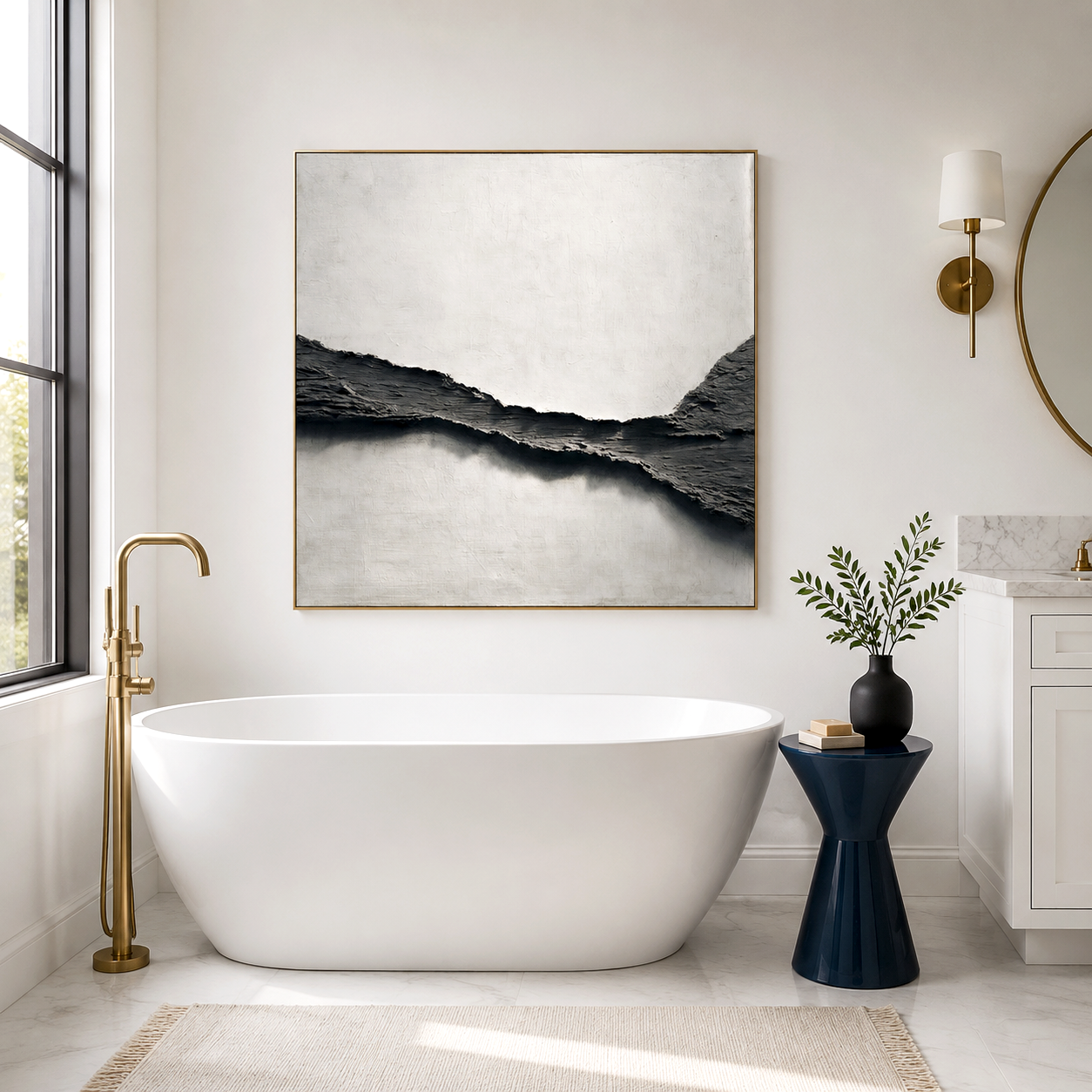
You hang a piece of surrealist pop art expecting instant impact, but something feels off. The colors are loud, the forms are striking, yet instead of elevating the room, the wall starts to feel crowded or disconnected. This is where most people pause—not because the artwork lacks power, but because surrealist pop art behaves differently from traditional wall decor.
Unlike flat prints or minimalist canvases, surrealist pop art sculptures—especially those with textured, dimensional surfaces—interact with light, depth, and surrounding objects in ways that aren’t always predictable. A bold abstract figure might look balanced in a gallery but feel dominant in a living room with limited wall space. The question isn’t whether surrealist pop art works—it’s how to make it work without overwhelming the environment.
What Defines Surrealist Pop Art in Modern Interiors?
Surrealist pop art blends two visual languages: the dreamlike distortion of surrealism and the graphic punch of pop art. The result often includes exaggerated forms, unexpected symbolism, and high-saturation colors.
But in real interiors, the defining feature isn’t just style—it’s presence.
-
Surrealist elements introduce ambiguity, which draws attention and invites interpretation.
-
Pop art color palettes increase visual energy, especially in neutral or muted rooms.
-
When combined in sculptural or relief form, the artwork creates physical depth, not just visual contrast.
This is why pieces like a bold abstract figure or a speeches abstract figure painting don’t simply decorate a wall—they compete with furniture, lighting, and even movement in the space.
Why 3D Textured Pop Art Feels More Impactful Than Flat Paintings
A common question: why does a vibrant textured painting feel more immersive than a standard canvas?
The answer lies in how light interacts with surface variation. A 3D relief structure creates micro-shadows that shift throughout the day, meaning the artwork is never visually static.
In practice:
-
Morning light softens textures, making colors feel layered and subtle.
-
Artificial lighting at night sharpens edges, increasing contrast and drama.
-
Movement (people walking by, changing angles) alters how the piece is perceived.
This dynamic behavior explains why many modernist mural art styles are evolving toward sculptural formats—they hold attention longer, especially in social or commercial spaces.
Acousart’s early experimentation with transforming sound-absorbing panels into artistic surfaces revealed a similar effect: once texture and function merge, walls stop behaving like passive backgrounds.
Where Surrealist Pop Art Works Best in Real Spaces
Not every wall benefits from high-energy artwork. Placement often determines whether the piece feels intentional or intrusive.
Surrealist pop art tends to perform best in:
-
Social zones (living rooms, lounges), where visual stimulation supports conversation.
-
Transitional spaces (entryways, hallways), where brief exposure creates curiosity rather than fatigue.
-
Commercial environments (cafés, studios), where strong identity matters more than calm neutrality.
In smaller bedrooms or tightly packed spaces, the same bold abstract figure may feel overwhelming, especially if surrounding elements compete for attention.
A practical observation: people often underestimate how much “visual rest” a room needs. Without it, even the most compelling surrealist pop art becomes tiring over time.
How to Balance Color and Structure Without Visual Overload
The biggest mistake isn’t choosing bold art—it’s failing to control what surrounds it.
When working with high-saturation surrealist pop art:
-
Pair with low-contrast backgrounds (off-white, muted gray, soft beige).
-
Limit competing textures (avoid mixing with heavily patterned wallpapers).
-
Use lighting intentionally—directional lighting enhances structure, while diffuse lighting softens intensity.
Think of the artwork as the “visual anchor.” Everything else should either support or step back.
In projects observed by Acousart’s team during gallery redesigns, spaces that succeeded weren’t those with more art—but those where each piece had enough visual breathing room.
Surrealist Pop Art vs Traditional Modern Art
When deciding between surrealist pop art and more conventional modernist mural art, the difference often comes down to emotional impact versus stability.
-
Surrealist pop art: dynamic, expressive, attention-grabbing, sometimes unpredictable in different lighting or layouts.
-
Traditional modern art: more controlled, easier to integrate, less likely to dominate the space.
If the goal is to create a focal point—something guests remember—surrealist pop art tends to outperform. If the goal is cohesion and calm, traditional approaches may feel safer.
This is why many users switch styles after installation—not because the artwork is wrong, but because the room’s purpose wasn’t clearly defined.
When Surrealist Pop Art Fails to Deliver the Expected Effect
Yes, it can fail—and often for avoidable reasons.
Common mismatches include:
-
Scale misjudgment: A large 3D piece in a narrow space compresses the room visually.
-
Lighting neglect: Without proper lighting, textures flatten and lose their intended depth.
-
Style conflict: Mixing surrealist pop art with overly ornate or classical interiors creates visual tension rather than contrast.
-
Expectation mismatch: expecting instant harmony without adjusting surrounding elements.
Another overlooked factor is adaptation time. Surrealist visuals are intentionally unconventional—what feels overwhelming at first can become engaging over time, but not every user allows for that adjustment period.
How to Use Surrealist Pop Art as a Social Focal Point
One of the strongest advantages of surrealist pop art is its role in social environments.
A vibrant textured painting with dimensional elements naturally draws attention, making it ideal for:
-
Photo backdrops (social media appeal increases with depth and color contrast).
-
Conversation starters (ambiguous forms invite interpretation).
-
Event spaces (visual energy enhances atmosphere without additional decor).
This explains why bold abstract figures are increasingly used in hospitality and creative studios—they create identity without relying on branding elements.
Acousart’s collaborations with emerging artists across different spaces highlight how these pieces evolve depending on context, especially when paired with acoustic functionality that subtly improves the environment without being visually obvious.
Acousart Expert Views
From a material and spatial perspective, surrealist pop art sculptures behave less like traditional artwork and more like hybrid architectural elements. The shift becomes noticeable when texture, depth, and acoustic properties intersect.
Acousart’s experience during its Xiamen gallery renovation illustrates this transition clearly. What began as a functional need—reducing noise—led to the transformation of flat sound-absorbing panels into sculptural art surfaces. Once installed, these pieces didn’t just reduce echo; they altered how people perceived the room’s scale and atmosphere.
This dual-function approach introduces a practical consideration: artwork is no longer purely visual. Thickness, material density, and surface geometry all influence both sound behavior and visual weight.
In real-world applications, this means placement decisions extend beyond aesthetics. A heavily textured surrealist pop art piece may improve acoustic comfort in a busy lounge while also serving as a visual anchor. However, the same piece in a quiet residential setting may shift from enhancement to dominance if not balanced carefully.
Understanding this overlap helps explain why some installations feel immersive while others feel excessive—the difference often lies in how well function and form align with the space.
Frequently Asked Questions
How do I choose the right surrealist pop art size for my wall?
Start with wall proportion rather than artwork preference. In real spaces, oversized pieces often compress smaller rooms, while undersized ones lose impact. A general rule is to cover about 60–75% of the wall width, adjusting for furniture and lighting.
Is surrealist pop art suitable for small apartments?
Yes, but only with controlled use. In compact spaces, a single bold abstract figure works better than multiple pieces. Too many high-energy visuals can reduce perceived space and create visual fatigue.
What’s the difference between textured pop art and flat wall art?
Textured pop art interacts with light and creates depth, while flat art relies purely on color and composition. In daily use, textured pieces feel more dynamic but also require better lighting to maintain their effect.
Can surrealist pop art clash with existing decor styles?
It can if the surrounding elements are equally dominant. The key is contrast with restraint—pair bold art with simpler furniture and neutral tones to avoid visual conflict.
How long does it take to feel “right” in a space with surrealist art?
Usually a few days to a few weeks. Because surrealist imagery challenges familiar patterns, initial discomfort is normal. Over time, many users find the artwork more engaging rather than overwhelming, especially once lighting and placement are adjusted.
Browse the Ophelia Series for Smart and Artistic Interior Solutions