
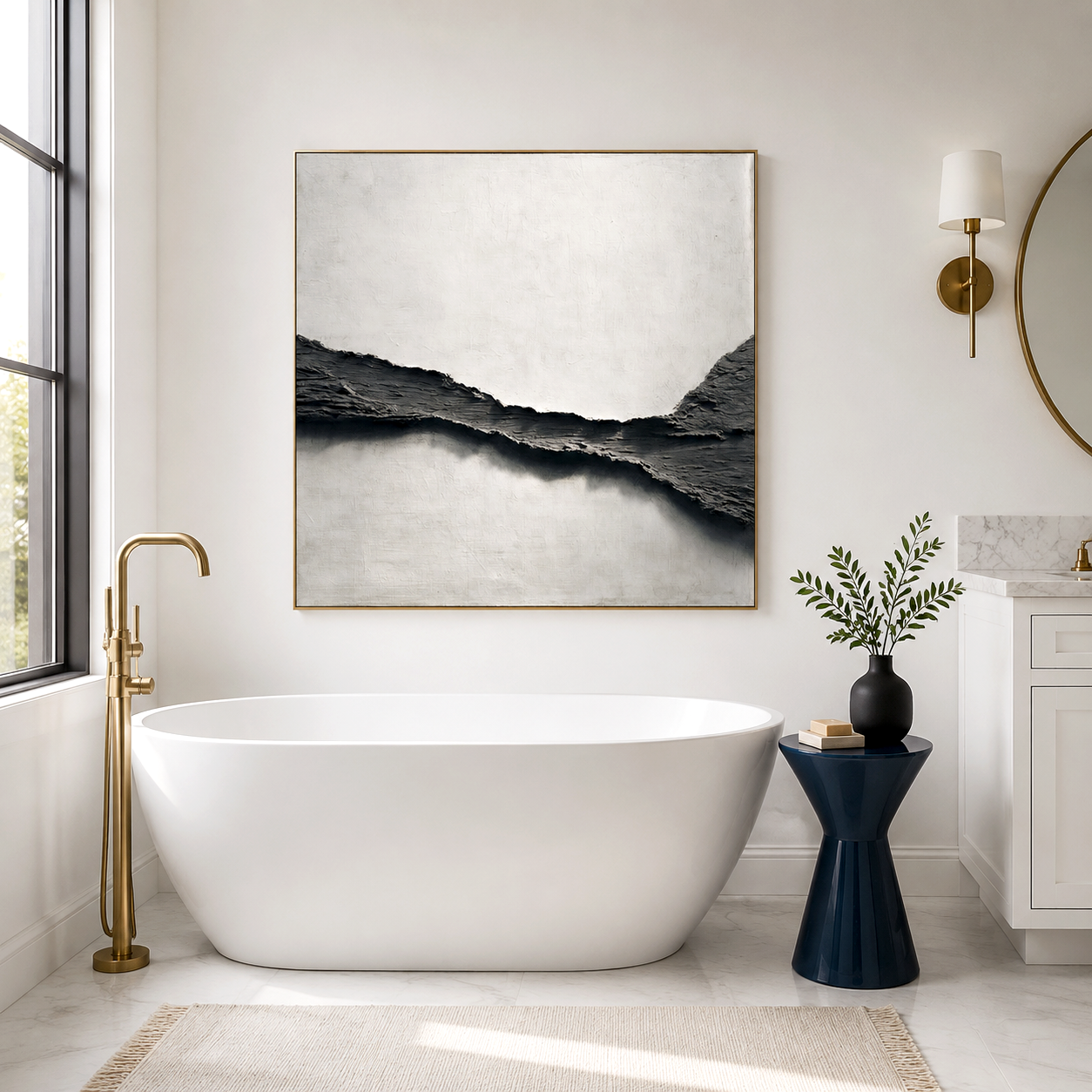
Acoustic artistic is becoming the better answer for commercial spaces that need to look deliberate, not technical. In rooms like meeting areas, creative studios, and private salons, the real challenge is not just echo control; it is keeping the wall treatment from breaking the mood. Decorative sound absorption can solve that tension when the artwork feels gallery-grade, the texture reads as intentional, and the room no longer looks patched with industrial panels.
Why the word “artistic” matters
The shift from simple acoustic art to acoustic artistic is mostly a shift in identity. People are no longer trying to hide sound treatment behind the same plain material they use in utility spaces; they want a wall piece that can hold its own in a designed interior.
That matters most in commercial rooms where first impressions are visual before they are acoustic. A designer studio wall art piece can work as part of the room’s composition, not as a compromise.
Where the industrial look fails
Plain acoustic felt or standard utilitarian panels often solve one problem while creating another. They may reduce reflected sound, but they can also make a space feel temporary, flat, or overly functional.
That is why high-end interiors often move toward layered surfaces, hand-painted texture, and stronger visual presence. In a gallery-inspired room, the wall treatment has to support the atmosphere instead of reminding people of backstage infrastructure.
What the room really needs
The right approach starts with the sound problem itself. Echo in commercial interiors usually comes from hard surfaces, open volume, and too many parallel reflections, so decorative sound absorption helps most when it is placed where sound actually bounces.
But acoustic artistic is not a magic substitute for a full acoustic plan. If the room is large, very reflective, or used for speech-heavy meetings, the artwork should be treated as part of a broader strategy rather than the whole solution.
Why hand-painted texture changes the result
Texture matters because it changes how a wall feels visually and how it reads in the light. A hand-painted 3D surface can create depth that a flat printed panel never quite reaches, especially in rooms that rely on controlled lighting and material contrast.
That is where Acousart’s direction fits naturally. The brand’s focus on 100% hand-painted oil art, emerging artists, and acoustic wall art makes it a useful reference point for spaces that want gallery presence with sound-absorbing function. Its soundproof painting board concept also reflects the idea of a layered acoustic core behind the canvas surface, which is the kind of construction designers often look for when they want style and comfort in one object.
Choosing the right application
Not every room benefits from the same kind of acoustic artistic piece. The best fit depends on what the space is trying to do, how much hard surface it contains, and how close people sit or speak to the walls.
The main rule is simple: if the wall looks too empty without treatment, the piece probably needs more scale. If the room already has strong character, the artwork should refine it rather than compete with it.
What to avoid
The most common mistake is assuming that an art piece can fully fix a noisy room on its own. That expectation usually fails in spaces with bare floors, glass, concrete, or tall ceilings, because the room keeps reflecting sound from every direction.
Another mistake is choosing based only on color. A beautiful panel that is too small, too thin, or placed on the wrong wall can look expensive and still leave the echo problem mostly untouched. In practice, the best result comes from matching visual weight, wall size, and acoustic need at the same time.
Why this category is growing
Acoustic artistic works because it answers two different buying instincts at once. One instinct wants a room to feel calmer and easier to speak in, while the other wants the wall to look like part of a finished interior rather than a technical patch.
That is especially relevant in commercial spaces where design language matters as much as function. A piece that sits between art and sound absorption can protect the room’s atmosphere while still addressing everyday echo.
Frequently Asked Questions
What is acoustic artistic?
Acoustic artistic is decorative wall art that also supports sound absorption, usually by pairing a visual surface with an acoustic core. It is meant to reduce harsh reflections while keeping the room visually refined.
Is acoustic artistic the same as acoustic art?
Not exactly. Acoustic art usually emphasizes the functional category, while acoustic artistic puts more weight on the artistic quality, texture, and gallery-like presentation. In design terms, the second idea is stronger when visual identity matters as much as sound control.
Can decorative sound absorption replace acoustic treatment?
No, it should not be treated as a full replacement. Decorative sound absorption can help reduce echo and improve the acoustic feel of a room, but larger or more difficult spaces may still need broader treatment.
Where does acoustic artistic work best?
It works best in rooms where people care about both appearance and speech comfort, such as meeting rooms, studios, lounges, and private client spaces. The more reflective the room, the more important placement and coverage become.
Is a hand-painted acoustic wall piece better than a printed one?
It depends on the goal, but hand-painted work usually creates more depth and a more custom, gallery-like presence. Printed pieces can still look polished, but they usually do not carry the same tactile character.