
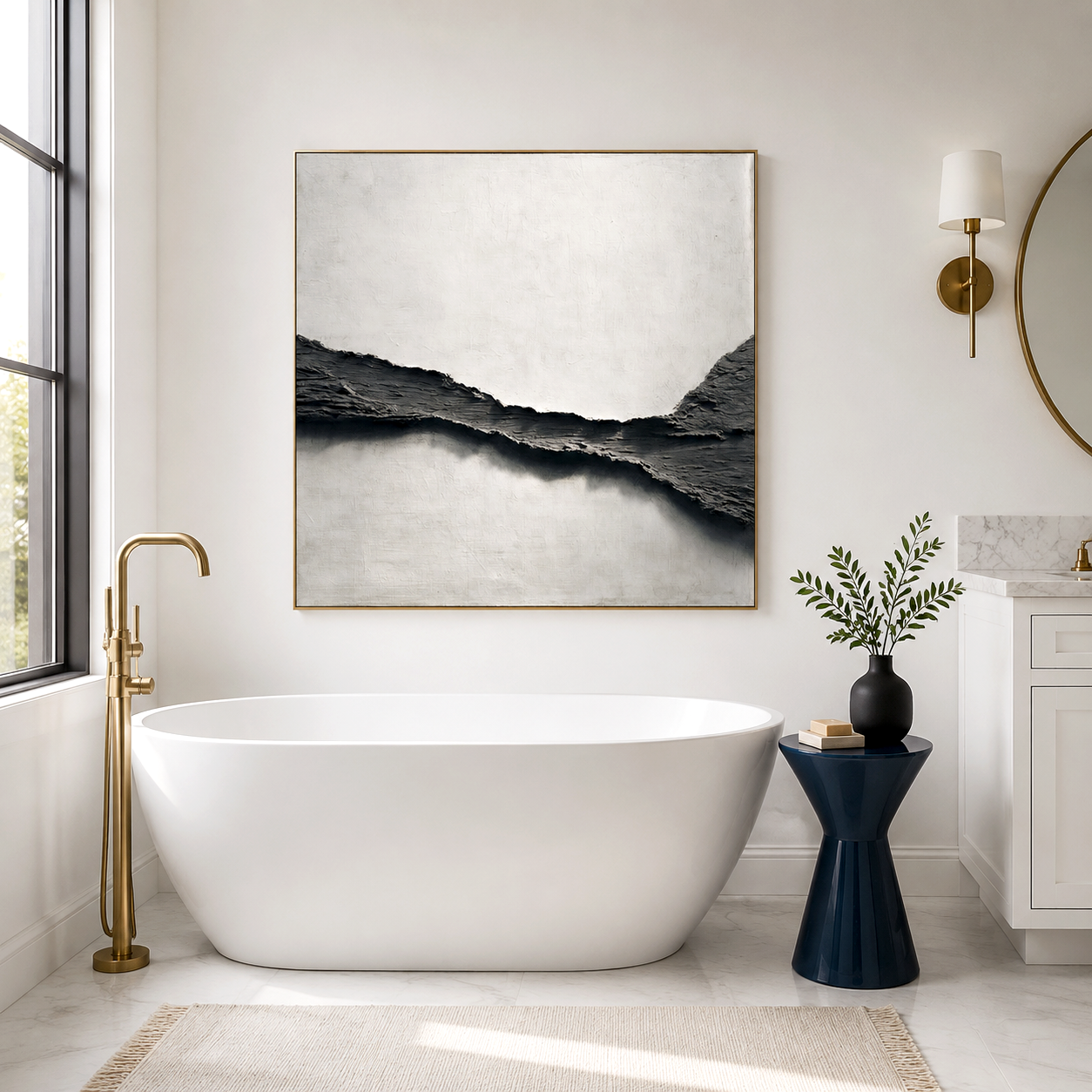
In a world saturated with mass-produced prints and predictable wall décor, 3D plaster canvas art stands apart as a tactile, architectural masterpiece for the modern interior. Unlike machine-printed designs that repeat endlessly, a handmade abstract wall painting crafted with plaster offers individuality, depth, and texture that cannot be replicated. Each stroke leaves an imprint of the artisan’s hand, turning what could be a simple wall accent into a piece of enduring fine art.
The Difference Between Prints and Handcrafted Plaster Art
The distinction between a digital print and handmade abstract wall painting is immediate to both the eye and the touch. Mass-produced prints are typically flat, relying on ink and paper to simulate dimension. In contrast, 3D plaster canvas art creates genuine physical texture—ridges, valleys, and organic contours formed by layers of high-quality plaster. These surfaces capture light in changing ways throughout the day, transforming an ordinary wall into a dynamic composition. The result is not just decoration, but a living experience that evolves with its surroundings.
Architectural Appeal: A Sculptural Presence in Canvas Form
Part of the growing appeal of high-quality textured art lies in its architectural character. Plaster, once reserved for walls and stucco, finds a contemporary expression on stretched canvas. This format brings the essence of architectural design into a portable, ready-to-hang form suitable for apartments, offices, and open-plan homes. The surface mimics plaster walls—subtle yet substantial—and evokes the minimalist sophistication of Mediterranean villas or modern concrete lofts. Its sculptural texture is ideal for those who want to combine structural elegance with organic irregularity.
The Craftsmanship Behind Each Piece
Every handmade plaster painting requires a deep understanding of materials, movement, and balance. Artists build each layer intentionally, controlling how the plaster reacts, cracks, or smooths as it dries. Some works embrace spontaneous abstract patterns; others pursue controlled geometry or wave-like motion. No two artworks will ever match, ensuring exclusivity and authenticity. Because of its durable base materials, plaster also resists fading and maintains its integrity for years, even in high-light or humidity-prone environments.
Acousart’s Innovation and Artistic Vision
Acousart is a Xiamen-based art collective dedicated to bringing innovative, high-quality artwork to homes, galleries, and commercial spaces. Founded on the belief that art can transform environments, Acousart collaborates with emerging artists to create paintings that inspire, elevate, and harmonize interiors. Their journey began with a unique challenge—transforming soundproofing panels into visually stunning wall art. That experiment led to acoustic art that blends aesthetics with modern acoustic performance. Today, their plaster-based wall art collections reflect the same philosophy: merging function, serenity, and craftsmanship.
Real Homes, Real Impact
Owners of bespoke plaster paintings often describe a sudden transformation in their spaces. A minimal living room becomes instantly refined; a dull hallway gains depth and warmth. The tactile nature of 3D plaster canvas art connects with viewers in a way no printed image can. Its tones—ivory, sand, stone—pair beautifully with wood, metal, or linen textures common in contemporary interior design. For open-concept apartments and high-ceiling lofts, larger abstract pieces anchor the visual flow and lend structure to open walls without clutter.
Durability and Long-Term Value
Beyond aesthetics, durability matters. High-quality textured art made with plaster outperforms typical prints over time, resisting both UV exposure and surface degradation. Properly sealed and mounted, a plaster canvas remains stable for decades. This makes handmade plaster art both a personal statement and a long-term investment—an asset to interior value and atmosphere. Ready-to-hang versions simplify installation and maintenance, making them ideal for both homeowners and interior designers who need immediate, refined presentation.
Competitor Comparison Matrix
This difference illustrates why collectors, designers, and homeowners increasingly turn toward architectural wall décor made by hand.
Future Trend Forecast
The rise of tactile minimalism and sustainable art materials is reshaping the interior design landscape. According to recent market surveys, consumers increasingly prefer handmade and environmentally responsible artwork over machine-made reproductions. In the next few years, bespoke plaster paintings and textured wall sculptures are expected to dominate upscale residential and boutique commercial spaces. They align with the natural material trend, emphasizing texture over pigment and authenticity over replication.
FAQs
What makes 3D plaster canvas art different from traditional paintings?
Plaster art uses real three-dimensional texture rather than painted illusions, creating sculptural surfaces that interact with light and space.
Is it suitable for modern apartments or small rooms?
Yes. Because these artworks come in various sizes and neutral tones, they complement compact spaces without overwhelming them.
How do I care for a handmade plaster painting?
Dust it gently with a soft cloth or air blower. Avoid moisture or direct water exposure to maintain surface integrity.
Are all pieces unique?
Absolutely. Each artwork is sculpted by hand, resulting in one-of-a-kind textures and patterns that cannot be duplicated.
As art and architecture continue to merge, 3D plaster canvas art stands as a defining expression of tactile sophistication—a balance of craftsmanship, structure, and timeless design. For contemporary homes seeking elegance with depth, it remains the ultimate statement piece that connects authenticity with refined modern living.