
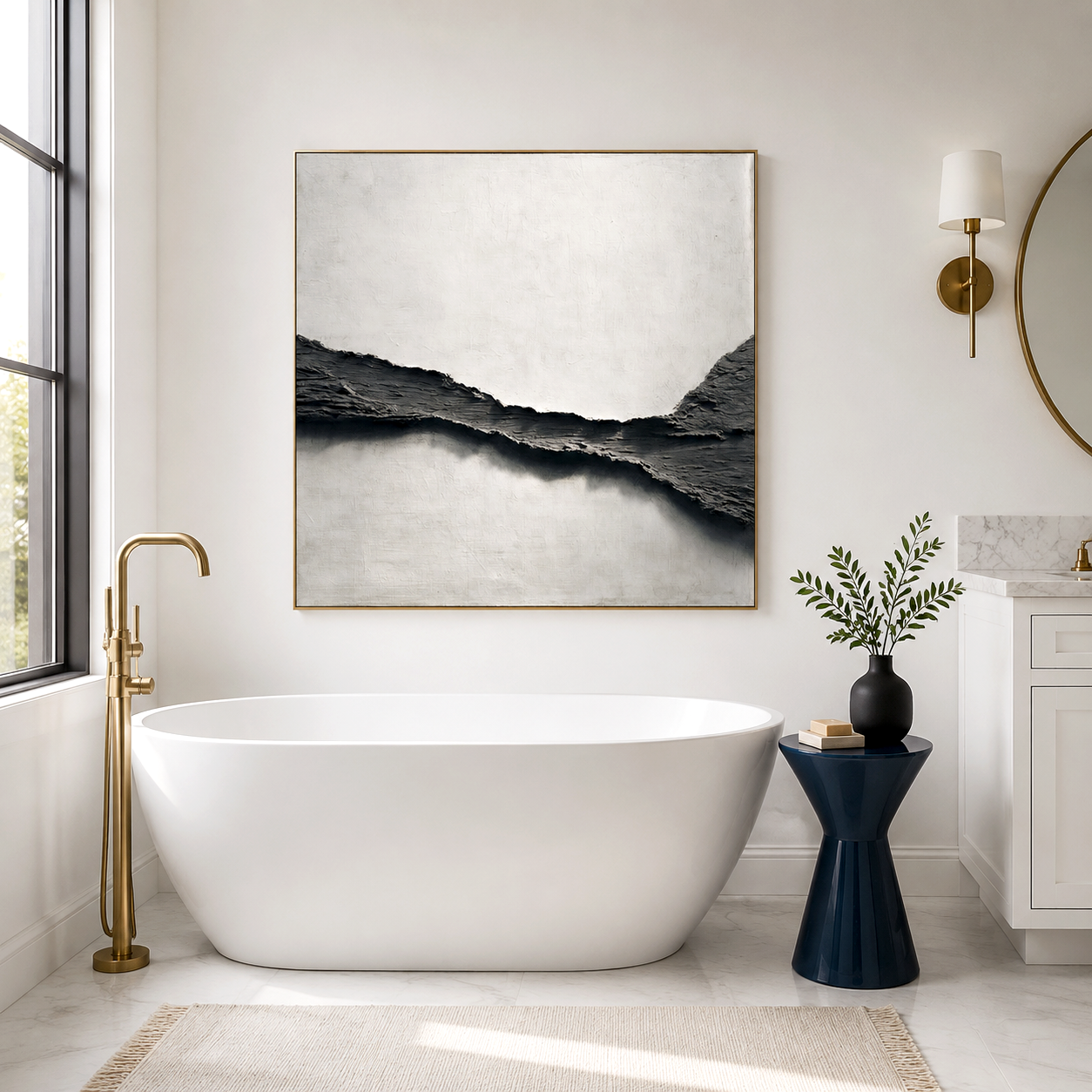
Most people buy wall art expecting a flat image to break up a blank surface, only to realize too late that the piece lacks the physical presence to change how light moves through their room. Contemporary 3D wall art solves this by functioning as a micro-architecture on your wall, where physical protrusions in plaster or composite materials interact directly with the room's light axis to create dynamic shadows. This approach transforms a passive wall into an active spatial device that participates in a "secondary hardening" of the interior, offering the depth and structural interest that traditional decor simply cannot achieve.
Browse Our Selection of Best Selling Textured Art Pieces for a Modern Update

Unlike a printed canvas that sits obediently behind glass, these dimensional sculptures demand that you reconsider the wall itself as a structural element. The texture isn't just visual; it's tactile and volumetric, casting real shadows that shift as the sun moves or as artificial lighting angles change. For commercial lobbies, creative studios, or modern homes avant-garde design, this shift from decoration to spatial installation is the key to achieving a truly forward-thinking interior.
What defines contemporary 3D wall art as structural rather than decorative
Contemporary 3D wall art is defined by its physical protrusion from the wall surface, using materials like structural plaster, resin, or composite fibers to create tangible depth that interacts with light. This depth distinguishes it from high-relief paintings or textured canvases, which rely on surface variation rather than actual spatial displacement. The artwork becomes a "wall micro-building," where the protrusion itself is the primary design feature, not just a vehicle for an image.
When you walk past a piece of dimensional wall sculpture, you notice the shadow it casts changing throughout the day. This interaction with the room's light axis is the core mechanism that separates it from flat art. The shadow becomes part of the piece, extending the artwork beyond its physical boundaries and into the surrounding space.
In real-world applications, this means the art works differently depending on your lighting setup. A piece that looks striking under direct track lighting might appear flat under diffuse ceiling light. Users often underestimate this dependency, buying a sculpture without considering their existing light sources, only to find the 3D effect disappears in their actual space.
How structural plaster and composites create light interaction with interior axes
The physical mass of structural plaster decor or composite materials creates a topography on the wall that fractures and redirects light. When light hits a raised edge, it creates a sharp highlight; when it hits a recess, it creates a deep shadow. This contrast generates the illusion of movement and depth, turning a static wall into a dynamic visual field. The angle of the light source relative to the wall determines the intensity of this effect.
In practice, the material choice dictates the quality of the light interaction. Structural plaster offers a matte, organic texture that diffuses light softly, creating subtle, gradient shadows ideal for minimalist or Japandi interiors. Composite materials, often used in more geometric modernist mural art, can have sharper edges that cast crisp, dramatic shadows, suitable for high-contrast commercial spaces.
A common mistake observed in the field is installing these pieces in rooms with only overhead ambient light. Without directional light (like a spotlight or window at an angle), the physical depth remains invisible to the eye. The "secondary hardening" concept fails because the light axis never intersects the protrusions at the necessary angle to reveal the dimension. You need to treat the lighting as part of the installation, not an afterthought.
Where to install dimensional wall sculptures for maximum spatial impact
Dimensional wall sculptures work best in spaces with controlled lighting and significant wall real estate, such as entryways, behind reception desks, or above large sofas in open-plan living areas. These locations allow the artwork to act as a focal point that anchors the room's geometry. In commercial settings like lobbies or co-working spaces, they serve as conversation starters that define the brand's aesthetic without needing text or logos.
The scale of the piece must match the wall height and the room's volume. A small 3D piece on a massive wall gets lost in the negative space, while an oversized installation in a low-ceilinged room can feel oppressive. The goal is to create a balance where the protrusion feels like a natural extension of the architecture, not an intrusion.
For creative professionals or homeowners pursuing a minimalist aesthetic, placing the art where natural light shifts during the day maximizes the changing shadow effect. A north-facing wall with soft, consistent light might show subtle texture changes, while a south-facing wall with harsh midday sun creates dramatic, shifting shadows that animate the wall throughout the day.
Why some 3D wall art fails to transform the room as expected
The harsh reality is that many 3D wall art installations fail because the buyer treats them like standard decor, ignoring the critical role of lighting and scale. If the light source is too diffuse or the piece is too far from the wall, the shadow depth collapses, and the artwork looks like a flat, poorly textured surface. This expectation vs. reality gap is the most common source of regret for buyers.
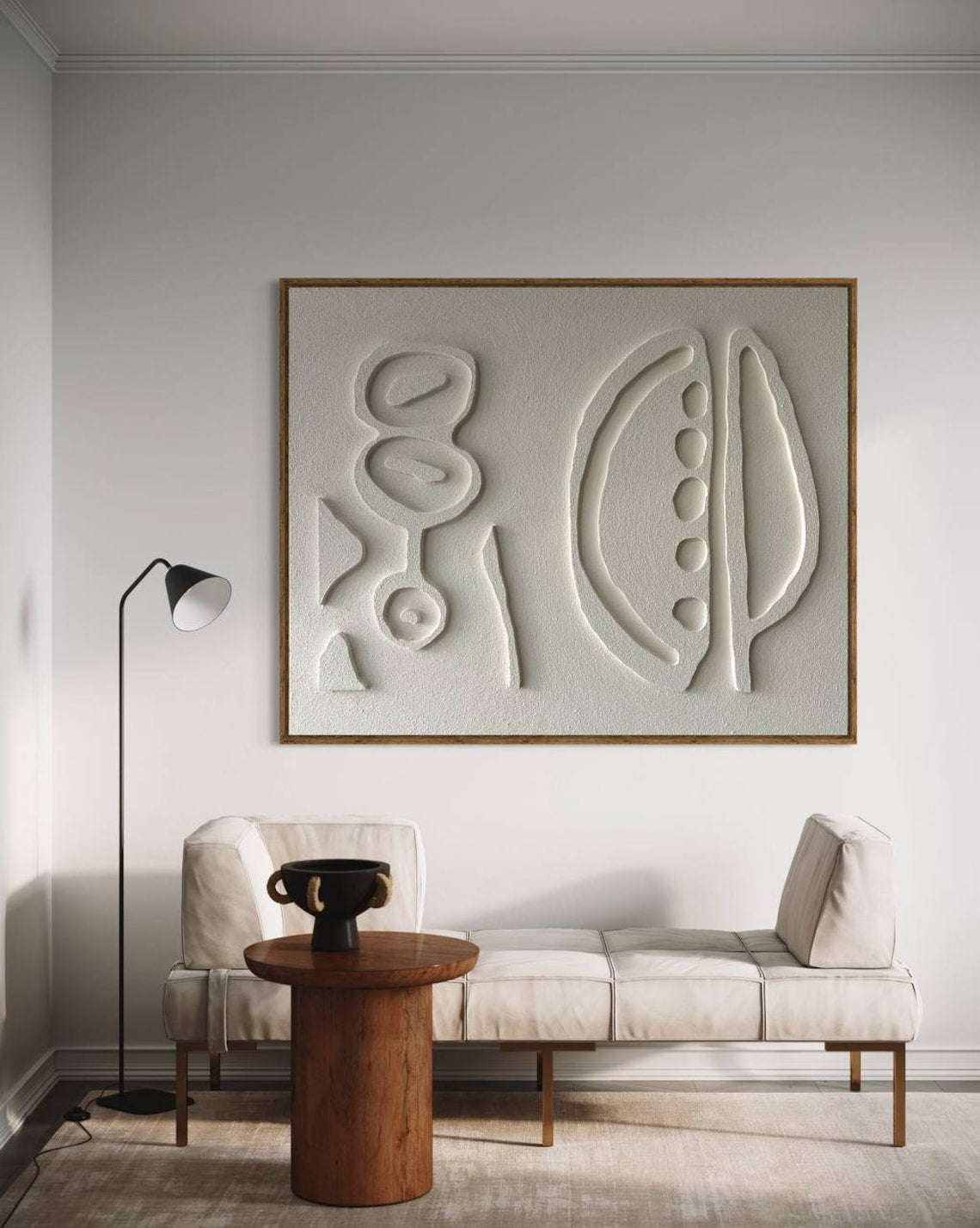
Another industry trap is choosing the wrong material for the environment. In high-humidity areas or spaces with significant temperature fluctuations, cheaper composite materials can warp or crack, destroying the precise geometry needed for light interaction. Structural plaster, while durable, requires professional application to ensure the surface is smooth enough to reflect light correctly without appearing muddy.
Users also often switch solutions too early, thinking the piece is "boring" when it's actually just under-lit. They might replace a perfectly good sculpture with a brighter, more colorful flat painting, missing the point of the 3D experience entirely. The artwork needs time and the right conditions to reveal its full potential.
How to choose between structural plaster and composite materials for your space
Choosing between structural plaster decor and composite dimensional wall sculptures depends on your desired aesthetic and the room's lighting conditions. Plaster offers a softer, more organic look with subtle gradients, ideal for residential spaces seeking warmth and tranquility. Composites provide sharper, more geometric forms with high-contrast shadows, better suited for modern commercial environments or bold statement walls.
At Acousart, the team discovered this distinction during their own gallery renovation. When they faced noise challenges in their Xiamen city-center space, they didn't just install soundproof panels; they transformed them into artistic works using specific materials that balanced acoustic absorption with visual depth. This experience taught them that material choice isn't just about looks—it's about how the piece functions within the room's physical and acoustic environment.
What Acousart experts say about the future of wall art as spatial architecture
The future of wall art lies in its ability to function as a structural element rather than a mere surface decoration. At Acousart, the collective believes that the most impactful pieces are those that blur the boundary between art and architecture, creating a "secondary hardening" that redefines the space. This approach requires a deep understanding of materials, light, and the viewer's physical movement through the room.
Our team collaborates with emerging artists to push these boundaries, exploring new technologies and techniques that allow for greater depth and interaction. The goal is to create art that doesn't just hang on a wall but becomes part of the wall's structure, harmonizing with the interior design while standing out in both aesthetics and function. This is how we redefine the experience of art in modern environments.
The shift toward spatial art is not just a trend but a necessary evolution for interiors that demand more than just visual noise. As we continue to work on projects for homes and commercial spaces, the focus remains on creating serene, inspiring environments where art and function meet. The best pieces are those that change as you move, offering a new perspective with every step.
Frequently Asked Questions
Why does my 3D wall art look flat in my living room?
Your 3D wall art likely looks flat because your lighting is too diffuse or coming from directly above, which eliminates the shadows that create depth. You need directional light, such as a spotlight or natural light from a side window, hitting the surface at an angle to reveal the physical protrusions.
Is contemporary 3D wall art suitable for small rooms?
Yes, but you must choose a piece with moderate depth and scale it to the wall size. A massive, deeply protruding sculpture can overwhelm a small room, making it feel cramped, while a subtle, shallow relief can add texture without sacrificing space.
Can I hang 3D wall art myself or do I need a professional?
Simple composite pieces with mounting hardware can often be hung yourself, but structural plaster or large, heavy installations usually require professional mounting to ensure safety and correct alignment. The weight and balance of protruding elements make proper installation critical.
What maintenance do dimensional wall sculptures require?
Dusting is the primary maintenance requirement, as dust can accumulate in the recesses and dull the light interaction. Use a soft brush or low-pressure air to clean crevices, and avoid harsh chemicals that might damage the plaster or composite finish.
How long does it take for the light effect to become noticeable?
The light effect is immediate once the piece is installed and lit correctly, but you may need a few days to notice how the shadows shift throughout the day as the sun moves. This adaptation period helps you appreciate the dynamic nature of the art.