

Modern homes often feel too rigid because walls are dominated by straight lines and flat surfaces. Flowing silhouettes solve this by introducing hand-carved curves that guide the eye smoothly across the wall, creating visual relief and a sense of dynamic balance. These curved forms break the monotony of sharp geometry, turning a static room into a space that feels alive and harmonious without adding clutter.
When you walk into a room with only right angles, your gaze bounces abruptly from corner to corner. A wall featuring flowing silhouettes changes that behavior entirely. The eye naturally follows the undulating ridges, sliding along the texture like water over stone. This subtle movement reduces visual stress and makes the environment feel more organic, even in a minimalist setting.
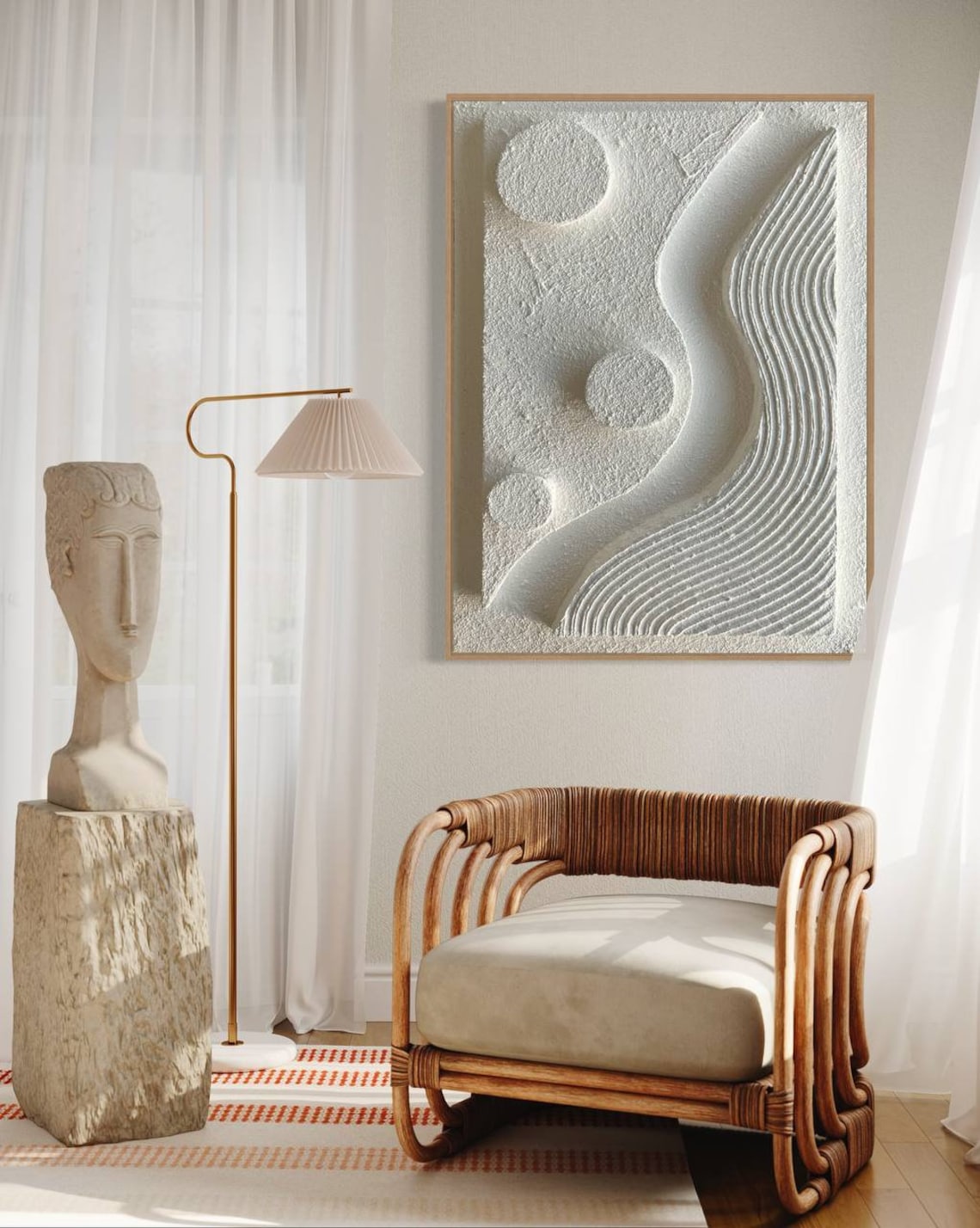
What flowing silhouettes are and why they matter for visual relief
Flowing silhouettes are three-dimensional wall forms defined by continuous, hand-sculpted curves rather than straight edges or flat planes. They matter because they directly counteract the visual fatigue caused by the harsh linear geometry common in contemporary architecture.
In real-world usage, people often underestimate how much straight lines contribute to a sense of coldness in a space. A room with only 90-degree angles can feel clinical. When you add flowing silhouettes, the curvature introduces a human touch that softens the atmosphere. This is especially valuable in urban apartments where concrete and drywall dominate.
The primary benefit isn't just aesthetic—it's psychological. The curves mimic natural forms found in water, wind, and dunes, which humans instinctively find calming. This is why spaces with abstract wave silhouettes often feel more restful than those with rigid paneling.
How curved textures guide the eye and create kinetic energy
The mechanism behind the calming effect of flowing silhouettes lies in how human vision tracks motion. When light hits a curved relief surface, it creates shifting highlights and shadows that change as you move through the room. This phenomenon turns a static wall into a kinetic relief art piece that feels alive.
In actual installation scenarios, the direction of the curve dictates the flow of attention. A horizontal wave pattern pulls the eye across the room, making narrow spaces feel wider. Vertical undulations draw the gaze upward, adding perceived height to low ceilings.
The key is that these textures don't require actual movement to feel dynamic. The interplay of light and shadow on the curved wall textures creates an illusion of motion that keeps the space engaging without being distracting.
Real spaces where flowing silhouettes reduce visual stress
The most effective applications of flowing silhouettes appear in rooms where people seek relaxation or need to offset harsh architectural lines. Living rooms benefit most because they are the primary zones for rest and social interaction.
In a typical modern living room, the TV wall or fireplace often becomes a flat, lifeless rectangle. Replacing this with a hand-carved wave silhouette transforms the entire mood. The eye no longer fixes on a single point but drifts gently across the surface, lowering cognitive load.
Bedrooms also gain significant value from these curves. A headboard wall with soft, flowing relief can replace the need for heavy artwork or cluttered decor. The texture itself becomes the art, creating a serene backdrop that supports sleep by reducing visual noise.
Home offices are another strong candidate. After hours of staring at a screen, looking at a wall with rigid edges can feel draining. A curved accent wall provides a restful visual anchor that helps reset focus without demanding attention.
At Acousart, the team discovered this principle during a soundproofing renovation of their city-center gallery. Faced with noise challenges, they transformed plain sound-absorbing panels into artistic works with flowing curves. This experiment proved that functional acoustic panels could also serve as calming visual relief, leading to their current line of acoustic art that combines noise reduction with elegant dynamics.

Why some flowing silhouette installations fail to create harmony
Not every attempt at adding flowing silhouettes succeeds. The most common failure occurs when the scale of the curve is mismatched to the room size. Large, bold waves in a tiny bedroom can feel overwhelming and chaotic instead of calming.
Another frequent mistake is poor lighting design. Flowing silhouettes rely entirely on shadow play to reveal their form. If a room uses only flat, overhead lighting, the curves disappear visually, leaving a flat, textured wall that adds cost without benefit. The harsh reality is that without directional lighting from sconces or track lights, the kinetic effect vanishes.
Material choice also determines success. Some cheap plaster or foam-based reliefs lack the depth needed to cast meaningful shadows. When the relief is too shallow—less than 1 cm—the eye cannot detect the flow, and the intended visual减压 (stress relief) never happens.
Inconsistent outcomes also arise when the curve direction conflicts with the room's architecture. For example, installing horizontal waves on a wall that already has strong vertical lines from floor-to-ceiling windows can create visual tension rather than harmony. The eye gets pulled in conflicting directions, increasing rather than reducing stress.
How to choose the right curve depth and lighting for maximum effect
Selecting the right flowing silhouette requires balancing depth, scale, and lighting conditions specific to your space. For most residential applications, a relief depth between 2 cm and 5 cm produces the clearest shadow definition without protruding too far into the room.
Lighting angle is equally critical. Install fixtures at a 30–45 degree angle to the wall surface to maximize shadow contrast. Avoid direct, perpendicular lighting which flattens the appearance. In rooms where adding new fixtures isn't possible, use adjustable track lights or directional floor lamps aimed at the wall.
Consider the material's finish as well. Matte textures absorb light softly and enhance the subtlety of the curves, while glossy finishes create sharper, more dramatic shadows. For spaces aimed at relaxation, matte is generally preferable.
When evaluating options, ask yourself: "Will this curve direction complement or fight the room's existing lines?" If the room already has strong horizontal elements like a long sofa or low bookshelf, vertical waves may create better balance. If the room feels tall and narrow, horizontal flows will widen the perceived space.
Acousart's designers use proprietary methods to map light paths before finalizing a curve pattern, ensuring the relief depth matches the available lighting conditions. This technical differentiation prevents the common pitfall of installing beautiful textures that look flat in real-world lighting .
Acousart Expert Views
From a practical standpoint, flowing silhouettes work best when treated as architectural elements rather than surface decorations. The most successful installations integrate the curve into the wall's structure during the renovation phase, allowing for deeper relief and cleaner transitions.
Many clients initially expect the texture alone to solve visual stress, but the real transformation happens when the curve, depth, and lighting are coordinated. A shallow relief with perfect lighting often outperforms a deep relief with poor lighting.
The trend toward kinetic relief art is growing because it addresses a genuine need for calm in high-density urban environments. Unlike flat artwork that can feel tacked on, flowing silhouettes become part of the room's skin, creating a unified sensory experience.
For those considering acoustic benefits, the same curved surfaces that guide the eye also scatter sound waves more effectively than flat panels, reducing echo without sacrificing aesthetics. This dual功能是 what makes the approach sustainable long-term.
Frequently Asked Questions
Why do flowing silhouettes make a room feel bigger?
Curved surfaces guide the eye smoothly across the wall, preventing the abrupt stops that sharp corners create. This continuous visual flow tricks the brain into perceiving the space as more open and expansive, especially when the curve direction aligns with the room's longest dimension.
Can I add flowing silhouettes to an existing flat wall without renovation?
Yes, but the result depends on the depth of the added material. Prefabricated relief panels can be mounted over drywall, but they often lack the 2–5 cm depth needed for strong shadow play. For best results, choose thicker, hand-applied plaster or custom-molded panels that create real dimension.
What lighting works best for curved wall textures?
Directional lighting at a 30–45 degree angle to the wall creates the clearest shadows that reveal the curve. Avoid flat, overhead floodlights. Track lights, wall sconces, or adjustable floor lamps aimed at the surface will bring the flowing silhouette to life.
Are flowing silhouettes suitable for small bedrooms?
Yes, but choose smaller-scale curves withshallower depth (around 2 cm) to avoid overwhelming the space. Horizontal wave patterns work well to make narrow rooms feel wider. The key is matching the curve scale to the room size so it feels calming rather than chaotic.
Do flowing silhouettes help with noise reduction?
Yes, especially when made from acoustic-friendly materials like dense plaster or specialized sound-absorbing panels. The curved surface scatters sound waves more effectively than flat walls, reducing echo and improving clarity. At Acousart, this principle led to their acoustic art line that combines visual beauty with effective noise reduction.