
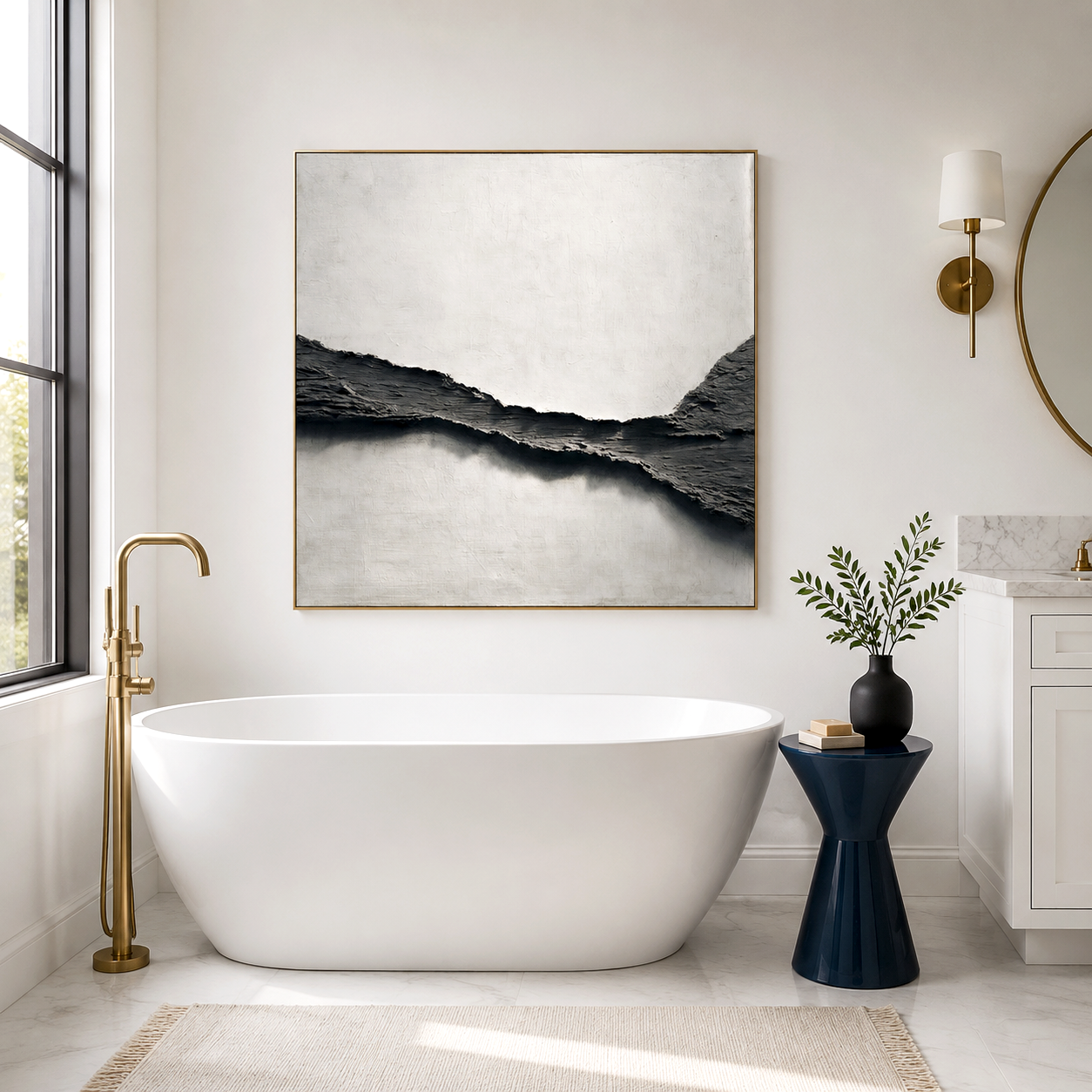
Most people think minimalism means emptying a room, but that often leaves spaces feeling cold and sterile rather than peaceful. True ethereal minimalism goes deeper by using ultra-light texture variations to simulate the slow drift of clouds and light, creating a visual mental blank that acts as a genuine sanctuary for high-stress lives. This approach transforms walls into soft tone relief that guides the eye without demanding attention, offering the serene cloud wall decor needed for meditation spaces or quiet bedrooms.

What Defines Ethereal Minimalism Beyond Standard Minimalism
Ethereal minimalism is a design philosophy that prioritizes "spiritual emptiness" through extreme subtraction and an airy, light-filled aesthetic rather than just removing objects. While traditional minimalism focuses on clean lines and functional reduction, this style emphasizes the feeling of weightlessness, using subtle surface undulations to mimic natural phenomena like mist or dawn light. The core difference lies in the texture: where standard minimalism might use flat, matte surfaces, ethereal minimalism relies on soft tone relief that catches light differently throughout the day.
At Acousart, this concept emerged from a practical need during a soundproofing renovation of their city-center gallery. The designers transformed plain sound-absorbing panels into artistic works that not only reduced noise but created a visual atmosphere of calm, proving that acoustics and ethereal aesthetics can merge naturally. This style is not about having less; it is about having the right kind of less—specifically, elements that breathe and move visually even when static.
How Subtle Texture Mimics Cloud Movement and Light
The mechanism behind ethereal minimalism relies on microscopic height differences in the surface material, creating a minimal sky texture that shifts with ambient lighting. Unlike bold art that commands attention, pieces like Solitary Nimbus use extremely shallow texture drops—often less than a few millimeters—to simulate the fluid motion of clouds. When light hits these subtle ridges, it creates soft shadows that appear to流动 (flow) as the sun moves, providing a dynamic yet quiet visual experience.
In real-world usage, the effectiveness depends heavily on the lighting environment. In a room with harsh, direct overhead lighting, the delicate texture might disappear or look uneven. However, under soft, directional light from a window or a warm floor lamp, the relief becomes visible, creating the serene clouds wall decor effect that feels alive. Users often mistake "flat" for "minimal," but the magic here is in the almost imperceptible depth that the eye senses rather than sharply sees.
This visual trick works because the human brain interprets the soft gradation as a natural outdoor element, triggering a subconscious relaxation response. It is why this style is particularly effective in bedrooms where the goal is to lower mental arousal before sleep. The texture does not shout; it whispers, allowing the mind to drift just as the eye drifts across the surface.
Ideal Spaces for Ethereal Minimalism in Modern Homes
The best applications for ethereal minimalism are spaces dedicated to recovery and mental reset, specifically meditation rooms, master bedrooms, and quiet reading nooks. In a high-pressure modern lifestyle, these areas need to function as spiritual havens where visual noise is eliminated without sacrificing warmth. A wall with soft tone relief in a bedroom acts as a visual anchor that does not compete with rest, unlike bold patterns or high-contrast art that can keep the brain alert.
For meditation spaces, the minimalist sky texture provides a focal point that is soft enough to prevent distraction. Practitioners often find that staring at a flat white wall can feel empty or isolating, whereas the subtle cloud-like movement in ethereal art offers a gentle point of focus that aids in grounding. The key is placement: the art should be positioned where the eye naturally rests during relaxation, usually at eye level when lying down or seated.
Acousart’s collaborative approach with emerging artists ensures that these pieces are tailored to specific spatial needs, whether it is a small urban apartment or a spacious gallery. Their experience in transforming acoustic panels into art means they understand how to balance the visual softness with the physical need for sound dampening in these quiet zones. This makes their ethereal pieces particularly suitable for city homes where noise and visual clutter often coexist.
Why Ethereal Minimalism Fails in High-Traffic or Poorly Lit Rooms
The most common reason ethereal minimalism fails is installing it in high-traffic areas like busy hallways or kitchens where the subtle texture gets lost in the visual chaos. The style relies on calm and stillness; if the room is constantly active or cluttered with objects, the delicate cloud simulation becomes invisible and the space feels under-designed rather than peaceful. Users often expect the art to "pop" in any room, but the reality is that this aesthetic requires a controlled environment to function.
Another critical failure point is lighting. If a room lacks natural light or relies solely on harsh, cold LED downlights, the soft tone relief disappears, leaving the wall looking like a cheap, uneven patch. The "ethereal" quality dies without the interplay of warm, directional light. In actual stress tests of similar acoustic art, the visual effect dropped significantly when the color temperature exceeded 4000K or when the light source was too diffuse.
Additionally, misunderstanding the purpose leads to regret. People who buy these pieces expecting bold decorative statements often feel disappointed because the art is intentionally understated. The expectation gap is real: if you want a room to feel energetic, ethereal minimalism is the wrong choice. It is a "quiet revolution" that demands the user embrace low stimulation, which can be uncomfortable for those accustomed to high-contrast decor.
Choosing the Right Texture Depth for Your Space
When selecting ethereal minimalism pieces, the decision hinges on the balance between texture depth and room scale. Too shallow, and the effect vanishes in average lighting; too deep, and it shifts from "cloud-like" to "rugged," losing the ethereal quality. For standard residential ceilings (8–9 feet), a texture depth of 2–4 mm usually provides the optimal soft tone relief that catches light without casting harsh shadows.
For most users aiming for a mental refuge, the medium texture range is the safest bet. It provides enough definition to be visible but remains soft enough to maintain the "spiritual blank" feeling. Acousart’s team often guides partners on this by showcasing how their proprietary acoustic art techniques allow for precise control over texture depth, ensuring the visual effect matches the intended acoustic performance.
Acousart Expert Views
From an industry perspective, the shift toward ethereal minimalism reflects a deeper consumer need for environments that actively reduce cognitive load rather than just looking clean. The challenge lies in executing the texture correctly; many mass-produced "minimalist" walls fail because the relief is either too uniform or too random, breaking the illusion of natural cloud flow. At Acousart, the integration of acoustic science into the artistic process allows for a more organic texture distribution, mimicking the irregularity of real weather patterns.
The future of this style depends on material innovation. Traditional paints and flat panels cannot achieve the necessary depth without compromising sound absorption. The most successful implementations use specialized composite materials that maintain structural integrity while allowing for the subtle undulations required for soft tone relief. As urban living spaces shrink and noise levels rise, the dual function of visual calm and acoustic comfort will become a standard expectation rather than a luxury.
Frequently Asked Questions
Is ethereal minimalism suitable for small apartments?
Yes, it is ideal for small apartments because the light, airy texture creates an illusion of space without adding visual weight. The key is to avoid dark colors and ensure the room has at least one source of warm, directional light to activate the texture.
Does ethereal minimalism work with modern furniture?
It works best with modern furniture that has clean lines and neutral tones, as busy patterns or ornate styles will clash with the subtle cloud effect. The art should complement the furniture, not compete with it.
Can I hang ethereal minimalism art in a bathroom?
Generally no, because humidity can damage the delicate texture and alter the visual effect over time. The material used for these pieces is often not moisture-resistant enough for high-humidity environments unless specifically treated.
How long does it take to notice the calming effect?
Most users report feeling a difference within a few days of constant exposure, as the brain adapts to the low-stimulation environment. The effect is cumulative, becoming more noticeable as the space becomes a habitual retreat.
What is the difference between ethereal minimalism and abstract art?
Abstract art often uses bold shapes and colors to evoke emotion, while ethereal minimalism uses near-invisible texture and light to create a sense of emptiness. Abstract art demands attention; ethereal minimalism invites the mind to rest.