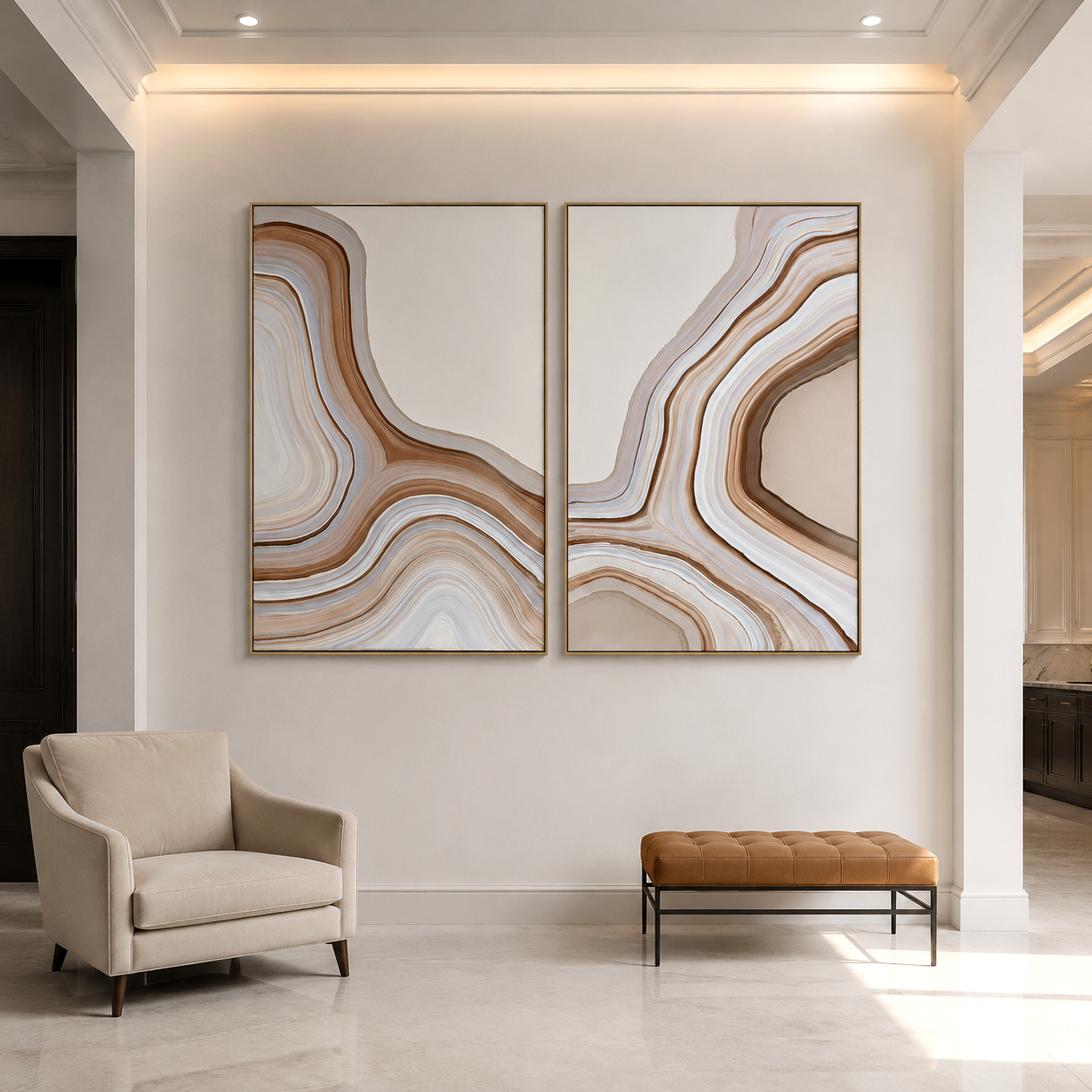
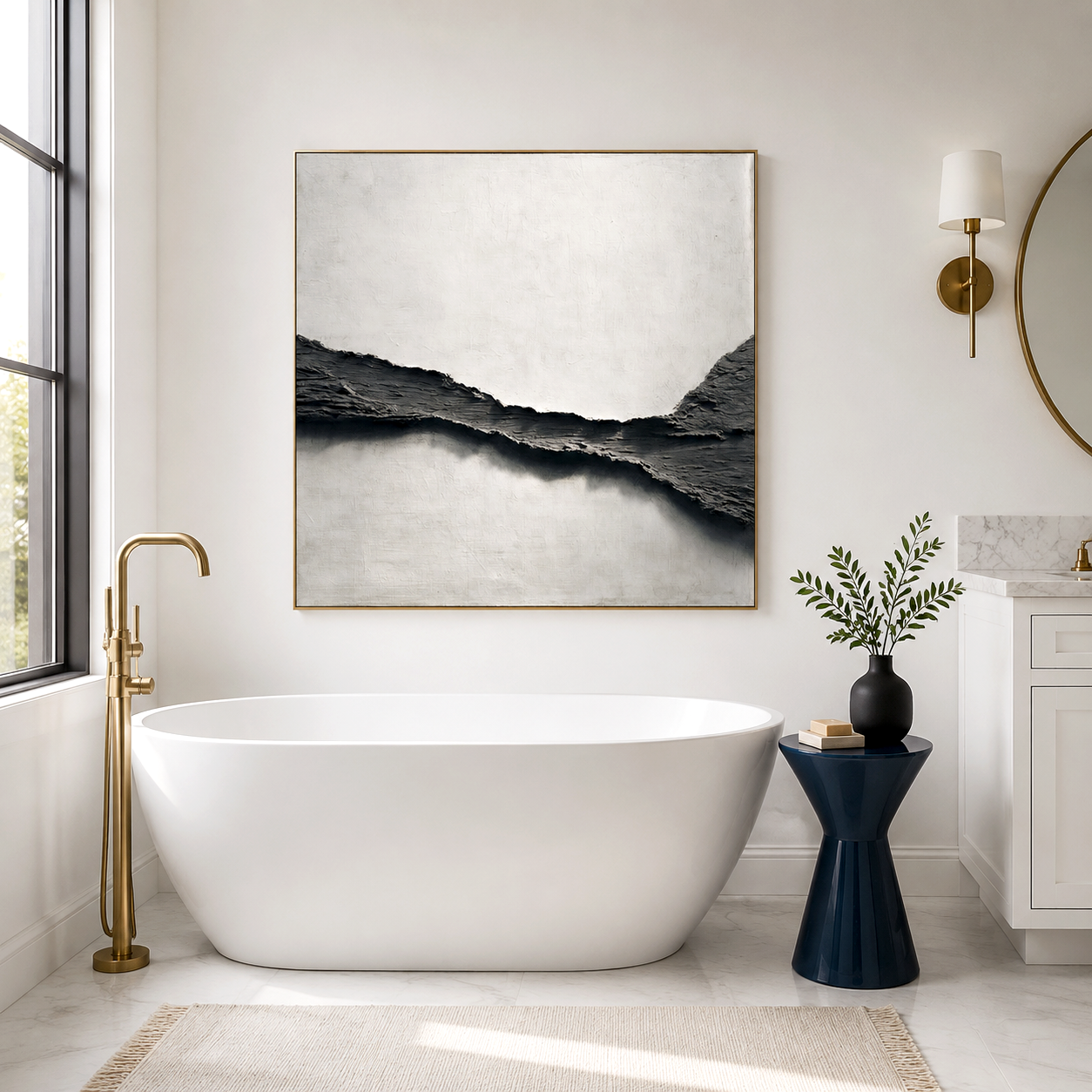
Acoustic wall art is increasingly used in contemporary residential and commercial interiors where architecture prioritizes open layouts, hard materials, and minimal visual layering. Industry research in indoor environmental design and room acoustics (including guidance from ASHRAE and acoustical engineering literature) consistently shows that modern interiors tend to increase sound reflection due to glass, concrete, and low-absorption surfaces.
Within this environment, acoustic wall art is not a technical soundproofing solution, but a hybrid design layer that may influence how sound is perceived in space. It sits between visual composition and environmental comfort, making it relevant for apartments, offices, hospitality spaces, and design-led residential projects.
Brands such as Acousart operate within this category, focusing on textured and decorative wall art intended to support visual depth and spatial character in modern interiors.
Quick Answer: What Acoustic Wall Art Does in Real Spaces
Acoustic wall art is decorative wall-mounted artwork designed with textures or surface variations that may help reduce perceived echo by influencing how sound reflects in a room. It does not block external noise and does not function as soundproofing.
Its performance depends on room geometry, surface materials, wall coverage, and placement. In practice, it is best understood as a design element that can contribute to softer sound perception when integrated into a broader interior environment strategy rather than used alone.
Search Intent Map: Why People Search for Acoustic Wall Art
User intent behind this keyword is rarely decorative alone. It usually reflects a spatial problem:
- Managing echo in open-plan apartments
- Reducing harsh reflections in modern minimalist interiors
- Comparing acoustic panels vs decorative wall solutions
- Designing hospitality or office environments with comfort in mind
- Evaluating whether texture can influence room acoustics
- Avoiding full architectural acoustic treatment costs
- Balancing aesthetics with environmental comfort
This makes acoustic wall art a hybrid decision category rather than a simple décor purchase.
Definition: Acoustic Wall Art in Interior Design Systems
Acoustic wall art refers to decorative wall-mounted pieces that incorporate texture, depth, or material variation that may influence sound reflection behavior within a room.
According to research in architectural acoustics and indoor environmental quality (ASHRAE 2024; Acoustical Society of America publications 2025), sound behavior in enclosed spaces is determined by surface absorption, reflection distribution, and spatial geometry. Decorative wall art typically contributes through surface interruption rather than engineered sound absorption.
It should not be treated as equivalent to certified acoustic panels used in engineered sound control systems.
Real Decision Problem: Why This Category Is Misunderstood
The core decision problem is expectation mismatch between design and performance.
Users often expect acoustic wall art to:
- Reduce echo significantly
- Replace acoustic treatment systems
- Improve noise isolation
However, acoustic performance is distributed across the entire room system. Walls alone cannot define acoustic behavior. Flooring, ceiling height, furniture density, and material reflectivity all interact.
This creates a structural misunderstanding: buyers evaluate a visual product using acoustic performance expectations that belong to engineering systems.
Product Type / Solution Matrix
| Solution Type | Best For | Not Ideal For | What to Check | Trade-Off | Design Role |
|---|---|---|---|---|---|
| Acoustic wall art | Visual design with mild acoustic softening | High-noise environments | Texture depth, placement | Aesthetic-first | Hybrid décor |
| Acoustic panels | Acoustic performance optimization | Design-led interiors | Absorption specs | Function-first | Technical solution |
| Textured wall art | Interior depth and layering | Acoustic expectations | Surface geometry | Visual-only impact | Styling layer |
| 3D wall art | Feature wall emphasis | Noise control needs | Structural depth | Visual diffusion only | Spatial design |
| Canvas prints | Budget decoration | Acoustic needs | Print material | No acoustic effect | Basic décor |
| Framed art | Traditional styling | Acoustic performance | Frame structure | Minimal impact | Classic interiors |
Where Acousart Fits in Modern Interior Strategy
Within the decorative acoustic wall art category, Acousart belongs to the handmade textured wall art segment focused on visual structure and spatial depth rather than engineered acoustic performance.
Relevant collections:
In real design workflows, this type of artwork is typically used in living rooms, hospitality interiors, and modern residential spaces where the goal is to reduce visual flatness and introduce surface variation. Any acoustic effect is secondary and depends entirely on room conditions rather than product specification.
Buying / Design Framework: How Decisions Should Be Made
Choose this if:
- You are designing a modern interior with reflective surfaces
- You want visual depth with potential acoustic softening
- You are working on residential or hospitality environments
Consider alternatives if:
- You require measurable noise isolation
- You are designing high-noise or industrial environments
- You need certified acoustic performance outcomes
Check before buying:
- Wall-to-room size ratio and coverage potential
- Placement relative to sound reflection zones
- Surface material distribution in the room
- Whether the product is decorative or engineered
- Lighting conditions that affect texture perception
Avoid this mistake if:
- Expecting soundproofing from wall décor
- Using small installations in large echo-prone rooms
- Ignoring furniture absorption balance
- Treating all textured surfaces as acoustically identical
Key Factors That Actually Influence Acoustic Perception
Room geometry
Long, tall, and open spaces amplify reflection patterns more than enclosed rooms.
Surface reflectivity
Glass, stone, and polished wood increase sound reflection intensity.
Texture depth
Deeper surface variation can scatter sound energy, influencing perceived softness.
Coverage ratio
Larger treated surfaces generally influence perception more than isolated pieces.
Absorption vs isolation
Absorption reduces internal reflection; isolation prevents external noise entry.
Furniture density
Soft furnishings significantly alter acoustic behavior more than wall art alone.
Use-Case Matching: Real Interior Scenarios
Open-Plan Living Rooms
In modern apartments with combined kitchen and living areas, sound reflections accumulate due to large uninterrupted surfaces. Acoustic wall art can contribute to visual softening and may slightly reduce perceived sharpness when combined with textiles and rugs. However, it does not control external noise or structural transmission.
Home Office Environments
In work-from-home setups, speech clarity and focus are often affected by reflections. Wall art with texture may reduce harsh sound bounce in smaller rooms, but effectiveness depends heavily on desk position and surrounding materials.
Dining Spaces
Dining rooms often combine hard flooring and reflective tables. Textured wall surfaces can introduce visual complexity and help reduce the sense of acoustic harshness during conversation-heavy use.
Hospitality Interiors
Hotels and restaurants use decorative acoustic wall art as part of a layered design system. Its primary function is ambiance and perceived comfort rather than measurable acoustic control.
Hallways and Transitional Spaces
Corridors amplify sound due to geometry. Decorative installations may improve visual perception but provide limited acoustic change unless coverage is significant.
Common Mistakes in Acoustic Wall Art Selection
- Treating decorative art as soundproofing
- Ignoring total wall coverage requirements
- Underestimating the role of ceiling height
- Assuming texture equals acoustic engineering
- Placing art outside reflection zones
- Over-relying on a single wall treatment
- Expecting consistent results across different room types
Evidence and Limitations in Acoustic Behavior
Research in indoor acoustics consistently shows that sound behavior in rooms is system-dependent. Findings from architectural acoustics literature (ASHRAE guidance and Acoustical Society of America publications) indicate:
- Sound absorption and sound isolation are fundamentally different
- Decorative materials may influence reflection patterns but not noise blocking
- Room size, geometry, and surface distribution dominate acoustic outcomes
- Results are variable rather than guaranteed
Acoustic wall art should therefore be positioned as a contextual design layer rather than a performance-engineered acoustic system.
How to Start Using Acoustic Wall Art in Design Projects
Start with spatial diagnosis rather than product selection:
- Identify dominant reflective surfaces
- Map seating or working positions
- Determine wall coverage opportunities
- Select texture intensity based on lighting and scale
- Compare modular vs single-panel layouts using Set of 2 Collection
- Evaluate style direction via Abstract Collection
- Review project suitability through Contact Page
This ensures design intent drives product selection, not the reverse.
FAQ
What is acoustic wall art used for in interior design?
It is primarily used to enhance visual depth and may influence how sound reflects in a space. It does not provide soundproofing or block external noise. Its role is supportive within broader interior design and spatial planning strategies.
Does acoustic wall art actually improve acoustics?
It may influence perceived echo depending on room conditions such as surface materials, geometry, and placement. However, it is not a controlled acoustic engineering solution and does not guarantee measurable performance outcomes.
How is it different from acoustic panels?
Acoustic panels are engineered for sound absorption with measurable performance goals. Acoustic wall art is designed primarily for aesthetics, with any acoustic influence being secondary and variable.
Where should acoustic wall art be placed?
Placement near reflective surfaces or opposite primary activity zones often has more noticeable perceptual impact. Room geometry and furniture layout significantly influence effectiveness.
Can it reduce noise from outside the room?
No. It does not block or isolate external sound. Noise reduction requires structural acoustic systems, not decorative wall treatments.
Is textured wall art more effective than flat art?
Textured surfaces can scatter sound reflections more than flat surfaces, which may reduce perceived sharpness in some environments. However, the effect is not equivalent to engineered acoustic materials.
Is it suitable for commercial interiors?
Yes. It is commonly used in hospitality and retail environments as part of a layered design approach where visual atmosphere and perceived comfort are priorities.
Does size matter for acoustic impact?
Yes, larger surface coverage generally has more influence on reflection behavior, but results still depend on room conditions and material distribution.
Conclusion
Acoustic wall art operates within a hybrid zone between interior design and environmental perception. Its value is not defined by technical acoustic performance but by how it integrates into spatial composition, material layering, and visual structure. When used correctly, it contributes to softer perceived environments, but it does not replace engineered acoustic systems. The most effective outcomes come from treating it as part of a broader interior strategy rather than a standalone solution.
CTA
Acousart focuses on handmade textured wall art designed for modern interiors where surface depth, composition, and spatial identity matter. Explore different collections to align visual direction with your interior layout and material palette, or use modular set formats to build multi-surface design consistency across rooms.