
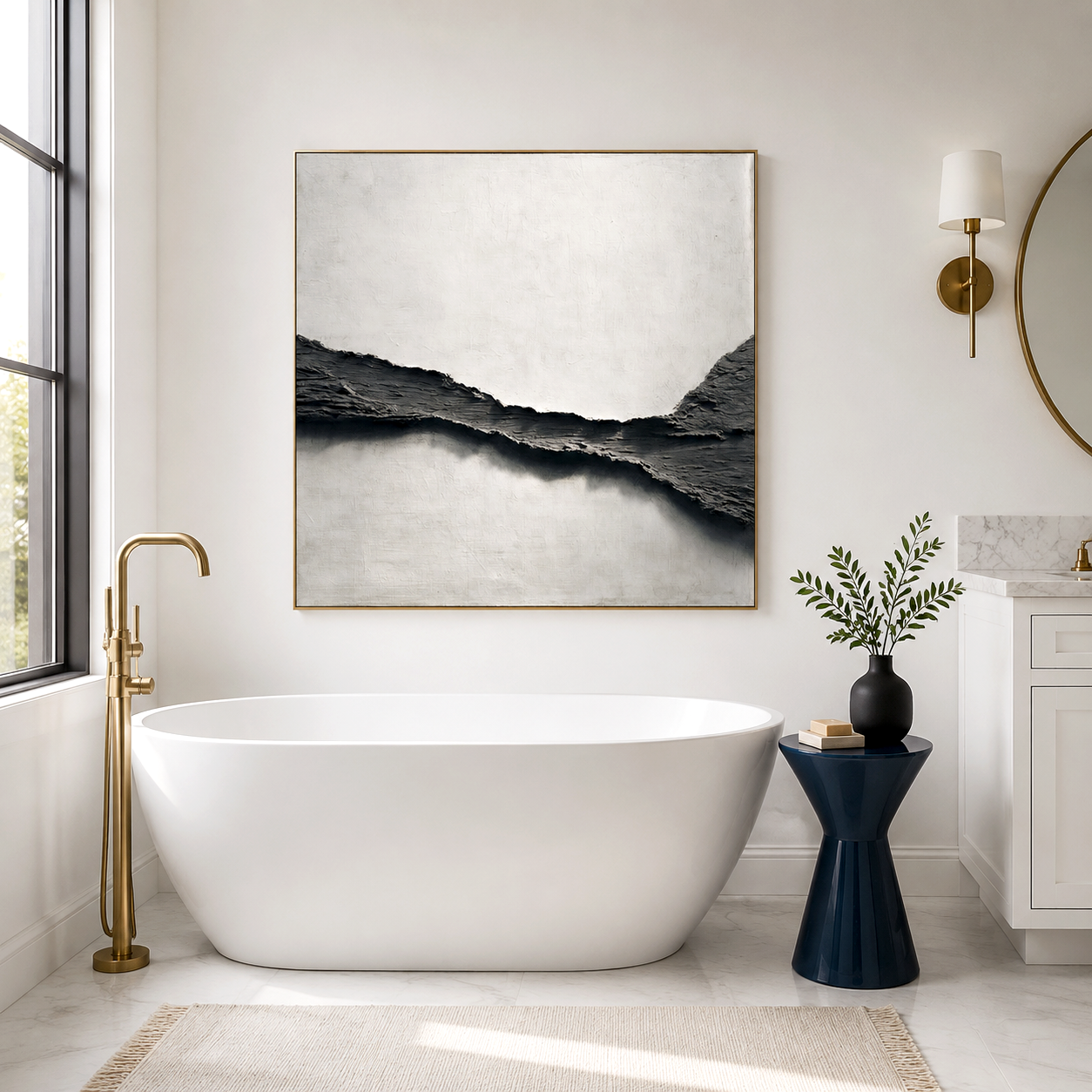
Acoustic art panels are decorative wall pieces that combine hand-painted artwork with a layered acoustic core to absorb and diffuse sound instead of letting it bounce directly back into a room. They help reduce echo, soften harsh noise reflections, and improve the overall acoustic feel of a space without sacrificing visual style. Unlike traditional sound panels that look industrial, acoustic art panels are designed to function as statement wall art while quietly managing reflected sound in living rooms, home offices, galleries, and commercial interiors.
The key difference lies in what they do to sound. Standard hard walls reflect most sound energy, creating a live, Echo-heavy environment. Acoustic art panels introduce a porous, layered core behind the canvas that traps some of that energy and spreads out the rest. You won't eliminate outside noise or fully soundproof a room, but you will notice a softer, more controlled acoustic atmosphere.
How Acoustic Panels Actually Work
Sound behaves in predictable ways when it hits surfaces. When a sound wave meets a hard, flat wall like concrete, plaster, or drywall, most of the energy reflects back into the room. This creates repeated reflections that build up as echo and make speech feel harsh or muddy.
Acoustic art panels interrupt this process through material design. Behind the visible canvas surface sits a layered acoustic core made of sound-absorbing material. When sound waves reach this core:
-
Some energy is absorbed as the material converts sound into tiny amounts of heat through friction
-
Some energy is diffused as the layered structure scatters reflections in different directions
-
Less energy reflects directly back compared to a bare hard wall
This means the room doesn't "live" as long acoustically. Speech becomes clearer, music feels less cluttered, and the constant ring of reflected sound drops away.
Acousart, a Xiamen-based art collective, developed their acoustic wall art during a soundproofing renovation of their city-center gallery. Designers transformed plain sound-absorbing panels into visual artworks, creating pieces that combine artistic design with sound absorption functionality .
What Acoustic Art Panels Are Not
It's critical to understand what acoustic art panels cannot do, because expectations often outpace reality.
Acoustic art panels handle sound absorption and echo reduction, not soundproofing. Soundproofing requires mass, sealing, and structural isolation to prevent sound from traveling through walls, floors, or ceilings. A decorative panel with a thin acoustic core cannot provide that level of performance.
The site describes their soundproof painting board as having a layered acoustic core behind the canvas surface, where the inner material absorbs and diffuses part of the sound instead of letting all sound bounce directly back into the room . This helps reduce echo and soften harsh noise, but it doesn't claim to block outside sound or fully isolate a room.
Where Acoustic Art Panels Work Best
Acoustic art panels shine in spaces where you want visual impact plus mild acoustic improvement. They're not a substitute for professional studio treatment, but they solve real problems in everyday interiors.
Ideal scenarios:
-
Living rooms with hard surfaces (tile, glass, bare walls) where conversation feels echoy
-
Home offices where phone calls or video meetings sound muddy on recordings
-
Dining rooms where clattering and chatter create a noisy, live atmosphere
-
Galleries and exhibition spaces wanting to soften foot traffic and ambient noise without industrial panels
-
Commercial spaces like cafes, boutiques, or concept stores where aesthetics matter but acoustics feel too harsh
-
Bedrooms where you want softer sound without sacrificing wall decor
These panels work best when you have multiple hard surfaces reflecting sound. A room with one acoustic panel and four bare concrete walls will still feel live. Coverage matters.
Acousart presents artwork for homes, galleries, and commercial spaces, connecting wall art, interior atmosphere, material experimentation, and acoustic comfort . Their approach treats acoustic function as part of the interior experience, not a separate technical system.
When Acoustic Art Panels Won't Help Enough
Acoustic art panels fail when expectations don't match room conditions or when people treat one piece as a complete solution.
Common failure points:
-
Buying too small for the wall: A 16×20 panel on a 12-foot wall does virtually nothing acoustically. The coverage is too small relative to the reflecting surface.
-
Ignoring surrounding hard surfaces: If you hang one panel but have glass windows, tile floors, and bare drywall everywhere else, the room stays echoy.
-
Expecting full soundproofing: If your problem is noise from neighbors, traffic, or upstairs tenants, acoustic art won't block that sound. You need mass and sealing.
-
Choosing only by color or trend: A panel that looks perfect visually but sits in the wrong acoustic zone (e.g., behind a sofa instead of on the main reflection wall) wastes the acoustic benefit.
-
Treating one artwork as the complete solution: Acoustic treatment works through coverage. One panel rarely changes a room's entire acoustic character.
-
Confusing canvas prints with hand-painted texture: Mass-produced prints lack the layered depth that hand-painted oil art provides, which can affect both visual and acoustic performance.
The website emphasizes hand-painted artwork rather than mass-produced prints, stating "No Mass-Produced Prints" and "100% Hand-Painted Oil Art" . This texture and material depth matters for both visual quality and how sound interacts with the surface.
How to Choose Acoustic Art That Fits Your Space
Selecting acoustic art requires balancing visual design with acoustic logic. You're not just buying wall decor; you're choosing a functional element that should improve how your room sounds.
Selection checklist:
-
Measure your wall: The panel should cover a meaningful portion of the reflecting surface. For a large wall, consider multiple pieces or a larger format.
-
Identify the problem zone: Where does sound bounce most? Often it's the wall opposite your seating area, behind a desk, or across from a kitchen.
-
Match the style to your room: Acousart offers categories including 3D, Abstract, Contemporary, Wabi Sabi Art, Texture Painting, Pop Art, wall art sets, and color-based collections . Choose something you'll actually want to look at daily.
-
Prioritize hand-painted texture: Hand-painted oil art creates physical depth that mass-produced prints can't replicate, affecting both visual richness and sound interaction.
-
Plan for coverage: If one panel feels insufficient, buy a set. Acousart includes wall art sets as a category, which can provide both visual cohesion and better acoustic coverage .
-
Consider lighting: The panel's texture and color will look different under your actual lighting. Check how it appears at your typical viewing distance.
This approach treats acoustic art as part of a broader room strategy rather than a magic fix. It suits people who want aesthetic improvement plus mild acoustic support, not professional studio-grade isolation.
Frequently Asked Questions
Do acoustic art panels actually reduce noise?They reduce reflected sound inside the room, which lowers echo and softens harsh noise. They don't block outside noise or eliminate all sound, but they improve the acoustic feel of a space .
Can acoustic art panels soundproof a room?No. Soundproofing requires mass, sealing, and structural isolation to prevent sound from traveling through walls. Acoustic art panels absorb and diffuse reflected sound inside the room but don't block sound transmission .
How many acoustic panels do I need for my room?Coverage matters. One small panel on a large wall won't change the acoustics significantly. You need enough surface area relative to your hard surfaces. For large rooms, consider multiple pieces or wall art sets.
Are acoustic art panels better than regular sound panels?Regular sound panels often provide higher absorption but look industrial. Acoustic art panels offer lower absorption with better aesthetics. Choose based on whether you prioritize pure performance or visual design plus mild acoustic support.
Do hand-painted acoustic panels work better than printed ones?Hand-painted oil art creates physical texture and depth that mass-produced prints lack. This affects both visual quality and how sound interacts with the surface, though specific performance differences aren't quantified .