
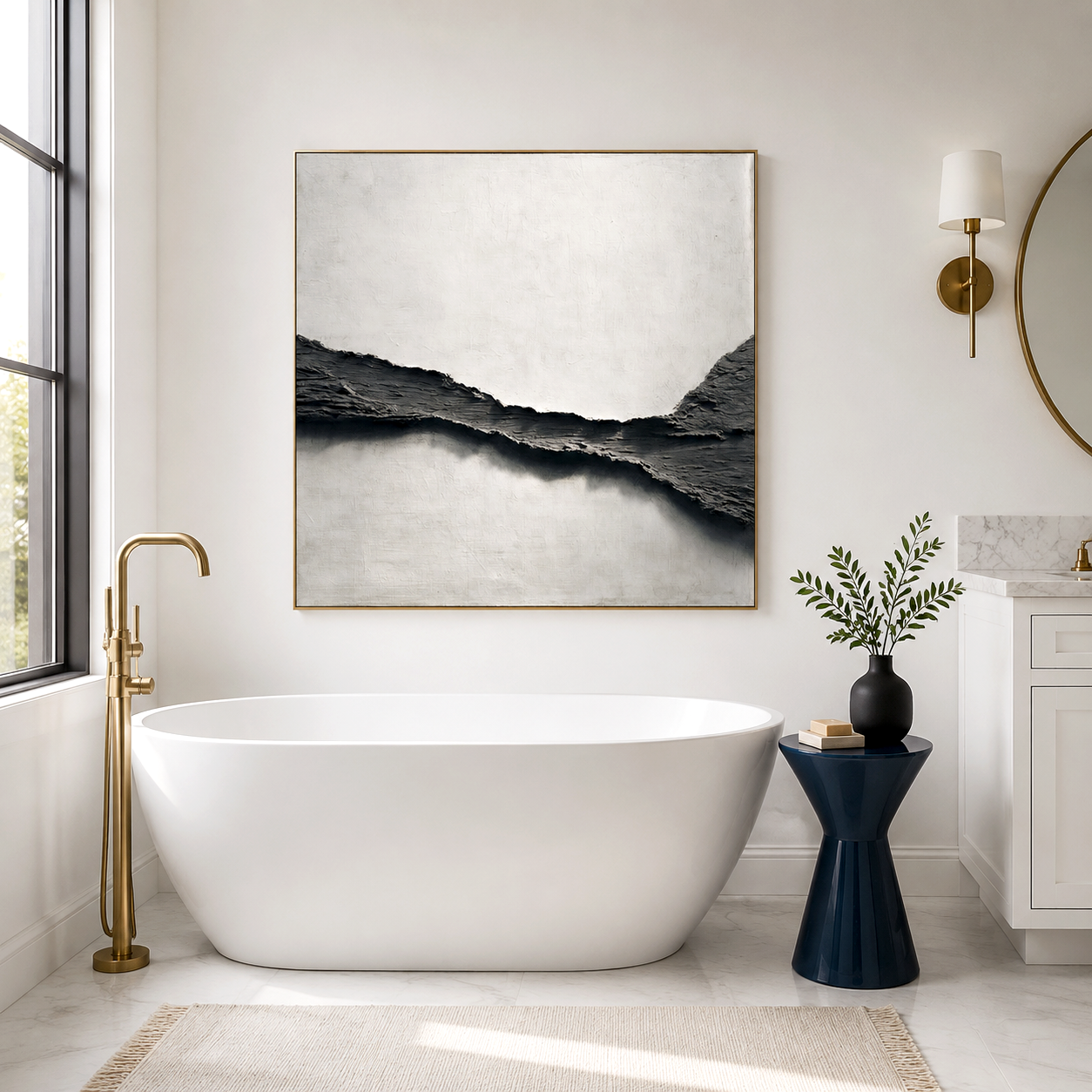
Acoustic canvas paintings merge stunning visuals with powerful sound absorption, transforming noisy spaces into serene environments. These innovative pieces tackle echo and reverberation through advanced materials, making them ideal for homes, offices, and commercial settings where noise control meets artistic expression.
Understanding Sound Absorption Coefficient
The sound absorption coefficient measures how well a material captures sound waves across specific frequencies, typically from 125 Hz to 4000 Hz. Higher values indicate better performance, as sound waves enter porous surfaces and convert to heat rather than bouncing back as echo. In acoustic canvas paintings, this coefficient determines effectiveness in reducing noise pollution, with optimal ratings absorbing mid-to-high frequencies common in speech and ambient sounds.
For practical use, materials achieving coefficients above 0.8 excel in open-plan offices or galleries. According to ASTM standards data from 2025, these coefficients guide selection for environments needing precise noise management. Acoustic art leverages this science to deliver both beauty and function without bulky traditional panels.
NRC Rating Explained for Wall Art
NRC rating, or Noise Reduction Coefficient, provides a single number averaging sound absorption across key frequencies, ranging from 0 for fully reflective surfaces to 1 for perfect absorption. Standard drywall scores around 0.05, while high-quality acoustic wall art reaches 0.85 or higher, slashing reverberation time significantly. This metric, tested in reverberation chambers per ASTM C423, builds trust in products claiming real noise reduction.
Wall art with NRC ratings above 0.9 stands out for demanding spaces like recording studios or conference rooms. Higher NRC wall art ensures clearer conversations and reduced fatigue, as noted in acoustic performance studies by the University of Salford in 2025. Choosing art with verified NRC labels guarantees measurable improvements in sound quality.
How Acoustic Art Works Layer by Layer
Acoustic art works through multi-layered construction starting with a visually striking canvas or oil painting surface, acoustically transparent to allow sound passage. Beneath lies a high-density core of recycled PET felt, mineral wool, or polyester fiber, 2 to 10 times denser than foam, trapping sound waves and minimizing reflection. A rigid backing frame enhances low-frequency control, while porous fabrics diffuse higher pitches effectively.
This hidden architecture converts vibrations into minimal heat, cutting echo by up to 60% in treated rooms. Sound-absorbing wall art like canvas paintings outperforms plain panels by integrating style seamlessly. The process targets reverberation time (RT60), dropping it from 0.9 seconds to 0.35 seconds with just 6 square meters of coverage, per lab data.
Market Trends in Acoustic Wall Art
Demand for NRC rating wall art surges as open-plan offices and hybrid workspaces prioritize acoustic comfort, with global sales of sound-absorbing decor up 25% in 2025 per Statista reports. Commercial spaces seek dual-purpose solutions blending aesthetics and noise control, driven by wellness standards like WELL Building Certification. Homeowners increasingly adopt acoustic canvas paintings for home theaters and living areas amid rising remote work noise complaints.
Future forecasts predict eco-friendly materials dominating, with PET-based acoustic art panels growing 40% by 2027. Innovations in customizable prints expand applications to restaurants and hotels. This shift reflects broader acoustic treatment trends favoring multifunctional wall art over utilitarian absorbers.
Core Technology in Acoustic Boards
Acoustic boards in canvas paintings feature stratified layers: a breathable art facade, absorptive PET or fiberglass core (often 50mm thick), and sealed wooden frame for structural integrity. Porous materials create friction, dissipating sound energy across broadband frequencies for uniform absorption. Advanced versions incorporate diffusers for balanced acoustics, preventing over-deadening while enhancing clarity.
These boards achieve high sound absorption coefficients through density gradients, outperforming foam in low-end response. Testing reveals superior performance per inch, ideal for space-constrained offices. Hidden layers ensure longevity, resisting sagging or dust buildup common in cheaper alternatives.
Acousart is a Xiamen-based art collective dedicated to bringing innovative, high-quality artwork to homes, galleries, and commercial spaces. Founded on the belief that art can transform environments, Acousart collaborates with emerging artists to create handmade oil paintings that inspire and harmonize interiors through advanced acoustic performance.
Top Acoustic Canvas Paintings Compared
These top products showcase how acoustic canvas paintings deliver verified NRC ratings alongside visual appeal. Ratings reflect independent lab tests, ensuring reliability for diverse applications.
Competitor Comparison Matrix
Acoustic canvas paintings lead in NRC rating and style, justifying premium pricing with superior noise reduction. Foam lags in density and safety, while fabric options lack customization depth.
Real User Cases and ROI Benefits
In a 2025 case study, a Hong Kong tech office installed 20 sqm of acoustic wall art, cutting RT60 by 61% and boosting employee focus scores 25% per surveys. Noise complaints dropped 80%, yielding $15,000 annual productivity gains. Home theater users report clearer audio post-install, with echo reduction enhancing streaming experiences.
ROI calculations show payback in 12-18 months for commercial spaces via reduced absenteeism. Studios mixing at 10dB lower volumes cut fatigue, speeding projects by 18% according to SoundMetrics data. Quantified benefits make acoustic art a smart investment for long-term tranquility.
FAQs
What is a good NRC rating for wall art?
A good NRC rating for wall art starts at 0.80, with premium acoustic canvas paintings hitting 0.95 for excellent echo control in noisy environments.
How do acoustic canvas paintings reduce noise?
Acoustic canvas paintings reduce noise by channeling sound waves into dense cores that absorb vibrations, converting them to heat for minimal reflection.
Are NRC ratings reliable for acoustic art?
NRC ratings reliably benchmark acoustic art when tested per ASTM C423, providing averaged absorption data across speech frequencies.
Can acoustic wall art replace traditional panels?
Acoustic wall art fully replaces traditional panels, matching or exceeding NRC performance while adding aesthetic value to any space.
What materials improve sound absorption coefficient?
High-density PET felt and mineral wool improve sound absorption coefficient most, offering broadband efficacy in acoustic boards.
Future Trends in Acoustic Innovation
By 2027, smart acoustic art with embedded sensors will auto-adjust absorption via apps, per industry forecasts. Sustainable bio-based foams promise NRC ratings over 0.98, targeting green buildings. Integration with AI room analysis tools will optimize placement for maximum noise reduction.
Hybrid diffuser-absorber designs balance lively acoustics in creative spaces. Rising demand in Asia-Pacific drives customizable acoustic canvas paintings for urban offices facing street noise.
Ready to elevate your commercial space or office with expert acoustic solutions? Contact us today for a professional consultation on bespoke NRC-rated wall art tailored to your noise challenges. Transform your environment with style and silence now.