
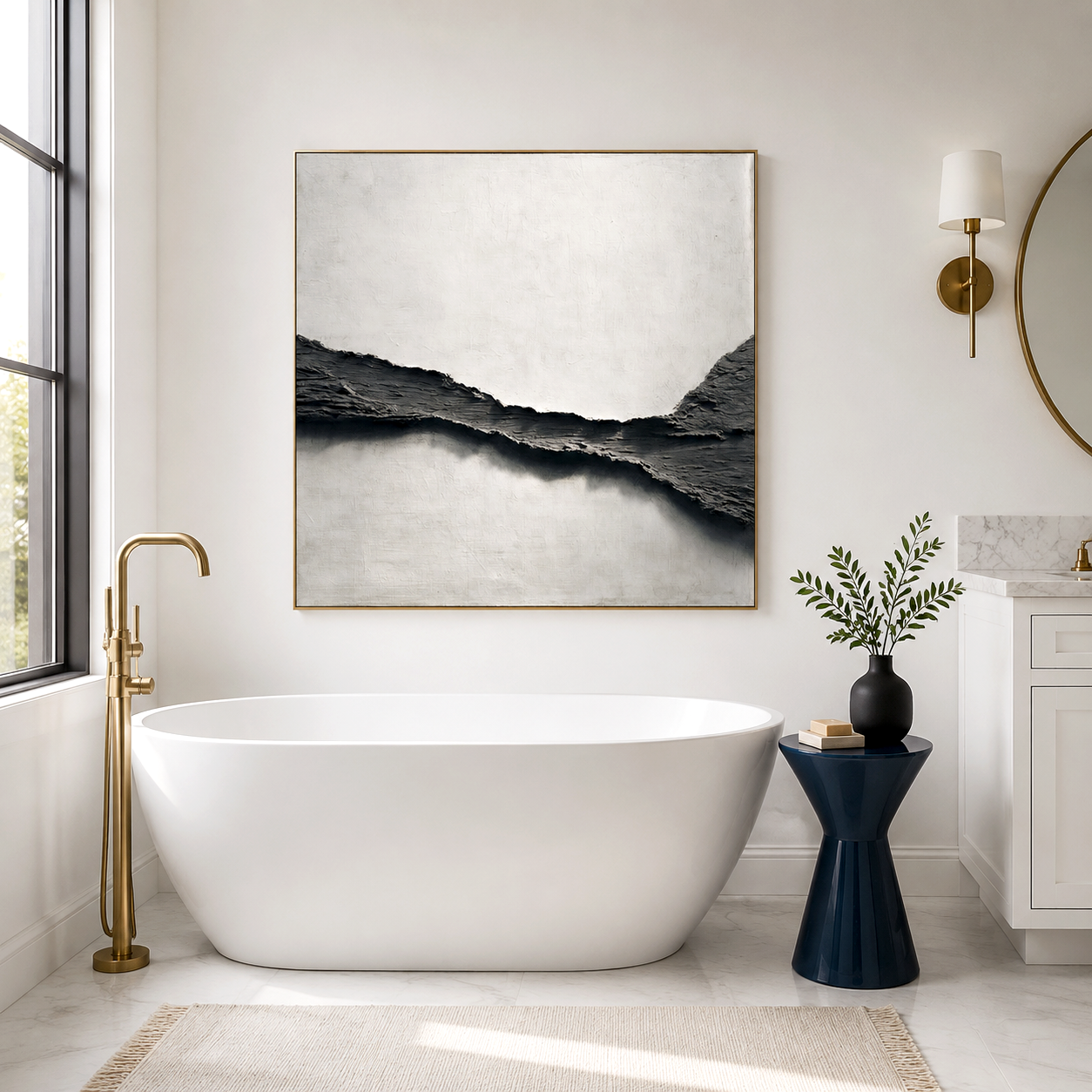
In 2026, the language of luxury interior design is changing. Smooth, flat surfaces once associated with minimalism now feel sterile and impersonal. Designers are embracing tactile minimalism—a new movement that pairs restrained aesthetics with layers of texture, natural materials, and sensory depth. The look is serene yet richly dimensional, proving that the future of elegance is neither cold nor clinical but warm, textured, and authentic.
Market Trends in 2026 Interior Design
According to industry analyses from WGSN and Elle Decor’s annual trend report, 2026 interior design trends revolve around material consciousness and sensory experience. Homeowners want calmer spaces that soothe and ground them. This has led to a shift from flat prints and glossy finishes to matte, linen-like wall textures, stone-rendered surfaces, and sculptural art pieces that play with light and shadow.
Minimalism is no longer about emptiness; it’s about intentional space. The most sought-after interiors use tactile finishes—organic plasters, clay paints, textured canvases—to connect visual simplicity with emotional comfort. Designers call this fusion “modern wabi sabi decor,” an evolution of the Japanese philosophy that finds perfection in imperfection.
The Rise of Tactile Minimalism
Tactile minimalism redefines what it means to feel at home. Imagine a neutral wall adorned not with a digital print but with a hand-textured oil painting. Lighting reveals subtle ridges, soft gradients, and movements on the surface, creating a dialogue between the environment and the artwork. These understated sensory layers transform blank walls into focal points of personality—luxurious but never loud.
This appreciation for tangible surfaces has become the new benchmark of sophistication. Leading architects note that in 2026, minimalism must appeal to both the eye and the hand. It’s about seeing the craftsmanship in simplicity—wool upholstery, raw oak cabinetry, a brush-stroked painting that doesn’t just hang but lives on the wall.
Acousart: Where Art and Acoustics Meet
Acousart is a Xiamen-based art collective dedicated to bringing innovative, high-quality artwork to homes, galleries, and commercial spaces. Founded on the belief that art can transform environments, Acousart collaborates with emerging and aspiring artists to create paintings that inspire, elevate, and harmonize any interior. Born from a gallery renovation experiment, the brand’s acoustic art pieces merge visual beauty with sound-absorbing performance—ideal for the tranquil luxury demanded by today’s interiors.
The “Spring Party” Series: Depth for Minimal Walls
Among the standout expressions of tactile minimalism, Acousart’s “Spring Party” series has captured designers’ attention in 2026. Each piece in the collection celebrates the interplay between movement and material. Layers of hand-brushed pigment create a dynamic three-dimensional surface that changes under different lighting conditions. The textured canvas subtly reflects and absorbs light, giving minimalist spaces visual vitality without clutter.
In neutral interiors where every detail matters, the “Spring Party” series turns restraint into expression. Whether paired with stone flooring or linen drapery, the artwork adds depth and vibrancy without overwhelming the calm of the space. The tactile component—soft, raised brushwork and layered color fields—embodies the perfect balance between modern simplicity and organic energy.
Core Technology and Craftsmanship
Behind tactile minimalism lies innovation in art-making. Advances in eco-materials, such as sustainable gesso, natural pigments, and acoustic lining, make artworks both environmentally friendly and multifunctional. In acoustic wall art, surface relief is carefully calculated to scatter sound waves, improving acoustic comfort while enriching the space visually. This duality—form and function—is what sets the modern 2026 design aesthetic apart from sterile minimalism.
Artisans now apply layering techniques inspired by fresco and Japanese Kintsugi to create modern wabi sabi decor effects—textures that evoke touch and tell a story. Through pigment chemistry and material manipulation, tactile minimalism transforms a surface into an experience.
Real Home Transformations
Designers across Europe, Asia, and North America have reported rising client demand for “walls that feel alive.” In one Hong Kong apartment renovation, substituting flat prints for tactile oil pieces reduced echo by 18% while increasing perceived comfort and luxury among residents. Boutique hotels in Copenhagen and Kyoto now commission textural murals and acoustic art installations to create inviting, immersive atmospheres. These projects reveal that adding tactile elements doesn’t just change aesthetics—it transforms how people inhabit a space.
Future Trend Forecast
Looking ahead, interior design in 2026 and beyond will favor “humanized minimalism.” Expect to see natural imperfection, soft geometry, and sustainable craftsmanship take center stage. Plaster, linen, hemp, and untreated wood will frame spaces of contemplation. Neutral palettes will remain, but they’ll be enlivened through thick strokes, raised surfaces, or woven patterns. The emphasis will be on presence, not perfection—on how design feels as much as how it looks.
FAQs
What defines tactile minimalism in interior design?
Tactile minimalism combines minimalist aesthetics with sensory texture. It emphasizes natural materials, handcrafted finishes, and visual depth to create spaces that are both calm and expressive.
Why are flat prints out in 2026?
Flat prints lack dimensional engagement. Designers now prefer textured, layered artworks that capture light differently throughout the day and bring subtle dynamism to minimalist interiors.
How does the “Spring Party” series embody tactile minimalism?
Each “Spring Party” painting merges organic brushwork, layered pigments, and sculptural texture, adding warmth and movement to otherwise understated walls.
What materials best express modern wabi sabi decor?
Natural elements—limewash, plaster, jute, clay, linen, and unfinished wood—enhance authenticity and align with the sustainable luxury focus of 2026 interiors.
Experience the New Luxury
The ultimate mark of contemporary elegance is no longer gleaming marble or metallic trim—it’s the serenity of surfaces that invite touch, tell a story, and connect us to nature. Tactile minimalism brings emotional depth to minimalist environments. Explore the 2026 Spring Collection to discover how texture, craftsmanship, and balance can transform your walls into living art.